
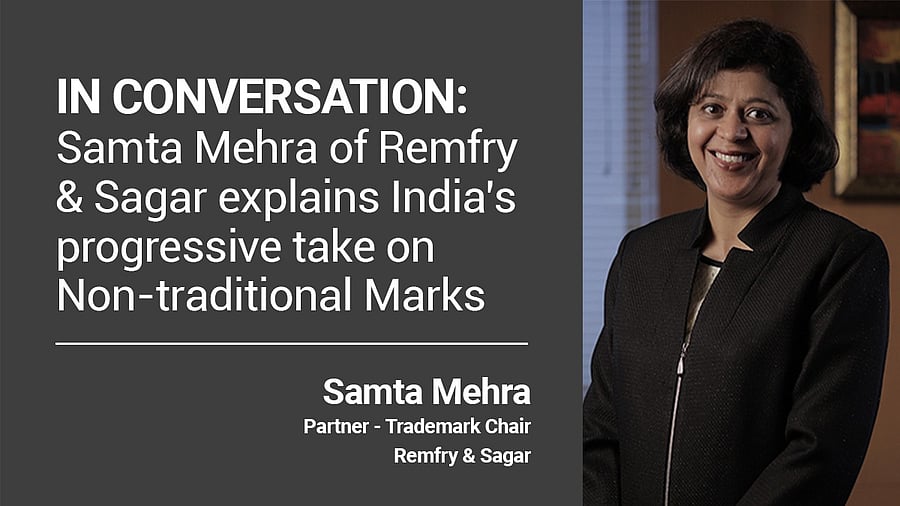
Samta Mehra, Partner at Remfry & Sagar, is widely regarded as one of India’s foremost trademark experts. With over two decades of practice, she has advised leading global and domestic clients on complex IP portfolios, enforcement strategies, and the evolving landscape of non‑traditional marks. In this conversation, she shares her perspective on the Delhi High Court’s recent decision declaring the Birkin bag shape and three other Hermès marks [‘HERMES’, ‘HERMES (stylised text)’ and the stylised mark titled ‘Hermes avec attelage’ (also described as the ‘duc-carriage-with-horse logo’)] as “well‑known trademarks” — a ruling that carries significant implications for luxury brands and Indian IP jurisprudence.
Q1. What is the legal significance of a mark being declared “well‑known” under Indian law?
A: Under Section 2(1)(zg) of the Trade Marks Act, 1999, a “well‑known trademark” is one that has achieved recognition across a substantial segment of the relevant section of the public, transcending product categories. Once declared well‑known, such marks can enjoy protection across disparate classes of goods and services, even where the proprietor has not registered them. Section 11(6) of the Act sets out the factors to be considered, including knowledge or recognition in relevant sections of the public, duration and extent of use and promotion, as well as details of statutory rights and enforcement history. For Hermès, this recognition means that the Birkin bag’s distinctive silhouette and associated marks cannot be appropriated even in unrelated industries — a powerful deterrent against dilution and free‑riding.
Q2. How did the Delhi High Court assess the evidentiary threshold in this case?
A: Justice Tejas Karia’s order carefully examined the evidence offered by Hermès’.
- Hermès enjoys strong recognition in India through its boutiques (operating in Mumbai and Delhi, post Hermès’ India launch in 2008), sales figures, and extensive media coverage; the BIRKIN shape, HERMÈS word mark, and carriage logo are recognised by the relevant fashion-aware public.
- The marks have been in continuous global use for decades: the BIRKIN since 1984, the HERMÈS brand since 1837, and the carriage logo since 1938, establishing longstanding commercial association.
- Hermès has invested substantially in worldwide advertising and holds extensive registrations in India and over 40 other countries for the BIRKIN shape and related marks, demonstrating sustained promotion and formal recognition.
- The company has a strong enforcement history, securing injunctions internationally and in India; the BIRKIN shape has also been recognised as well-known by foreign industry bodies.
Collectively, the evidence established that the BIRKIN 3D shape, the HERMÈS mark (word and stylised versions), and the carriage device satisfy all statutory criteria and warrant declaration as well-known trade marks in India.
Q3. What does this mean for shape marks and non‑traditional trademarks in India?
A: It is important to mention that the definition of a trademark under the Indian Trade Marks Act, 1999 is inclusive, and not exhaustive - Section 2(m) of the Act, defines a “mark” broadly to include amongst others “shape of goods, packaging, and combination of colours.” Thus, the Act envisages that any sign can be considered as a trademark son long as it is capable of distinguishing the goods/services of the proprietor from those of others and can be graphically represented.
Shape marks fall into the category of non-traditional marks, which usually lack distinctiveness as they are not intrinsically recognised by consumers as source identifiers but rather as functional or decorative elements of a product. In fact, Section 9(3) explicitly states that:
“A mark shall not be registered as a trade mark if it consists exclusively of (a) the shape of goods which results from the nature of the goods themselves; or (b) the shape of goods which is necessary to obtain a technical result; or (c) the shape which gives substantial value to the goods.”
That said, once a shape acquires secondary meaning through use and recognition (in trademark parlance, ‘acquire distinctiveness’), it can become a powerful brand indicator.
Indian courts have, over the years, been progressive when it comes to recognising and protecting non‑traditional marks. For instance, the unique shape of the Gorbatschow vodka bottle has been recognised as a trademark. Similar marks worth a mention include John Deere ‘green and yellow’ colour combination, Levi Strauss & Co.’s ‘Arcuate Stitching Design’ and Louboutin’s red sole mark, all of which also enjoy ‘well-known mark’ status.
This ruling strengthens jurisprudence in the shape mark domain and signals how iconic luxury product designs can enjoy and benefit from strong trademark protection and enforcement.
Q4. How does this compare with EU and US jurisprudence?
A: This decision is in sync with global standards in assessing well-known mark status.
Q5. What enforcement advantages does Hermès gain post‑recognition?
A: The advantages are substantial. Hermès may rely on this recognition to challenge misuse in other categories, reducing the evidentiary burden in future disputes, including those that do not overlap with luxury fashion and thereby, prevent dilution and tarnishment. Second, enforcement against counterfeits and look‑alikes becomes faster, as courts and the Registry must take judicial notice of the mark’s status. In this regard, Hermès should take steps to record their well-known mark status at the Trademark Office as well which maintains a specific list.
Q6. What broader impact might this have on Indian IP jurisprudence?
A: The ruling sets a precedent for luxury brands and beyond. It demonstrates that jurisprudence is evolving and Indian Courts are progressive and willing to recognize iconic product shapes as well‑known marks, provided the evidentiary threshold is met. This could encourage other global brands to seek similar recognition. It may also nudge the Registry to be more receptive to non‑traditional marks,.
Q7. Technical Deep Dive: What statutory provisions and principles were most relevant?
A: The key provisions are:
Section 2(1)(zg): Definition of “well‑known trademark.”
Section 11(6) – 11(10): Factors for determining well‑known status
Section 2(m): Definition of “mark,” which includes shape of goods.
Section 29(4): Infringement provisions, protecting well-known marks against blurring, tarnishment, and free-riding, even outside their core market.
Q9. Looking Ahead: What should brand owners and practitioners take away?
A: The key takeaway is that India is open to recognizing non‑traditional marks as well‑known, provided the evidentiary burden is met. Brand owners should:
Maintain robust records of IP registrations, sales and advertising figures.
Document enforcement history to demonstrate active policing of rights.
Be proactive in seeking recognition.
Consider the strategic value of well‑known status for customs enforcement and dilution claims.
For practitioners, this ruling is a reminder that courts are receptive to reputation‑centric arguments. It also underscores the importance of aligning litigation strategy with broader brand protection goals.
Conclusion
The Delhi High Court’s recognition of the Birkin bag shape and Hermès marks as well‑known trademarks is significant and one that demonstrates the receptive and progressive mindset of the judiciary and offers luxury brands a powerful enforcement tool. As Samta Mehra notes, this is not just about Hermès — it is about India’s willingness to embrace the evolving realities of brand identity in a global marketplace.