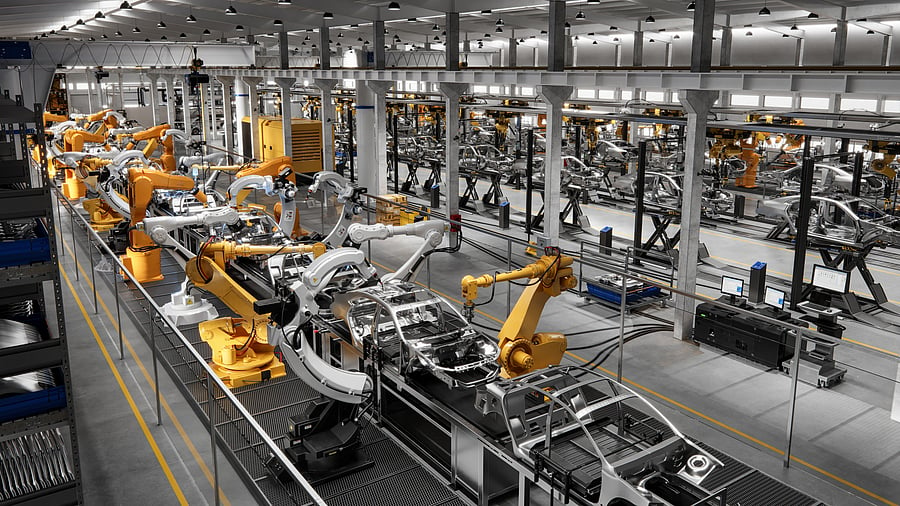
Image for representational purposes.
Credit: iStock Photo
Bengaluru: The India-US trade agreement, which has reduced reciprocal tariffs on Indian goods to 18 per cent, has been welcomed by the auto component sector, underlining the pact’s importance in strengthening global supply chains and improving export competitiveness.
The deal is expected to most-favourably impact export-oriented sectors such as auto components, which were hit hard when the Trump administration imposed tariffs of up to 50 per cent on Indian goods.
“The India-US trade deal is particularly positive for export-oriented sectors with meaningful exposure to the US market,” Axis Direct said in a report, adding that the auto ancillaries sector stands to benefit from improved market access, tariff rationalisation and greater supply-chain certainty.
The moderation in tariffs represents a meaningful tailwind for Indian automobile exporters, especially auto component manufacturers, for whom the US remains a key market contributing 25-30 per cent of export revenues. The US is among the most-important destinations for India’s auto component industry. Exports to the US stood at $3.12 billion in the first half of the current financial year, while US exports to India were valued at $844 million during the same period.
Calling the agreement a positive step, the Automotive Component Manufacturers Association of India (ACMA) said it would enhance the competitiveness of Indian goods in the US market. “The proposed reduction in reciprocal tariffs to 18 per cent is a positive step that will enhance the competitiveness of Indian automotive components in the US market,” ACMA President Vikrampati Singhania said. He added that at a time when global supply chains are undergoing structural realignments, the deal provides greater predictability and confidence for long-term trade and investment decisions.
Analysts said the sharp rollback in duties materially reduces export friction, enhances cost-competitiveness and strengthens India’s role in global OEM sourcing, while the benefit for vehicle OEMs remains relatively limited due to low direct exports. “The tariff reduction is expected to lower effective US import costs by 6-8 per cent, improving bid competitiveness and supporting incremental volume gains, better customer retention and higher plant utilisation, especially in engineered and value-added components,” Axis Direct noted.
Accordingly, auto ancillary companies are expected to capture a larger share of the gains than vehicle manufacturers, given higher export intensity, contractual supply arrangements and limited dependence on end-market pricing.
Welcoming the agreement, TVS Motor Company Chairman Sudarshan Venu said the intent to progressively lower tariffs and non-tariff barriers could deepen supply-chain integration, enable faster technology collaboration and attract investment into advanced manufacturing.
“The immediate reduction in reciprocal tariffs from 50 per cent to 18 per cent, along with the commitment to progressively lower barriers, will boost growth momentum and improve predictability for businesses,” Mahindra Group CEO and Managing Director Anish Shah said, adding that the deal supports India’s broader growth ambitions.