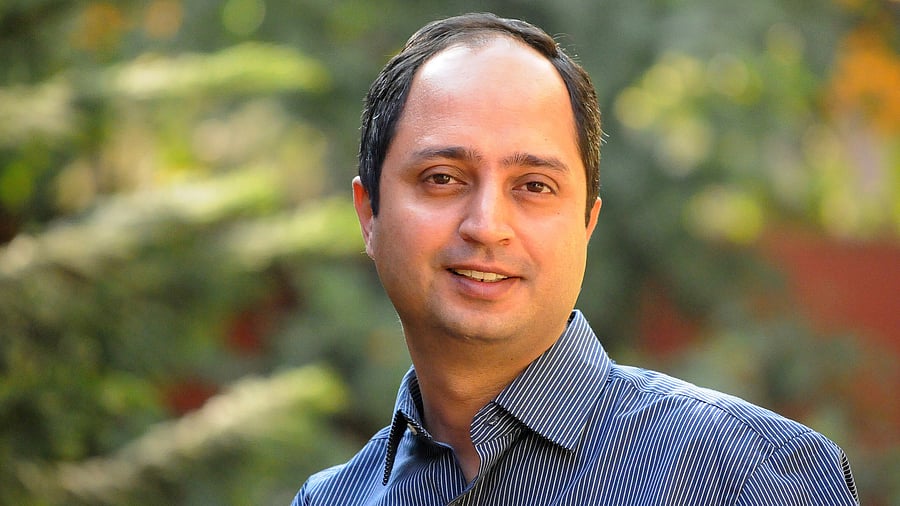
Mr. Amit Tandon, Founder and CEO, PolyCycl.
Credit: Special arrangement
Bengaluru: Over 5 billion tonnes of plastic are sitting in landfills across the world, according to studies, and the global recycling rate is just about 10 per cent, said PolyCycl Founder and CEO Amit Tandon.
“While we speak about plastics being the bane of society, it's actually the waste plastic. It’s a bane for the environment at the end of its life, because it does not enzymatically or biologically degrade. The chemical recycling sector is now emerging, and PolyCycl is a circular economy technology company that is tackling plastic waste,” the founder said.
Tandon was in Bengaluru to announce that the Chandigarh-based deep tech company, which has developed technology for chemical recycling of waste plastics, has received Series A investment from Rainmatter, the climate and sustainability-focused investment initiative of Zerodha.
Though he did not disclose the amount of funding, Tandon said the investment supports the next phase of deployment of PolyCycl’s technology platform, focused on enabling plastic-to-plastic circularity for hard-to-recycle plastics.
There are many challenges when it comes to recycling plastics, and they are being recycled at only 10-12 per cent globally. “That's how low the rates are when compared with rates of other materials, including paper, cardboard, metals, as they are very high in most parts of the world,” he said, adding that the chemical recycling sector is emerging, and that it could become a $10-20 billion market in the next 10 years.
PolyCycl’s technology breaks down used plastics into their fundamental hydrocarbon molecules, which can then be reconstituted to manufacture a range of renewable materials, including new, low-carbon virgin plastics. The final product is a high-quality circular hydrocarbon feedstock that can be used by petrochemical producers to manufacture new plastics, including food-grade polymers, as well as renewable chemicals and low-carbon fuels, he explained.
The company targets an EBITDA margin exceeding 50 per cent at scale. It follows an asset-light global licensing model as the primary route to scale. It has eight international patent grants.
“Over the next decade, we aim to enable the recycling of approximately 1.6 million tonnes of waste plastics annually, producing around 1.1 million KTA of circular pyrolysis oils,” Tandon said.