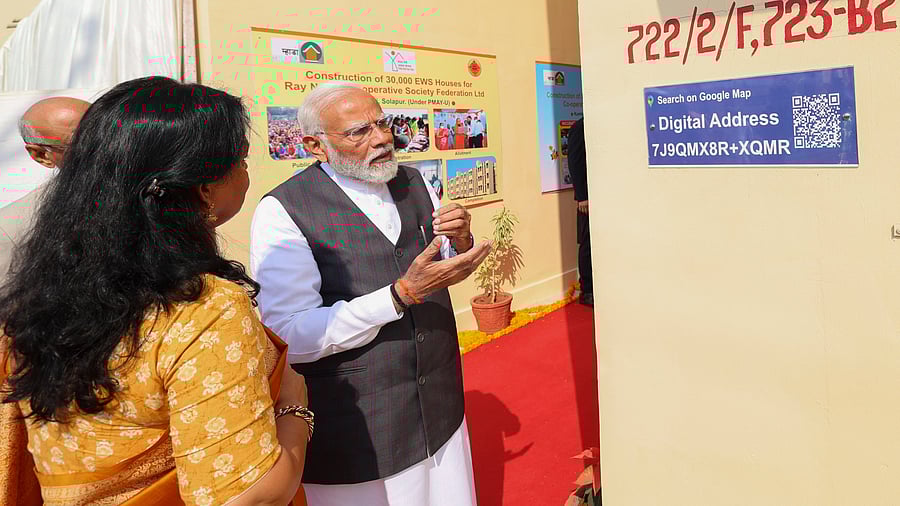
Under the two phases of the Pradhan Mantri Awas Yojana - Urban (PMAY-U), a total of 122.06 lakh houses have been sanctioned, of which 96.02 lakh houses have been completed/ delivered to the beneficiaries across the country as on November 24, 2025.
Bengaluru: The government has undertaken multiple interventions to support affordable housing in urban areas. These include direct tax and GST benefits, inclusion in priority-sector lending, which enables higher loan-to-value ratios and therefore smaller down payments, and provision of infrastructure status, amongst others, the Economic Survey 2025-26 said.
Under the two phases of the Pradhan Mantri Awas Yojana - Urban (PMAY-U), a total of 122.06 lakh houses have been sanctioned, of which 96.02 lakh houses have been completed/ delivered to the beneficiaries across the country as on November 24, 2025.
The Survey has noted that in many Indian cities, affordable housing increasingly appears in peripheral areas due to lower land costs and easier access to large plots. “Developers often move projects to the outskirts to keep prices attractive for low and middle-income buyers, as land acquisition is simpler. However, these areas typically lack sufficient infrastructure, including poor connectivity to employment centres, inadequate mass transit systems and civic amenities,” the survey said.
Consequently, while these locations offer affordable housing, they often fall short in essential urban services required for sustainable living. This creates a dilemma: despite higher demand driven by affordability, the lack of proper infrastructure hampers their liveability and long-term appeal, it said.
Quoting a recent Knight Frank - NAREDCO report, the Economic Survey highlighted that the cumulative affordable housing demand in India by 2030 is estimated to be 30 million units. The report also finds that in India's top eight cities, the supply of affordable housing (units costing less than Rs 50 lakh) has declined from 52.4% in 2018 to 17% by 2025.
“Informal housing and slums play a key role in facilitating geographical proximity between labour and the place of work. In the absence of affordable housing, informal settlements often cluster near residential areas, industrial zones, or commercial establishments, providing access to employment and services that would otherwise be inaccessible to low-income migrants and workers,” the Survey said.