
India’s green homes movement has largely been shaped by what homeowners can see, energy-efficient tiles, low-VOC paints, rooftop solar panels, smart lighting and water-saving fixtures. However, as India tightens sustainability norms and urban housing demand accelerates, the real drivers of green homes are increasingly invisible. Among them, electrical wiring has emerged as one of the most critical enablers of safety, energy efficiency and sustainability.
With rising household electrification, higher appliance density, electric vehicle (EV) charging, and rooftop solar integration, the electrical load within Indian homes has increased significantly. According to the Ministry of Power and the Bureau of Energy Efficiency (BEE), residential electricity consumption continues to grow faster than overall demand, making efficient and safe electrical infrastructure essential to India’s climate and energy goals.
Policy Push Is Redefining Green Housing Standards
Government policy is playing a decisive role in reshaping how green homes are designed and built. The National Building Code (NBC) has strengthened fire-safety requirements, while green building frameworks such as IGBC and GRIHA increasingly evaluate electrical systems for efficiency, material sustainability and lifecycle performance. The Energy Conservation Building Code (ECBC) and its residential adaptations further reinforce the need for reduced electrical losses and safer power distribution.
At the same time, flagship initiatives such as the National Solar Mission, FAME II for electric mobility, and the Smart Cities Mission are changing the electrical demands placed on residential infrastructure. Homes today must safely support solar inverters, battery systems, EV chargers, smart meters and uninterrupted digital connectivity. These requirements place unprecedented stress on conventional wiring systems that were designed for lower loads and shorter lifespans.
Why Conventional Wiring Falls Short
Traditional house wires, often based on standard PVC insulation, carry both environmental and safety limitations. PVC manufacturing is energy-intensive, and during fire incidents, such wires can emit dense smoke and toxic gases, posing serious risks to occupants. From a sustainability perspective, higher electrical losses and shorter service life increase energy consumption and material waste over time.
As a result, green homes can no longer rely solely on visible eco-features. What runs behind the walls is now central to achieving true energy efficiency, fire safety and environmental compliance.
The Rise of Certified Green Wires
This shift has driven the adoption of green electrical wires designed to reduce carbon footprint, improve safety and support long-term energy efficiency. These wires typically use high-purity copper conductors to minimise power loss, along with low-smoke, halogen-free and lead-free insulation compounds that significantly reduce toxic emissions during fires.
Crucially, third-party certifications have become essential. Certifications such as GreenPro assess products across their lifecycle, from raw material sourcing and manufacturing processes to usage efficiency and recyclability—helping homeowners and developers identify genuinely sustainable electrical solutions.
How Polycab Is Supporting India’s Green Homes Transition
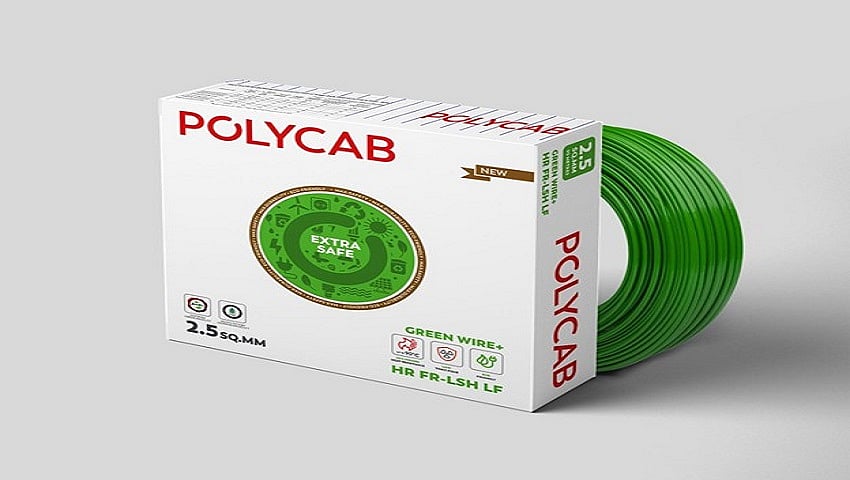
Polycab has been actively aligning its electrical solutions with India’s evolving policy and sustainability framework. Its GreenPro-certified house wires are engineered to meet stringent requirements around fire safety, energy efficiency and environmental impact. Features such as low-smoke halogen insulation enhances indoor safety, while high-conductivity copper reduces electrical losses, supporting lower energy consumption over the lifespan of the home. In addition, Polycab Green Wires are RoHS and REACH compliant, ensuring restricted use of hazardous substances and making them safer for indoor living environments and the environment across their lifecycle.
These specifications are increasingly relevant for green residential projects seeking compliance with government notified norms, as well as for homes integrating solar power systems and EV charging infrastructure. Beyond products, Polycab has also invested in energy-efficient manufacturing, renewable energy adoption and responsible material practices, reinforcing a holistic approach to sustainability.
Wiring: The New Foundation of Green Homes
As India works toward its target of 500 GW of non-fossil fuel capacity by 2030 and continues to expand urban housing, the definition of green homes is evolving. Sustainability is no longer limited to surface-level materials or appliances, it is embedded in the electrical backbone that powers modern living.
For homeowners, developers and policymakers alike, the message is that green homes are only as sustainable as the systems behind their walls. Certified green wires, designed for safety, efficiency and longevity, are becoming as essential as any visible eco-friendly feature.
India’s green homes revolution is being built quietly, wire by wire. And in the years ahead, these hidden systems will play a decisive role in creating safer, more energy-efficient and environmentally responsible homes.
Green Wire Plus - https://www.amazon.in/gp/product/B0G7F5DSPN?th=1