
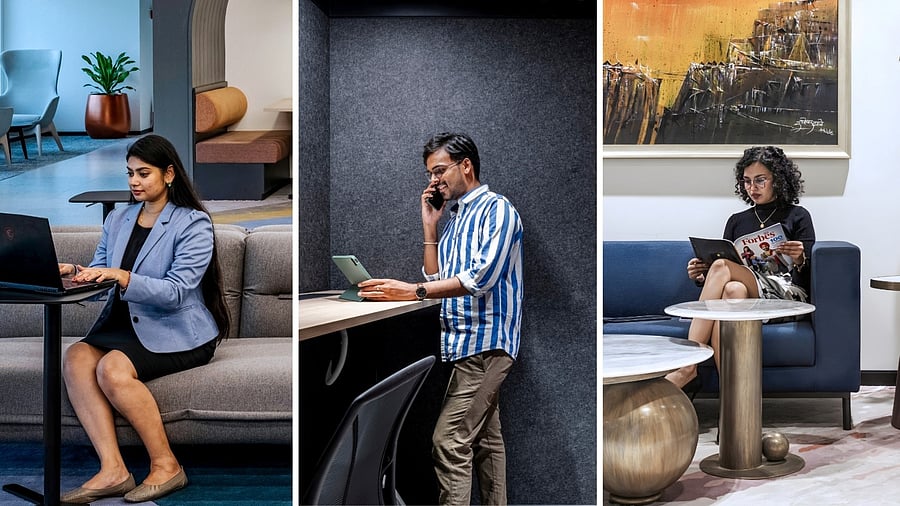
Image Credits: Zyeta
At 31, Amara, a UX designer known for her razor-sharp focus, battles daily to tune out the flood of chaotic sounds that cascade through her open office. Every clack of a keyboard or sudden ring slices into her concentration, leaving her drained long before the day’s end. 40-year-old Rafael, a data scientist, faces his own war: the harsh glare of fluorescent lights and buzzing ambient noise sap the calm required for his complex analyses. Meanwhile, 26-year-old Zara, a software developer, feels boxed in by surroundings that ignore her heightened sensitivity to textures and movement, smothering her creativity. And then there’s Kian, 22-year-old Gen Z and a vibrant digital strategist, whose neurodivergent mind thrives on shifting sensory experiences—adjustable lighting, tactile materials, and dynamic colors feed his spark and sustain his focus in ways conventional offices never could.
Their struggles are not failings; they are signals. These signals reveal a workplace design blueprint outdated and inadequate for the rich spectrum of human neurological wiring. Research indicates that approximately 1 in 7 individuals have neurodiverse traits, highlighting the critical need for workplaces to create inclusive environments that support a wide range of cognitive styles.
This is where sensory immersion and neurodiversity-informed design answer the call, creating spaces that respect these differences and uplift every mind.
What Is Neurodiversity?
Neurodiversity includes conditions like Autism Spectrum Disorder (ASD), Attention-Deficit/Hyperactivity Disorder (ADHD), dyslexia, dyspraxia, and Sensory Processing Disorder (SPD). These conditions affect communication, focus, motor skills, and how individuals respond to light, sound, texture, and space. For example:
People with ASD may excel in detail but find social noise and sudden sounds overwhelming.
ADHD can cause impulsivity and difficulty focusing, especially in cluttered or noisy spaces.
Dyslexia challenges reading but often pairs with exceptional creativity.
Dyspraxia impacts coordination while fostering unique problem-solving approaches.
SPD leads to hypersensitive or hyposensitive responses to sensory stimuli.
Why Designing for Neurodiversity Is Essential
According to the World Health Organization, 15% of the world population lives with some form of neurodiverse condition. This means workplaces excluding these needs inadvertently alienate a significant talent pool.
Prioritizing neurodiverse design boosts:
Employee well-being and satisfaction by reducing sensory overload and anxiety.
Creativity and innovation through embracing diverse thinking styles.
Talent attraction and retention by signaling authentic inclusivity.
Business performance, with studies like Deloitte’s confirming diverse teams outperform their peers financially.
Yet many neurodivergent employees report feeling misunderstood or unsupported, leading to stress and attrition. The gap is glaring—modern workplaces must evolve.
How to Design for Neurodiversity: Hypersensitive and Hyposensitive Spatial Planning
Designing with neurodiversity means embracing a nuanced understanding of sensory needs. Some individuals like Amara and Rafael, are hypersensitive; their sensory receptors are easily overwhelmed, requiring calm, controlled environments. Others like Kian, are hyposensitive, needing elevated sensory input to thrive and stay engaged.
Spatial Zoning and Gradients of Sensory Input
Successful workplaces craft a spectrum of microenvironments that range from low to high sensory stimuli, allowing employees to migrate in response to their changing needs. These spaces are carefully sequenced from bustling collaborative hubs near entry points, rich with colors and textures for hyposensitive sensory seekers, to quiet, private sanctuaries nestled deeper within, favoring gentle tones and minimal stimuli for hypersensitive workers.
Hypersensitive-Friendly Spaces
Calm, neutral palettes: Soft, muted colors reduce visual noise.
Controlled acoustics: Sound-absorbing materials and white noise systems mitigate auditory distractions.
Enclosed focus zones: Small, private rooms provide refuge from overstimulation.
Natural elements: Biophilic design incorporating plants and natural materials fosters calm.
Hyposensitive-Enriched Environments
Dynamic color schemes: Bright, invigorating hues stimulate attention.
Textured and tactile surfaces: Engaging materials invite exploration.
Adaptive lighting: Tunable LED systems allow variation in intensity and color to energize and support creative work.
Activity hubs: Zones promoting movement, discovery, and sensory play to keep hyposensitive employees engaged.
Flexible Furniture and Personal Control
Furniture that supports diverse postures and work modes lets employees physically tune their environment. Giving people control over lighting, sound masking, or privacy screens further enables self-regulation—crucial for neurodiverse sensory needs.
Spatial Sequencing and Wayfinding
Thoughtful sequencing of spaces provides a predictable rhythm essential for many neurodivergent individuals sensitive to abrupt changes. Incorporating landmarks, gradual sensory transitions, and clear visual cues helps everyone orient themselves and feel secure moving across office zones.
This layered, human-centric approach to spatial planning nurtures inclusivity by respecting all levels of sensory sensitivity—offering choice, comfort, and control so people can bring their best selves to work.
Case Study
The following case study illustrates how two prominent Bengaluru offices—LinkedIn, the global professional networking platform, and 7-11, the international retail convenience leader—were designed with neurodiversity and sensory immersion principles by Zyeta, emphasizing acoustic zoning and adaptive lighting to enhance employee well-being and productivity.
At LinkedIn Bengaluru, Zyeta employed detailed acoustic landscape mapping to analyze sound flow within the hybrid office. This informed a deliberate balance between “hot” zones—vibrant, collaboration-driven spaces—and “cool” zones—quiet, enclosed areas featuring soundproofing and soft materials. This zoning empowers employees to choose settings matching their sensory needs, reducing cognitive overload and supporting focused work.
In the 7-11 GSC’s Bengaluru office, dynamic RGB LED lighting systems were integrated, programmed to enrich the sensory environment, catering particularly to younger neurodiverse workers who thrive with customizable stimuli. Together, these design strategies provide a spectrum of sensory experiences—from energized collaboration to tranquil focus—ensuring inclusivity for both hypersensitive and hyposensitive individuals, enhancing overall engagement and workplace satisfaction.
In Summary
Returning to Amara, Rafael, Zara, and Kian—their daily battles in conventional offices reveal the urgent need for change. With design strategies rooted in neurodiversity and sensory immersion, workplaces can shift from sources of stress to supportive ecosystems that honor each person’s neurological wiring. This is the power of neurodiversity-informed design: creating inclusive spaces that offer choice, control, and comfort.
For workplaces ready to rethink how environments shape experience and productivity, the journey begins by listening to diverse cognitive voices and designing spaces that truly feel right—for every mind, every mood, every moment.