Across the world, cats pad through art history with velvet paws. In ancient Egypt, Bastet purrs from temple walls, sleek and divine. Japanese ukiyo-e prints celebrate mischievous bakeneko, tails twitching with magic. Art in West Asia hides felines in tilework and poetry, elegant and aloof. European painters, from Chardin to Manet, nap cats beside bread and the bourgeoisie. Modern memes crown them emperors of the internet — especially, the orange cats of the world.
Everywhere, artists agree: cats sit, stare, judge, and somehow become immortal. They knock over time, chase light, curl into symbols, and leave whiskered signatures on culture worldwide.
An ongoing exhibition in Bengaluru pays homage to these very creatures. The Many Lives of the Cat — a delightfully eclectic exhibition that opened in November at the Museum of Art and Photography (MAP).
On until March 29, the exhibition takes as its subject a much-loved muse: the cat. But this is no ordinary pet retrospective. At once scholarly, playful, historical, and deeply human, the show uses the feline to unravel Indian visual culture across centuries and styles, all while paying heartfelt tribute to the legendary art historian Professor BN Goswamy.
Goswamy was not, by his own admission, a cat lover. Yet in his final published book, ‘The Indian Cat: Stories, Paintings, Poetry, and Proverbs’, he explored the animal’s appearances in Indian art, literature, poetry and proverbs with wit and warmth. For MAP, the book became the conceptual heartbeat of the exhibition. “It felt important to honour that relationship,” the show’s curator, Khushi Bansal, explains — both to celebrate Goswamy’s monumental scholarship and to invite visitors into Indian art history through something universally familiar.
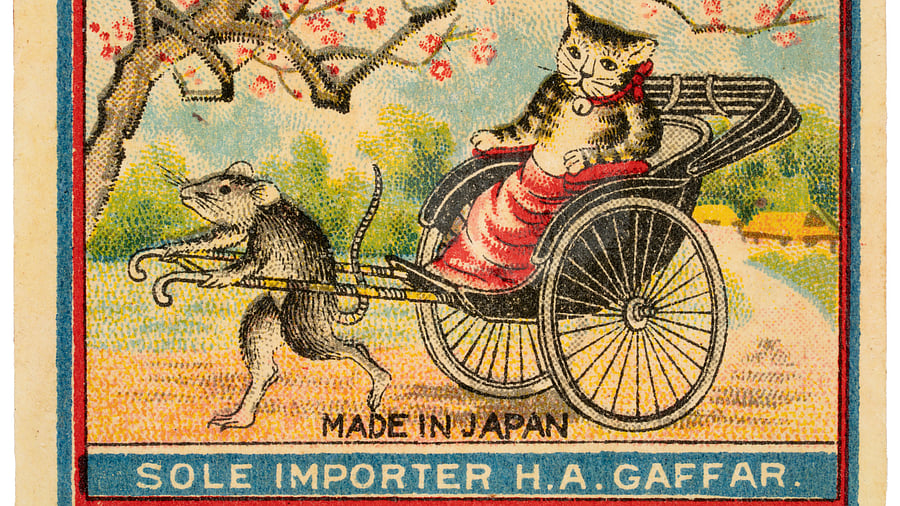
Walking through the exhibition feels like tiptoeing into a whimsical, whiskered dream. The gallery greets you with cats lounging, prowling, and plotting across centuries of Indian art, from delicate miniature paintings to bold modern canvases and even quirky matchbox covers.
What distinguishes The Many Lives of the Cat is its thematic boldness. The exhibition doesn’t simply present works featuring cats; it stages a narrative arc across distinct sections, each tracing a different life of the feline figure. From the affectionate companion curled on a lap to the mischievous marauder knocking textiles askew, from political satire to mythic wildness, the cat becomes a lens through which India’s visual and social histories come into focus.
Works by artists such as Jamini Roy, K G Subramanyan, Chandana Hore, and Bhupendra Baghel show cats in states of grace, and subsequently in glorious absurdity.
A personal favourite of mine is a painting by Ratheesh T. Rendered in a moody, immersive palette, the painting captures a black panther gliding through a dense thicket of oversized leaves, their veins etched in deep greens and bruised reds. The foliage closes in, creating a near-surreal jungle that feels both intimate and foreboding. With its luminous yellow eyes and taut, deliberate stance, the panther embodies quiet power and vigilance, anchoring the composition in a moment of suspended tension and untamed wilderness. A faint lunar reflection, hovering at the edge of the frame, heightens the sense of mystery.
In Mughal and Rajput miniatures, cats often appear alongside parrots and other creatures; sometimes they loom large, not merely as witnesses to palace life but as active participants in visual storytelling, the curator points out. In one piece, a feline’s oversized parrot companion evokes unexpected spatial play, hinting at nuanced relationships between form, perspective, and narrative.
The final section of the exhibition is dedicated to the ‘Fierce Cat’ — the predator. It ranges from textile souvenirs gifted in post-Partition India, hinting at turbulent histories, to narratives drawn from myth and folklore where cats and tigers intersect with stories of heroism and divine intervention. A hand-painted Ganjifa card deck, traditionally used in gameplay, evokes mythic battles between tiger and lion, layered with symbolic meaning.
Throughout, Goswamy’s voice accompanies the works. Extended labels quote passages from his book, offering interpretive context and playful reflections on cats’ many roles, from poetic subject to philosophical figure. Khushi points out that this juxtaposition of scholarly text and visual imagery allows visitors to absorb a bit of art history simply by looking — and, at times, laughing— making the exhibition unexpectedly accessible.
The Many Lives of the Cat reminds us that even the most familiar figures in our lives, those that leap into our laps and our hearts, carry deeper histories and meanings in the realm of art.