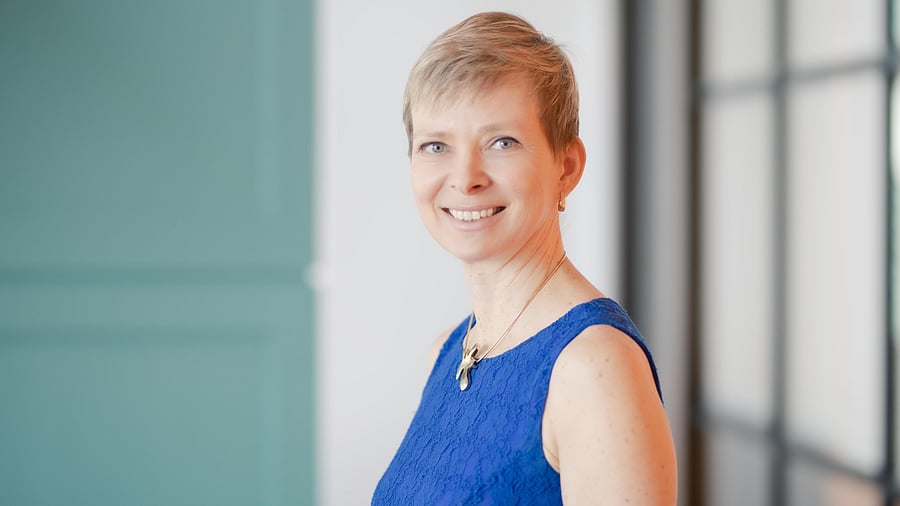
Credit: Special Arrangement
“We’re making great progress,” the CEO said in a meeting with his senior leaders. I looked around to see just one woman besides me, and only people with fair or fairly light skin. Progress, I thought, “can be very subjective.” The comment was followed by a familiar refrain: “We do have diversity of thought — look at all the degrees in the room! Engineering, chemistry, business.” He then highlighted the nationalities and socio-economic backgrounds present. But to me, “diversity of thought” in a room full of men rings an alarm.
Because let’s be honest: the real conversations still take place on the golf course, over beers, or in WhatsApp groups sans women. Those networks remain tight and male. The boys still bring along their protégés. And the rest of us? We’re still trying to break through the golf course ceiling. If that’s “progress”, we need to aim higher.
Meanwhile, women are leading the Diversity, Equity, and Inclusion (DEI) work — company-wide committees, employee resource groups — unpaid. I’ve lost count of how many times I’ve heard companies ask: “How do we get men involved in our diversity and inclusion committees?” Some even suggest, “Maybe we should pay them to join the DEI committee.” Pay men to do the work women have been doing unpaid for years? It would be laughable if it weren’t so insulting. Women are already project managers of the unpaid labour at home — childcare, elder care, the emotional calendar, the endless life admin.
And now, in the workplace, we’re expected to shoulder the unpaid burden of diversity too?
Evolution or revolution?
History reminds us that sometimes a single bold act changes everything. Rosa Parks, a 42-year-old seamstress, refused to give up her seat to a white man one December evening in Alabama in 1955. Her defiance sparked a seismic shift in the civil rights movement.
Yet for every Rosa Parks, we need thousands taking an evolutionary step — small, daily actions that push the envelope. Like speaking up when someone is dismissed for being the “wrong profile” — too dark-skinned, too outspoken, too working-class, too female. And let’s not underestimate what happens when we set targets and commit to them. In 2016, an Australian mining company set a goal: 40 per cent of new hires would be women by 2025.
At the time, only 17 per cent of their workforce was women. Today, in one of the world’s most male-dominated industries, they’re just a few hires away from reaching that goal.
The same was true when Ireland legalised gay marriage in May 2015. It was revolutionary, built on years of quiet evolution. That bold decision opened hearts, shifted norms, and normalised equality.
What’s the real revolution?
We don’t have to wait for the perfect revolution. We need bold leadership and the courage to act.
Evolution places responsibility on the individual — you be more inclusive, you speak up. Without systemic change and top-down commitment, the already overburdened need to carry the weight for others.
Maybe, the real revolution is to stop calling equity “radical”and start calling it necessary.
(The writer is a leadership coach, author and gender equity advocate, helping organisations cultivate inclusive and authentic leadership.)