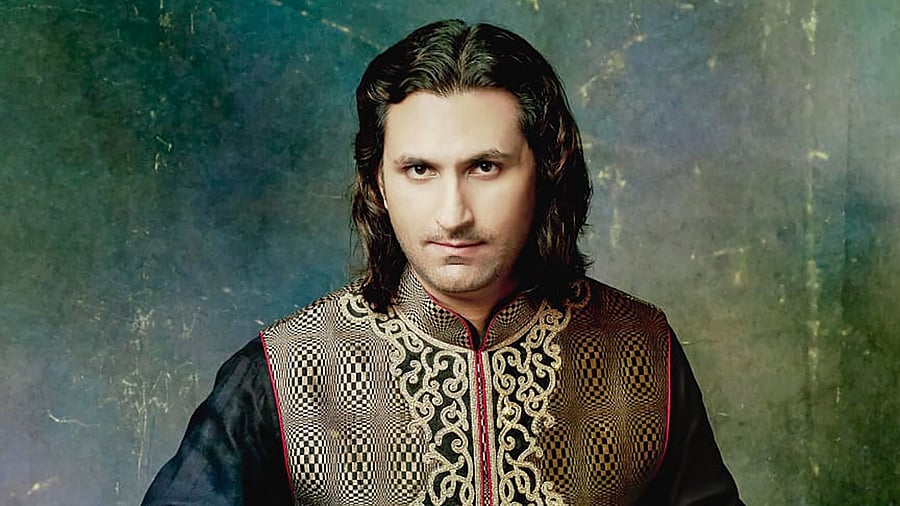
Rahul Sharma.
Credit: Special Arrangement
A lot has changed when it comes to santoor music, says Rahul Sharma. The santoor player is performing in Bengaluru on Sunday. Excerpts from an interview:
Since your father, Pandit Shivkumar Sharma, introduced the santoor to classical music, how has its status changed?
The santoor was a little-known Kashmiri instrument primarily used in the Sufiana style of music. My father had a vision for it; he created a new language for others to follow. As a result, santoor has become an intrinsic part of Indian classical music. Since then, it has also found a place in various other genres. I have experimented with electronica and collaborated with Grammy-winning artistes like Deep Forest. The santoor led the Cape Town Philharmonic Symphony Orchestra, a milestone for this instrument.
You have also worked on non-classical and thematic work. How do you transition between these two styles, given that one is raga-bound and the other is not?
When it comes to performing on stage, each raga typically lasts an hour. This process is similar to how a painter works on a canvas, gradually adding colours and details. A raga unfolds similarly, revealing various permutations and combinations, rooted in improvisation and not rehearsed music. While composing for Richard Clayderman, I learnt the importance of sticking to notation. Conversely, when I play with Kenny G, who is accustomed to jazz improvisation, there is more freedom. I might leave a gap of about 20 bars for him to improvise before I join in.
How has film music influenced your approach to classical music, and vice versa?
I worked for ‘Mujhse Dosti Karoge’ and was fortunate to have Lata Mangeshkar sing three or four of my compositions. It taught me a lot about the craft. Creating film music is not just about quality, but also the director’s vision. It is completely situational. The melody should be catchy enough for even someone like a rickshaw driver to hum. It is different from the classical genre. They are two distinct worlds.
What is your wishlist to make independent music more popular and accessible?
Today, an artiste can reach fans across the globe. When you receive your year-end data on platforms like Spotify, it might show that your music was played in 178 countries. That is incredible! Previously, artistes had to rely on music companies. Audiences want to engage with performances. In the past, there seemed to be room only for Bollywood or regional music, but now there is more variety. I think we are on the brink of something even greater in the next two to three years.
Sharma will perform as part of ‘Uttar Dakshin’ on December 21, 6 pm at Chowdaiah Memorial Hall, Vyalikaval. Tickets online.