
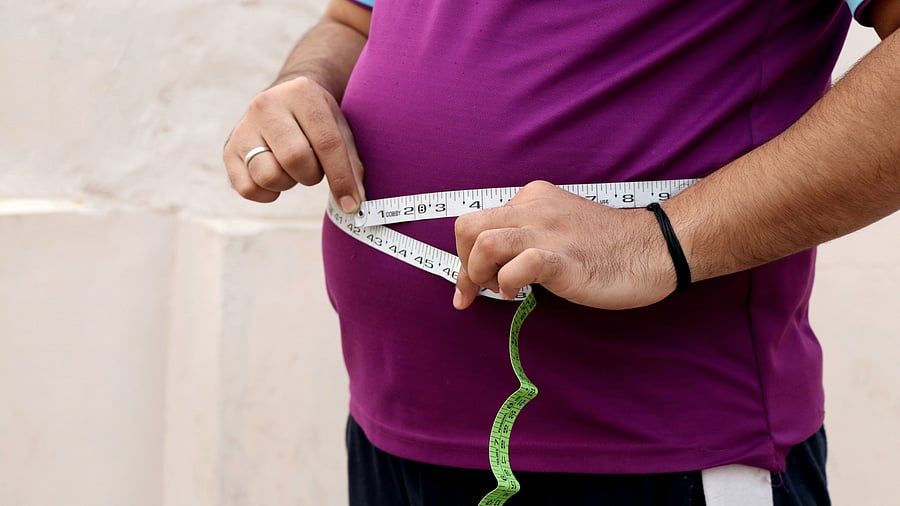
The pattern of obesity in India differs notably from that observed in Europe, with Indians tending to develop more central (abdominal) obesity.
Credit: iStock Photo
New research by the University of Sheffield and the University of Nottingham has found that the waist-to-height ratio (WtHR) is a more accurate and reliable indicator of age-related obesity risk than BMI, which can mislead older people and those with less muscle mass into believing they are not at risk of obesity.
The waist-to-height ratio, on the other hand, is a lot easier for people to understand and remember than more complex BMI categories, particularly in children. A good indicator of a healthy weight is if your waist measures less than half your height. The WtHR provides a better representation of visceral fat, which is stored around the abdomen and exerts greater effects on internal organs, which is why it is more important for health.
Analysing the obesity trends in England between 2005 and 2021, they compared the BMI alongside other waist-related measures, including the waist-to-height ratio.
Waist-to-height ratio is a lot easier for people to understand and remember than more complex BMI categories, particularly in children. People can easily check their own risk with a measuring tape. If your waist is less than half your height, that’s a good indicator you’re at a healthy weight.
“BMI is a well-understood measure. However, it could be misleading for people, particularly older people and those with less muscle mass, into thinking they are not at risk of obesity,” said co-author Laura Gray from the University of Sheffield.
Unlike BMI, which tends to rise through middle age and then decline later primarily due to muscle loss, the WtHR continues to increase steadily, better reflecting how obesity-related diseases such as heart disease, stroke and dementia could increase in older adults.
“Our findings show that increases in obesity have been largely driven by environmental changes over time, not just individual behaviours, which means we need broader systemic action with policymakers addressing the food environment,” she said.
The likelihood of obesity also increases with age, suggesting that an ageing population could further increase the prevalence. “If we under-diagnose obesity in older adults because we’re relying solely on BMI, then this could mean we fail to identify large proportions of people who are at high risk and can benefit from healthcare interventions,” she added.
Asked whether WtHR is used in India, Gray told DH, “While there is quite a bit of evidence for the use of waist-to-height ratio in children in Indian populations, there doesn’t seem to be much research in this area on older adults.”
The study has appeared in the International Journal of Obesity.