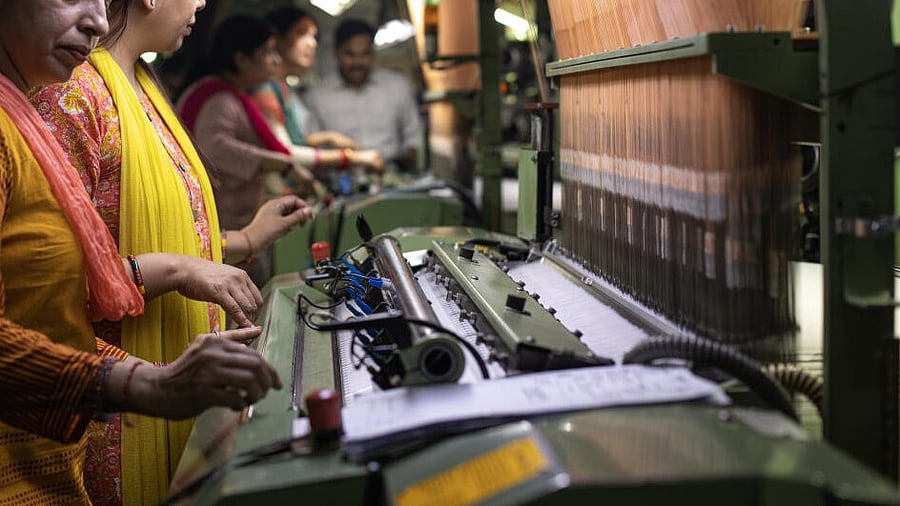
A central feature of the Survey’s labour analysis was the e-Shram portal, designed to register unorganised workers and link them to social security and employment services.
Credit: iStock Photo
New Delhi: India’s labour market has shown that female participation in the workforce has risen sharply, data furnished by the latest Economic Survey 2025–26, tabled in Parliament by the Finance Ministry on Thursday showed.
The Survey highlighted a “positive trend in female labour force participation” in recent years. Data released in the Survey show that the Female Labour Force Participation Rate (FLFPR) increased from 23.3% in 2017–18 to 41.7% in 2023-24. As per the Survey, unemployment among women has also declined in the same period, with the female unemployment rate reducing from 5.6% in 2017-18 to 3.2% in 2023-24.
“While this marks a significant improvement, women’s overall participation remains lower than that of men,” the report said, adding that it will require targeted policy support to sustain and deepen further gains.
The Survey showed that overall employment levels and labour force engagement have strengthened, with the Periodic Labour Force Survey showing gains in key indicators across sectors.
A central feature of the Survey’s labour analysis was the e-Shram portal, designed to register unorganised workers and link them to social security and employment services. As of January 2026, the portal had recorded registrations of over 31 crore unorganised workers, with women constituting around 54% of all registrants.
The Survey underlined the dual burden of paid and unpaid work borne by women as a key constraint on labour market participation. It stated that women spent “about 363 minutes a day on unpaid activities, while men spent around 123 minutes a day on unpaid activities.” “While women participating in paid work contribute a considerable amount of time, their overall participation remains lower than that of men,” the report said.
The Economic Survey also flagged the importance of enhancing healthcare access, care infrastructure and workplace support to sustain and deepen women’s participation in paid work. Women, it noted, spend significantly more time on unpaid activities compared with men. Such support systems, including “availability of childcare facilities and crèches” and “flexible work policy,” were highlighted as necessary complements to broader labour market reforms.