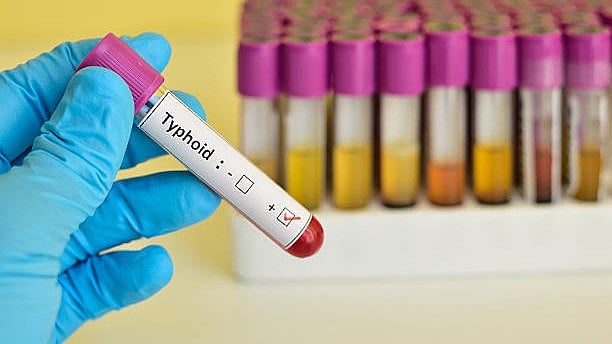
Image for representational purposes.
Credit: iStock Photo
Ahmedabad: Days after typhoid breakout in Gujarat's capital city Gandhinagar due to consumption of contaminated water, the national National Human Rights Commission (NHRC) on Thursday took suo motu cognizance of the case and has sought a report from the state government in two weeks.
Quoting a media report, the NHRC stated, "Reportedly, the surge in the patients of Typhoid has exposed serious flaws in the newly laid water supply system in Gandhinagar. Seven points of leaks have been identified in the water pipeline network causing sewage to mix with the drinking water supply."
Issuing notice to the state chief secretary, the commission has sought a detailed report on the matter within two weeks. "The Commission has observed that the contents of the news report, if true, raise serious issues of violation of the human rights of the victims. Therefore, it has issued a notice to the Chief Secretary, Government of Gujarat, calling for a detailed report on the matter within two weeks," the notice stated.
It has instructed the authority to include in the report "the present health status of the out-door and in-door patients of typhoid and the steps taken or proposed to ensure such incidents do not recur."
The notice mentions a 30 bed pediatric ward opened in the Gandhinagar Civil Hospital to handle the increasing number of typhoid patients, mostly children.
They were admitted to the hospital with high fever and gastrointestinal symptoms. Health officials had stated earlier that most of the patients were aged between 1 and 16 years.
According to health officials, most of the patients are between ages of 1 and 16. They said that the reason behind the epidemic was water contamination caused by pipeline leakages in Gandhinagar’s Sector 24, 28, and Adivada areas.
The state government had said that following the outbreak, survey teams of the Gandhinagar Municipal Corporation covered 20,800 households, and preventive measures, 30,000 chlorine tablets and 20,600 ORS packets were distributed.