
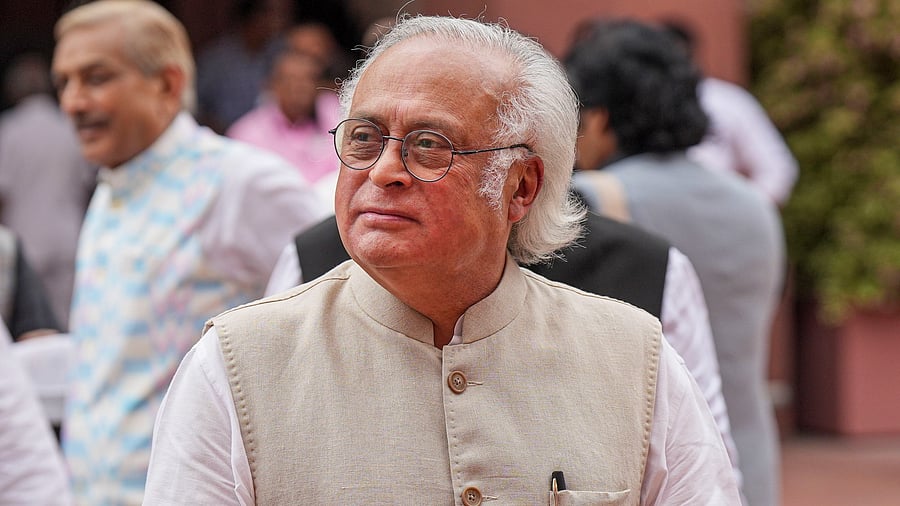
Congress general secretary in-charge communications Jairam Ramesh
Credit: PTI Photo
New Delhi: Congress on Wednesday used the recently-published draft labour policy referring to 'Manusmriti' as something that formed the basis of labour governance in the country to accuse the Modi government of returning to the controversial text, which is "in keeping with the RSS’ most cherished traditions".
General Secretary (Communications) Jairam Ramesh said the Modi government's draft 'Shram Shakti Niti 2025' released earlier this month for public feedback "explicitly" claims that the Manusmriti embeds "the moral basis of labour governance within India's civilisational fabric, centuries before the rise of modern labour law".
"This return to the principles of the Manusmriti is in keeping with the RSS’ most cherished traditions. After all, it had attacked the Constitution of India soon after it was adopted - on the grounds that it did not derive inspiration from the ideals and values of Manu as embodied in the Manusmriti," he posted on X.
According to the draft policy, India’s understanding of labour "extends far beyond its economic dimension -- it embodies a sacred and moral duty that sustains social harmony, economic well-being, and collective prosperity.
"In the Indic worldview, work is not merely a means of livelihood but a contribution to the broader order of dharma (righteous duty). This perspective recognises every worker - whether an artisan, farmer, teacher, or industrial labourer - as an essential participant in the cycle of social creation," the draft said.
"Ancient texts such as the Manusmriti, Yajnavalkyasmriti, Naradasmriti, Sukraniti, and Arthashastra articulated this ethos through the concept of rajadharma, emphasising the sovereign’s duty to ensure justice, fair wages, and the protection of workers from exploitation. These early formulations embedded the moral basis of labour governance within India’s civilisational fabric, centuries before the rise of modern labour law," it added.