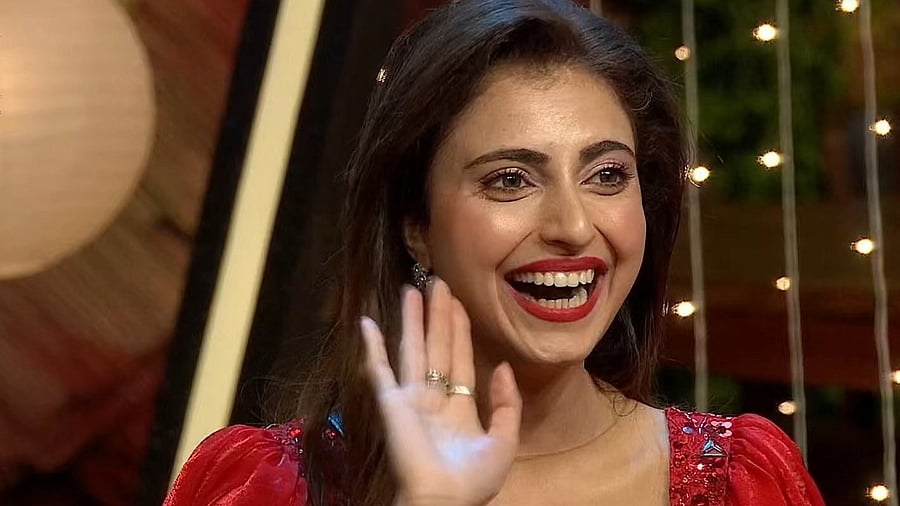
Credit: X/@its_SanyHere
Srinagar: When Farhana Bhatt walked out of the Bigg Boss 19 house this year as the first runner-up, it wasn’t just a personal triumph.
For many young women in Kashmir watching her journey unfold on one of India’s biggest reality shows, her rise symbolised something shifting quietly, but decisively, back home.
At 27, Farhana belongs to a growing generation of Kashmiri women who are stepping beyond traditional expectations, seeking visibility in spaces once considered too distant or too controversial. Her story mirrors that change.
Born on March 15, 1997, in Srinagar, Farhana grew up in a conservative Kashmiri Muslim household where acting was not a path families typically encouraged. But alongside the hesitations stood unwavering supporters—her mother and her grandfather—who pushed her to believe she could build a life in performance. Her sisters, Soliha and Fiza, also remained part of her inner circle of cheerleaders.
That backing mattered, because in the valley, ambitions in cinema and television still often run into cultural resistance. Many young women quietly shelve dreams before they take shape. Farhana did the opposite.
After completing a degree in Mass Communication and Journalism at the Government College for Women, Srinagar, she chose to be the face on screen rather than the voice behind it. She left Srinagar for Mumbai, joining Actor Prepares, the acting school run by Anupam Kher. Here she studied theatre, camera acting and the Navarasa techniques that helped deepen her emotional range. It was the foundation she needed to break into the film industry.
Her debut came in Sunshine Music Tours & Travels (2016), followed by a notable role as Jasmeet in Imtiaz Ali’s Laila Majnu (2018). She later appeared in Notebook (2019), and gradually expanded her presence across streaming platforms with projects such as The Freelancer on Disney+ Hotstar, and independent titles like Country of Blind and Heaven of Hindustan.
But it was Bigg Boss 19 that placed her firmly in the national gaze. Her early eviction could have ended her run abruptly, yet the show’s secret-room twist brought her back, and she fought her way to the finale. Her composure, restraint and ability to hold her ground struck a chord with viewers, making her one of the season’s most recognised faces.
Farhana’s rise reflects a broader trend visible across Kashmir today: young women venturing into acting, sports, entrepreneurship, content creation and public life—fields once considered off-limits.
The valley has seen more female actors, fashion entrepreneurs, musicians, pilots and athletes emerge over the last decade than in previous generations combined. Many of them, like Farhana, come from homes where the idea of a daughter choosing a public-facing profession was once unimaginable.
Media outlets estimate her net worth in the Rs 1.5–3 crore range, a sign of how swiftly new opportunities are opening for Kashmiri women who push boundaries.
For Farhana, the journey from Srinagar’s old city to India’s most-watched reality TV finale is not just a personal arc, it is part of a larger story. A story of Kashmiri women who are claiming space, visibility and careers on their own terms, redefining what is possible in a place that once told them otherwise.
And like many of them, Farhana Bhatt appears to be only getting started.