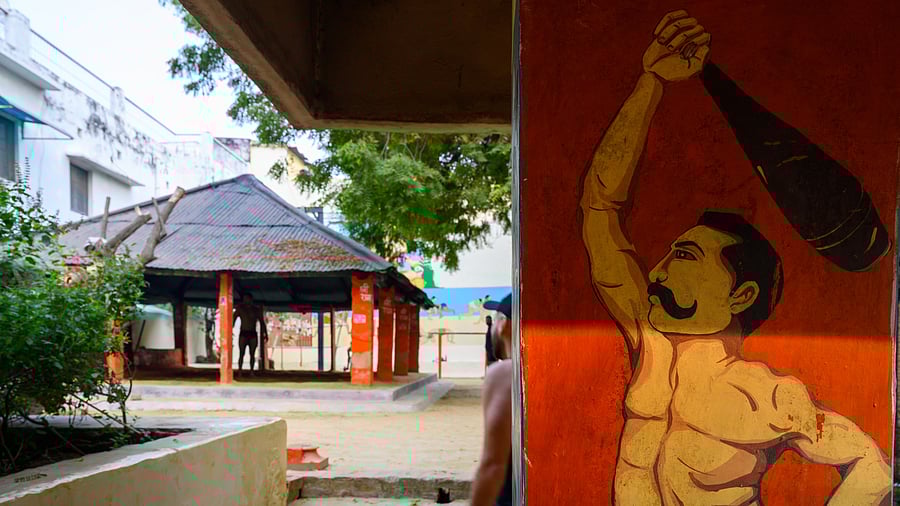
Representational image of a wrestling ground.
Credit: iStock Photo
Srinagar: Imagine a wrestling match where the arena is usually bare earth, the rules are centuries old, and the loudest applause comes from entire villages packed around a mud pit.
That traditional sport — known as dangal — is now making an unlikely leap into a floodlit stadium. On December 17, Jammu will host its first International Dangal, introducing the Rustam-e-Jammu Kashmir title at the Maulana Azad Stadium.
Dangal is India’s indigenous form of wrestling, far removed from televised professional bouts. Wrestlers, called pehalwans, compete using sheer strength, technique and endurance, usually without elaborate equipment or weight divisions. In Jammu’s plains — in districts such as Kathua, Samba and parts of Udhampur — these contests have traditionally been held during village fairs and religious festivals, often lasting late into the evening and drawing huge crowds.
Now, that rural tradition is being brought to a larger stage. Organised by the Jammu and Kashmir Sports Council in collaboration with the J&K Indian Style Wrestling Association, the international dangal aims to give structure and visibility to a sport that has quietly survived decades of political unrest and changing lifestyles.
While Kashmir is often associated in national discourse with conflict, Jammu’s wrestling culture has continued largely out of the spotlight, kept alive by local akharas and family lineages of pehalwans.
The highlight of the event will be the Rustam-e-Jammu Kashmir title, one of the most prestigious honours in Indian-style wrestling. The term “Rustam”, drawn from Persian legend, symbolises exceptional strength and valour. The title bout will be open to wrestlers weighing above 85 kg, with the winner set to receive ₹50,000, along with the traditional Gurj and Patta, symbols of supremacy in dangal culture. Other finalists will also receive cash prizes.
Adding to the appeal is the international line-up. Organisers say over 100 wrestlers from India and abroad, including from Iran, are expected to compete in open-category matches, offering local wrestlers rare exposure to international opponents.
By hosting the event at the Maulana Azad Stadium — a venue better known for modern sports — authorities hope to blend tradition with modern infrastructure and attract a wider audience. With free entry expected for spectators, the event is also meant to be a public celebration, introducing audiences beyond Jammu and Kashmir to a living sporting tradition now stepping into the national spotlight.