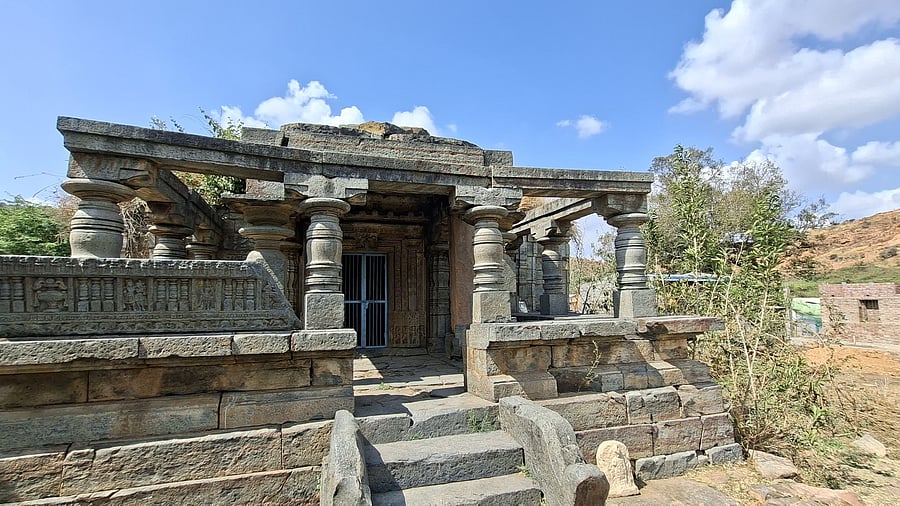
Belagavi: Ancient temples of archaeological importance at Hooli village in Savadatti taluk, which once used to be a seat of Shaivism, face the threat of extinction if necessary measures to conserve them are not taken.
Temples from 11th and 12th centuries from the rule of Kalyani Chalukyas are a visual delight, but are in a poor state, covered by bushes and shrubs and due to encroachments.
Residents say that the village has 101 temples and as many wells. Lack of maintenance has resulted in overgrowth around the temples and the wells. Encroachments by local residents pose a threat to the monuments.
The temples have huge potential for tourism, but they aren't known much to the outside world, due to the lack of enough publicity.
The Archaeological Survey of India (ASI) has taken over the Panchalingeshwara temple.
But the Bhavanishankara, Andhakeshwara, Kalameshwara, Madaneshwara, Tarakeshwara, Kashi Vishwanatha, Beeradeva, Suryanarayana and Hooli Sangameshwara Ajjanavaru temples are yet to be included in the list of monuments of the ASI or the state archaeology department.
ASI museums director Smita Reddy told DH that the temples at Hooli were ancient and need to be conserved.
"The ASI has taken over Panchalingeshwara temple and efforts are on to include other temples in the list of the state archaeology department to get them declared as protected monuments," she said.
"We have written letters to the tahsildar as also the Savadatti and Hooli gram panchayats (GPs) to clear encroachments from the premises of temples. After gold was found at Lakkundi in Gadag, we fear that treasure hunters may damage temples at Hooli too. It is myth and imagination that treasure is hidden under idols in ancient temples," she said.
Mahadevappa Kalli, the panchayat development officer of Hooli GP, said, "We get the overgrowth cleaned twice a year and also a keep watch on the temples to ensure that none damages the structures. We received a letter from ASI on January 1, regarding measures to clean the premises of temples. At the local body meeting on January 27, it was decided to clear the overgrowth".