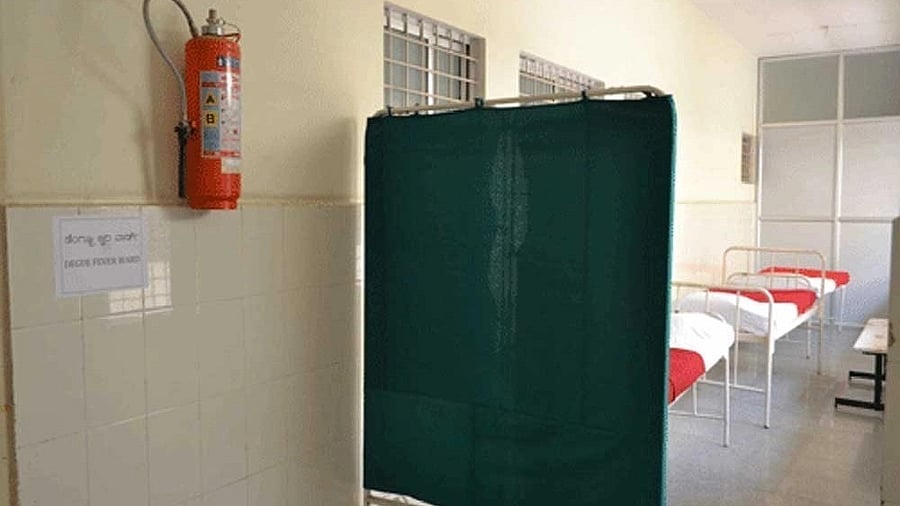
Representative image showing a hospital ward.
Credit: PTI File Photo
Bengaluru: In a major move to protect patients from hidden costs and confusing medical bills, the Bureau of Indian Standards (BIS) has introduced a new system for hospital billing. The new guidelines aim to make hospital charges transparent, easy to understand and uniform across the country.
The decision comes after a long-standing demand from citizens. A study by community platform LocalCircles found 53% of patients in India did not receive fully itemised bills.
Many were forced to pay lump-sum package charges without knowing what they were actually being billed for. Also, 74% of people surveyed wanted the government to mandate a fixed billing format to prevent overcharging.
The survey received over 35,000 responses from citizens in 329 districts. As much as 64% of the respondents were men. A total of 42% were from tier 1, about 22% from tier 2 and 36% respondents were from tier 3, 4, 5 cities and rural districts.
The standard introduces the use of Unique Health ID (UHID) on bills to facilitate better tracking of medical records. Additionally, the final bill must include names and designations of doctors involved in treatment and must be signed by an authorised signatory and the patient or his/her next of kin.
The BIS said inconsistent billing had damaged the trust between patients and healthcare providers. By standardising format, the government hopes to reduce disputes and ensure patients are charged for only services they receive.
Dr Ajith, chief medical officer of a leading hospital, told DH that while itemised billing was becoming the norm, compliance remained inconsistent in the city.
Itemised billing
He said NABH (National Accreditation Board for Hospitals & Healthcare Providers), an organisation under Quality Council of India, mandated itemised billing as part of its accreditation protocol.
While most corporate hospitals adhere to these transparency standards, other healthcare facilities have yet to fully implement them.
“It is good to see common citizens raise issues and finally a government body taking it from a public concern to a solution,” said Sachin Taparia, founder of LocalCircles. While currently voluntary, “we are hopeful that the standard will become mandatory for all hospitals by 2027,” he said.