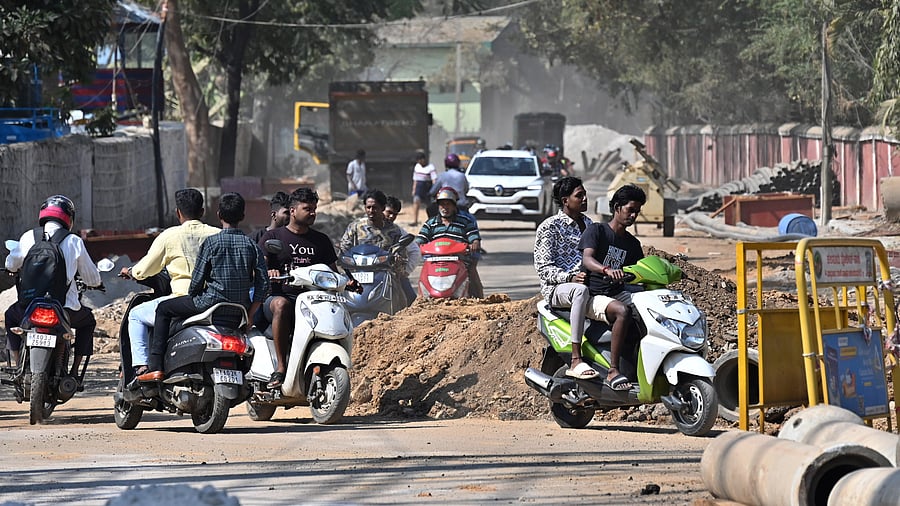
Commuters on two-wheelers inhale more toxic air.
Credit: DH File Photo
Bengaluru: Doctors in the city are reporting rising lung infections and skin allergies, attributing the surge to prolonged exposure to dust and pollutants from ongoing construction.
They say fine particulate matter from construction sites, when inhaled over time, is a serious health concern, causing lasting lung and skin damage.
Dr Manjunath PH, Consultant Interventional Pulmonologist, said respiratory infections are up among those living near construction work.
“Many patients report constant exposure to construction dust at home or work. Earlier, infections mainly aggravated pre-existing conditions. Now, healthy people are also showing symptoms,” he said.
Pulmonologists say respiratory illnesses, once seasonal, are now common.
Dr Hemanth Kumar M, Senior Consultant Pulmonologist, said ongoing “pollution spikes” are pushing up hospital visits.
“Historically, cases peaked in winter. Now, we see a 20 to 30 per cent rise in emergency visits for acute asthma and COPD year-round. Worryingly, more first-time patients with no history of lung problems present with sudden breathlessness, often mistaken for allergy but caused by pollutant toxicity,” he said.
Doctors flagged the high risk to daily commuters, especially two-wheeler users.
“Prolonged travel in open vehicles raises exposure to PM 2.5 and black carbon. Studies show two-wheeler riders inhale more pollution than car or metro travellers. Masks and avoiding peak hours may help but cannot eliminate risk," said Dr Shivaraj AL, Lead Consultant, Pulmonology.
Worsening skin health
City dermatologists report a spike in pollution-linked skin issues, especially in those in their 20s to 40s.
Dr Ruby Sachdev, Consultant Aesthetic Physician, said patients present with acne, redness, burning and sensitivity even without prior skin disease.
“Symptoms worsen after passing through high-traffic areas or during nearby construction. The skin barrier is breaking down faster, making skin more reactive,” she said.
Dr Priyanka Kuri, Consultant Dermatologist, said, “Clinical reports show real-time skin damage from pollution. Authorities must prioritise dust control, safer construction, and stricter emission norms,” she said.