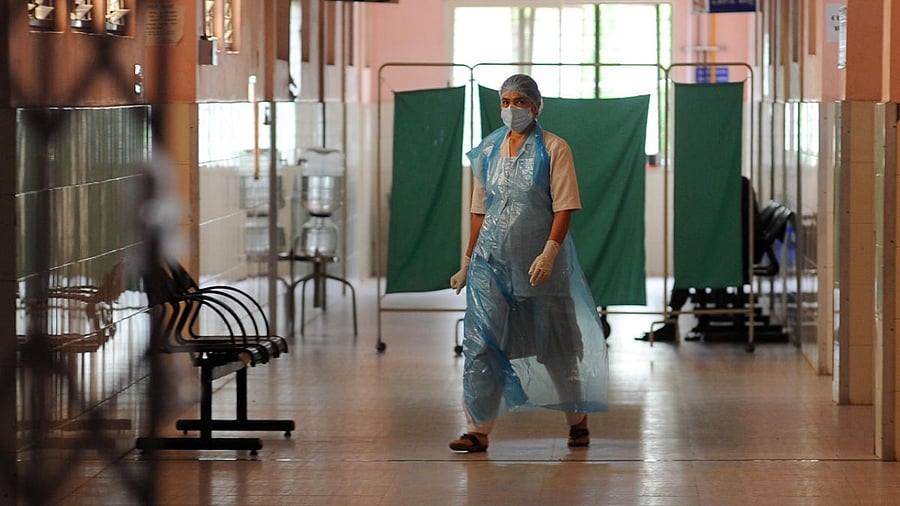
CV Raman General Hospital (in pic)
Credit: DH photo
Bengaluru: A former IT employee in her late 20s was found wandering the streets of Bellandur, living in the shadows of her previous life, while suffering from severe mental illness marked by erotomania delusions and catatonic withdrawal.
Rescued by an NGO, she was admitted to the Emergency Care and Rehabilitation Centre (ECRC) at CV Raman Hospital in Indiranagar for treatment and rehabilitation. Months later, she is slowly recovering and has secured an entry-level job.
Her journey mirrors that of more than 100 homeless people with mental illness who have recovered and rebuilt their lives through the state's ECRC programme.
Four months after the government established ECRCs, 154 homeless patients with mental illness have received treatment and rehabilitation.
The programme is currently operational in Bengaluru Urban, Udupi, Gadag and Yadgir districts and will soon be extended to Chitradurga, Ramanagar, Davangere, Bengaluru Rural and Mysuru.
In Bengaluru Urban, the programme is being run at CV Raman Hospital in association with Aladamara Foundation, a city-based NGO working to provide mental health facilities to homeless people. Patients are identified and brought in by NGOs or police, who hand them over to the hospital.
CV Raman Hospital has allocated 28 beds for the ECRC and provides food and medicines, while the NGO supplies psychiatrists, psychologists and other required manpower.
At the Bengaluru centre, 135 patients — 68 men, 58 women and one transgender — have been treated and rehabilitated so far.
Dr Rajesh KS, hospital medical superintendent, said 32% of patients were diagnosed with schizophrenia, 21% with mental retardation, 14% with bipolar disorder, 8% with depression, and 6% with dementia.
"Thirty-three percent have fully recovered, 50% have shown improvement and others are still under treatment," he told DH.
Of those admitted at the centre, 37% are from Bengaluru, 26% from other districts and 37% from other states.
Health and Family Welfare Minister Dinesh Gundu Rao told DH, "We are planning to open more emergency care and rehabilitation centres as the response has been good. Our ultimate goal is to reunite these patients with their families".