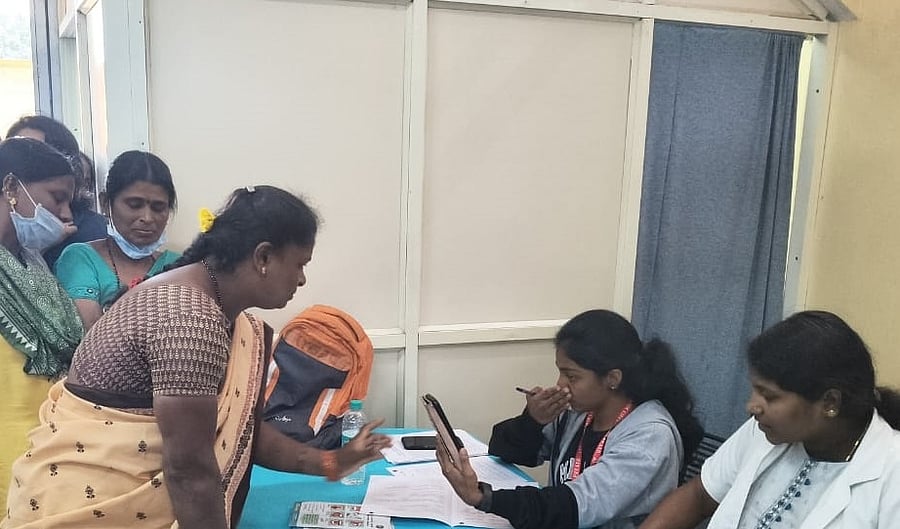
The Indian Cancer Society (ICS) is holding a number of drives all through January to spread awareness about cervical cancer. January is observed as Cervical Cancer Awareness month.
According to data, India reported 1,27,526 new cervical cancer cases in 2022, contributing to 17.7% of overall cancer cases in the country. “While cervical cancer is largely preventable, India continues to report a high burden of cases,” says Kanchan Banerjee of ICS.
What to expect
The Cervical Health Awareness Open Forum will be held on January 20 in partnership with the Rotary Club of Bangalore at the Rotary House of Friendship on Lavelle Road. The event will include a quiz competition on the topic, in addition to a skit on the myths surrounding the disease, put together by medical students. Two survivors and two vaccinated individuals will also share their stories.
In other parts of Karnataka, the ICS will screen 200 women from high-risk groups (in Gadag), provide informative flipcharts to ASHA workers to distribute among women in areas where they work (Kalaburagi) and screen 1,500 women from marginalised communities with limited access to healthcare (across multiple districts).
Cervical cancer prevention is both effective and achievable, says Dr Sundari Nandyala, a gynaecologist. One can prevent the disease by getting regular HPV vaccinations from ages 11-20. To detect it early, it is recommended that women 25 and above undergo HPV DNA screenings once in 5 to 10 years, and pap smears once in three years. “While the vaccination can be taken even after age 20, it is most effective when taken earlier,” she explains.
ICS, which completes 75 years in 2026, was started in Mumbai by Dr Jussawala and Naval Tata. Last year, the Society screened 10,726 women for cervical cancer in Karnataka alone.
Apart from their work with cervical cancer, the Society also conducts community-based cancer awareness programmes on other preventable cancers, detection camps for cervical, breast and oral cancers and counselling sessions for patients. Additionally, they also help patients navigate the process of treatment, provide anti-tobacco education, train frontline health workers and educators, offer financial support and assist with nutritional planning post treatment.