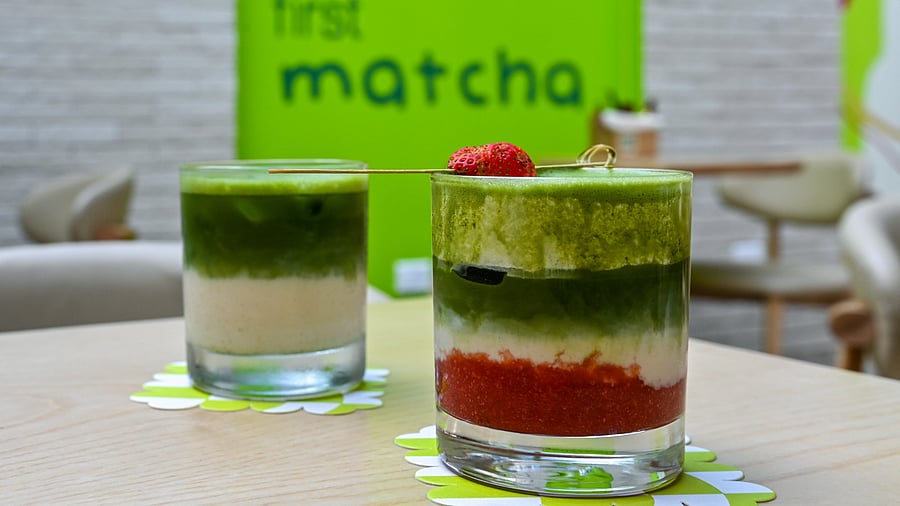
Strawberry and cream matcha is a popular option at Purpose Matcha on Convent Road.
Credit: DH Photo
The unprecedented popularity of matcha has birthed a clutch of Japanese-themed tea shops over the past six months. While matcha pop-ups were all the rage during the first half of 2025, towards the end of the year, we saw permanent shops popping up in areas like Indiranagar, the Central Business District, J P Nagar and Koramangala.
At Turtle Matcha in Indiranagar, they do not aim to ape Japanese tea shops, but instead look to them for inspiration. “We blend the highest grade of matcha with flavours we know will work for Bengaluru’s palate,” says Karishma Lala, who runs the cafe along with her fiance Sachin Rathore.
On the menu are unusual flavours like toasted cinnamon, honey rosemary, and caramel popcorn, their most popular. The organic ceremonial grade matcha they use is imported from Shizuoka in Japan. “We tried a number of samples and picked one that suits Indian palates the best,” she explains.
Female clients
Karishma was hooked after she tried matcha for the first time in Vietnam six years ago. But its popularity over the last two years encouraged her to set up her own store.
The duo began by hosting pop-ups. “From May to October 2025, when we opened our shop, we did about 11 pop-ups,” Karishma recalls. About 70% of their clientele is female and in the 18 to 35 age group. About a kilometre away, Teka — Coffee and Japanese Tea, is another spot that opened towards the end of 2025. It is run by a Japanese national, Haruka Nagahashi, and offers matcha in addition to less popular Japanese teas such as hojicha and genmaicha. The tea leaves are imported from Japan and stone-ground at the shop.
Different grades
It has been three months since Ananya Rao’s Purpose Matcha on Convent Road started welcoming customers. She notes that clientele who are regular matcha drinkers prefer their classic matcha latte, while options like strawberry and cream matcha are popular with most clients. The 40-seater churns out about 30-35 cups of matcha a day on average. “Our repeat customers are clued into Japanese tea culture. We have also trained our staff to educate customers who are interested in matcha,” she says.
The cafe uses three different grades of matcha, which are imported from Uji, Japan. The highest quality is used for classic, non-flavoured matcha drinks, the second highest is used for drinks that incorporate multiple flavour combinations, while the third goes into desserts.
Kaori by Chiran, also in Indiranagar, has noticed an increase in customers looking for less-known Japanese teas such as gyokuro, genmaicha, and hojicha. “Regarded the most premium and carefully cultivated tea in Japan, gyokuro resonates with customers who are interested in refined flavours and slow, mindful consumption,” says Rashmi Govindaraju, who works with Chiran Tea, which runs the shop. The cafe was opened in December 2025 and is currently located within a Japanese restaurant.
Pranit Jay, a resident of Koramangala, first tried matcha eight years ago. Since then, he has been experimenting with it at home. But the sudden popularity of the drink has allowed him to sample newer flavours. He notes that these matcha-focused cafes have menus that suit every budget. “The most expensive matcha I have had was around Rs 450-480, and the most inexpensive was around Rs 180,” he shares, adding, “I also think Bengaluru has an active matcha community, with regular meetups and popups, compared to other metros.”