Credit: Special Arrangement
Many Bengaluru organisations for Persons with Disabilities (PwDs) say Karnataka is among the better states for disability-friendly policies, yet PwDs feel they are denied basic facilities. Metrolife spoke to these organisations about the challenges.
Transport issues
S Babu, deputy director — policy and advocacy, The Association of People with Disability, says mobility in Bengaluru remains challenging. Of the state’s 13.24 lakh PwDs, 2.74 lakh live in Bengaluru Urban and 18,470 in Bengaluru Rural, as per Census 2011. “Despite this number, using buses is not easy,” he notes. Roads and footpaths are not movement-friendly for wheelchair users and the blind, and only a few buses have wheelchair ramps. “Apart from major bus stands, most others lack accessibility,” he adds.
Sensory overload
The needs of those with sensory disabilities are still overlooked, says Divya S Karthik, co-founder of Sakya Foundation. Bengaluru has improved access for people with visual and mobility impairments, but “this is not the case for those with autism, ADHD or sensory processing conditions”, she adds. People with these conditions experience sensory overload from bright lights, loud or crowded spaces, packed metros, and chaotic queues. “Dedicated coaches for people with sensory disabilities could offer calmer travel,” she suggests.
Infrastructure for children
Reuban Daniel, founding trustee and head of operations, PACT India, says most Bengaluru schools are still not inclusive. “City schools rarely have shadow teachers or trained staff. Good schools for PwDs are limited, and the few existing ones are expensive,” he adds.
Classroom infrastructure also falls short. “Classrooms are not designed for sensory needs. Even learning material is rarely inclusive, so children are pushed into special schools, which segregates them from society,” he says.
Therapy, medical needs
Babu notes that physiotherapy at primary health centres is unavailable for PwDs and there is a lack of medical kits for spinal cord injuries. “Patients cannot always turn to private hospitals or NGOs,” he adds.
Divya notes that occupational, speech, and behavioural therapies for children with autism and ADHD are expensive, between Rs 800 and Rs 1,200 for 40 minutes. “Few NGOs specialise in autism, and no government centre offers dedicated support,” she says.
Employment prospects are also limited. “Companies are more willing to hire people with visual, hearing, or mobility impairments, than those with autism or ADHD,” Divya adds.
UDID card
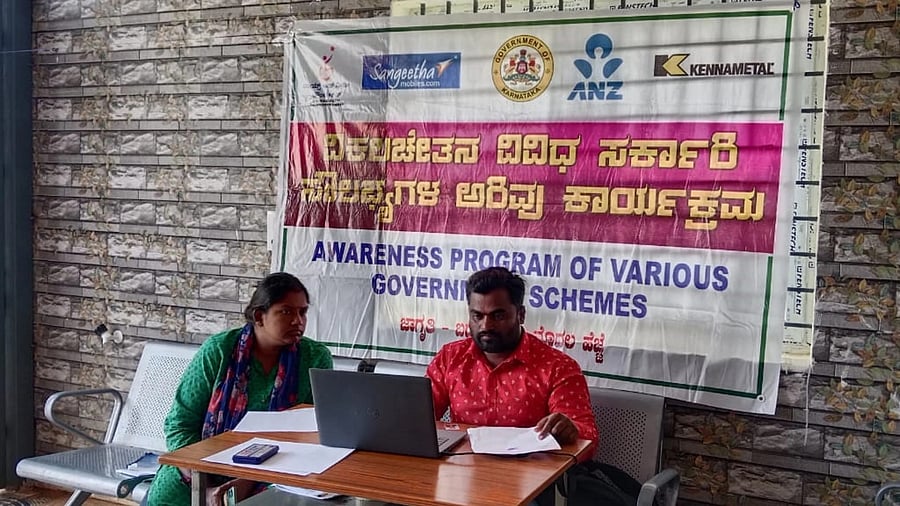
Arun Kumar S, founder, Voice of the Needy, says there is poor awareness and access to the Unique Disability ID (UDID) card and its schemes. “In Bengaluru Urban, only 50,000-60,000 own it. The lengthy process for issuing the card is a key reason,” he notes.
UDID grants access to 40-plus schemes, including monthly financial assistance (Rs 800 to Rs 2,000) according to the disability, scholarships, transport concessions, and free assistive devices.
However, even in major hospitals like K C General and Victoria, he says, “nobody guides patients”.