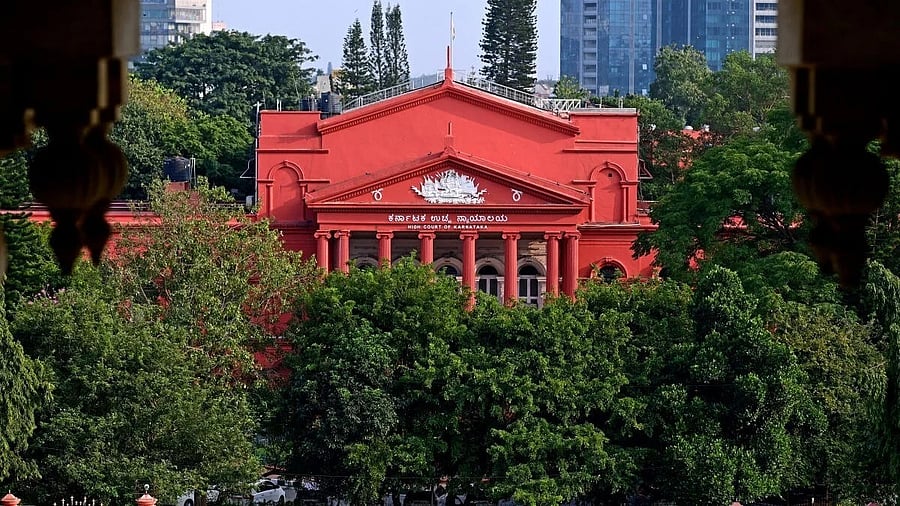
Karnataka High Court.
Credit: DH Photo
Bengaluru: A disciplinary authority is not empowered to endlessly commission fresh inquiries, until its predisposition is satisfied, the Dharwad bench of the high court has observed in a recent judgement. Justice M Nagaprasanna has said this while setting aside the fresh inquiry proceedings ordered against a chief office at Town Municipal Council in Lakshmeshwar, Gadag district.
The petitioner, Ravi D Bagalkot, was working as Chief Officer of Kalaghatagi town municipal corporation in Gadag district during 2013-14. An inquiry was ordered against him on certain allegations of irregularities with regards to civil works, grant of illegal khata transfer permission. After the inquiry, the inquiry officer exonerated him. However, on January 20, 2018, the Department of Municipal Administration ordered a fresh inquiry by appointing an officer for conducting proceedings on the same set of allegations.
Challenging this, it was argued on behalf of the petitioner that there cannot be a new inquiry by a different inquiry officer on the same charges. On the other hand, the state government defended the action contending that the disciplinary authority was not satisfied with the first report and therefore a de novo inquiry was directed to be conducted.
The court cited Apex Court judgements on similar issues wherein the top court consistently held that while further enquiry by the same officer is permissible if marred by procedural lapses, the appointment of successive officers, until a desired conclusion is reached, would undoubtedly amount to abuse of the process.
“The principle that emerges is clear as crystal; the Disciplinary Authority is empowered to reconsider the evidence and record its own findings which would be in disagreement with the findings of the Enquiry Officer; it is not empowered to endlessly commission fresh enquiries, until its predisposition is satisfied. Such a course not only contravenes the Rules, but also strikes at the root of fairness, reasonableness and becomes arbitrary. In the present case, the appointment of the new Enquiry Officer to rehear the very charges already adjudicated is wholly without jurisdiction. If permitted, it would reduce the enquiry process into a never ending ordeal, eroding the basic tenets of administrative justice,” Justice Nagaprasanna said.