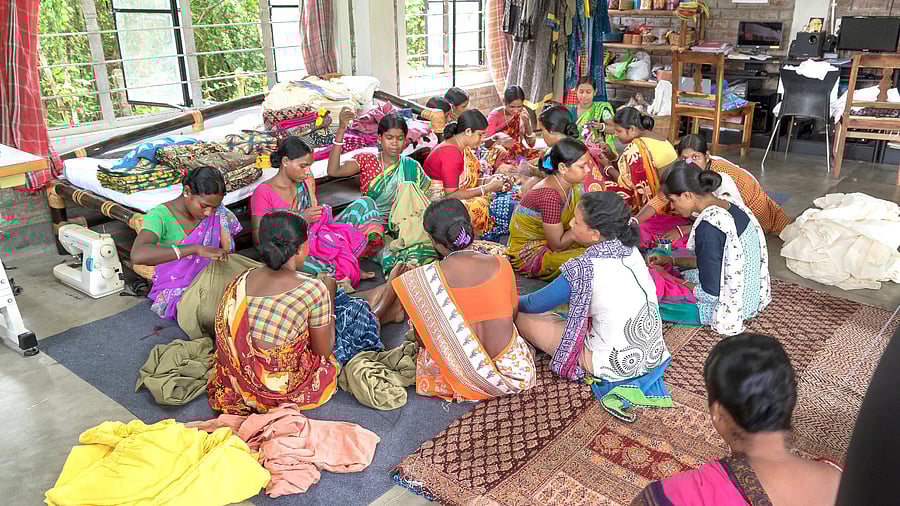
Empowering women workers, one light at a time
Credit: DH photo
Bengaluru: In a first-of-its-kind move in the country, the Karnataka Labour Department is framing a law to provide social security and welfare measures to 'destitute widow women workers'.
The draft of the Karnataka Destitute Widow Women Workers (Social Security and Welfare) Bill, 2026, which DH has accessed, defines a destitute widow woman worker as one whose husband has died, who is engaged or capable of being engaged in any form of work, and who doesn’t have "sufficient means of livelihood" and is living in "poverty, abandonment, homelessness and economic distress".
However, the draft has not set an income bar to define destitute widow women workers.
While there are Central and state schemes to provide pension and other financial assistance to widows, the Karnataka Bill — a pet project of Labour Minister Santosh Lad — seeks to provide comprehensive livelihood options for destitute women.
The Bill points out that every destitute widow woman worker has the right to work and earn her livelihood, and proposes to form the Karnataka State Destitute Widow Women Worker Social Security and Welfare Board to provide social security and other welfare schemes for registered beneficiaries and their families. The board will also have a mandate to impart skills to the beneficiaries.
Welfare fund
The Bill proposes to form the Karnataka Destitute Widow Women Worker Social Security and Welfare Fund, which will be bankrolled by the destitute widow women worker welfare cess on the sale of petroleum products.
Additionally, the fund will also receive contributions by registered widow women workers, grants-in-aid from the state and Union governments, donations under the Corporate Social Responsibility (CSR) funds, money generated through investments of the board, etc. The funds will be utilised and managed by the board.
Sources pointed out that the main chunk of the funds would flow from CSR contributions or budgetary grants or allocations.
The department is looking at using such CSR funds to develop microenterprises by aligning with NGOs. Officials are also exploring options of using Central grants if possible.
Registration
The Bill proposes registration of beneficiaries and mandates the issuance of a registration certificate with a validity of three years. Only those beneficiaries with a valid registration certificate will be eligible for the social security benefits.
The proposed legislation also notes that the board must maintain a database of all registrations and undertake the digitisation of all records through a "dedicated" software.
Each registered worker shall be assigned a unique identification number or a similar number generated either in the e-shram, Seva Sindhu or Ambedkar Sahayasta portals.
"This Bill looks beyond providing pensionary benefits to women. It seeks to provide comprehensive livelihood options and erase the social stigma for destitute widow women workers. The intention is to build their social status and provide employment opportunities, if possible," Additional Labour Commissioner G Manjunath told DH.
He noted that pre-legislative consultations will soon be conducted.
All India Central Council of Trade Unions (AICCTU) state secretary Maitreyee Krishnan welcomed steps to provide social security to destitute widow workers but underscored the need for an urban employment guarantee act.