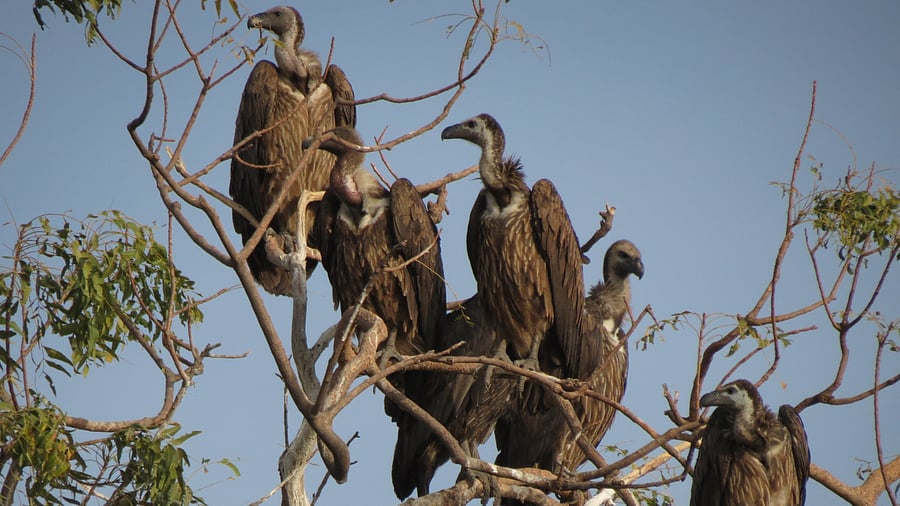
White-rumped vulture.
Credit: Special arrangement.
Mumbai: The Bombay Natural History Society (BNHS) who has recorded a massive success in conservation breeding programme and raised over 800 vultures in its conservation breeding centres across India, now recording the success in releasing the vultures too.
BNHS, which is headquartered in Mumbai, is giving a final shape to its plan of releasing vultures in Assam.
“The BNHS campaign is very important as it will decide the success of the Vulture release programme", said Kishor Rithe, Director, BNHS.
BNHS scientists plan to release the Slender-billed and White-rumped vultures in Assam in the new year, January 2026.
Slender-billed Vultures at Rani of BNHS.
The BNHS team, supported by the Royal Society for the Protection of Birds (RSPB) and the Assam Forest Department working hard to prepare the positive ground for the birds to be released.
BNHS teams are presently conducting village-level meetings and educating villagers about vultures and their importance.
“The two species of vultures - Slender-billed vulture and White-rumped Vulture have bred in captivity successfully. We are working with the local communities to save the vultures in their natural habitats. Currently, we are working on the reintroduction of these two species,” said Dr Sachin Ranade, Senior Scientist and Deputy Director, BNHS.
The release of aviaries is set now, and the vultures will be released in a scientific way termed as ‘Soft Release Method’”.
Problems such as using non steroidal anti inflammatory drugs (NSAIDs) like diclofenac, aceclofenac, ketoprofen and nimesulide, and pesticides were highlighted during the educational campaign.
Dr Ranade explains how veterinarians have to play an important contribution in practising the right way of treating domestic cattle.
“The veterinarians and their assistants (paravets) who actually handle the medicine for livestock play a valuable role. We are requesting them to advocate and use only vulture-safe medicines like Meloxicam, Tolfenamic acid in cattle treatment, the cattle and their carcasses do not have any harmful residues for vultures,” he said.
In Assam, there are frequent incidences of Poison Bait. The cases have been found where locals sprayed pesticides on cattle carcasses – just to kill stray dogs. As vultures can’t distinguish between safe and unsafe carcasses, they fall victim to such incidents of poisoning. It has taken a toll on many wild vultures and caused a delay in the release of the captive-bred vultures into the wild, he said.
Dr Ranade says, “The vultures released will be serving the common cattle owners, farmers and people of Assam. By feeding on the cattle carcasses, they will control the pollution caused by rotten carcasses and the spread of various diseases. Rebuilding the natural food chain in the ecosystem is most important for the survival of the vultures to be released as well as the wild Vultures."
"Nowadays, Assam is the only stronghold of the Slender-billed vulture in India. Saving this species will be the most important action in conservation for the global population," he adds.