
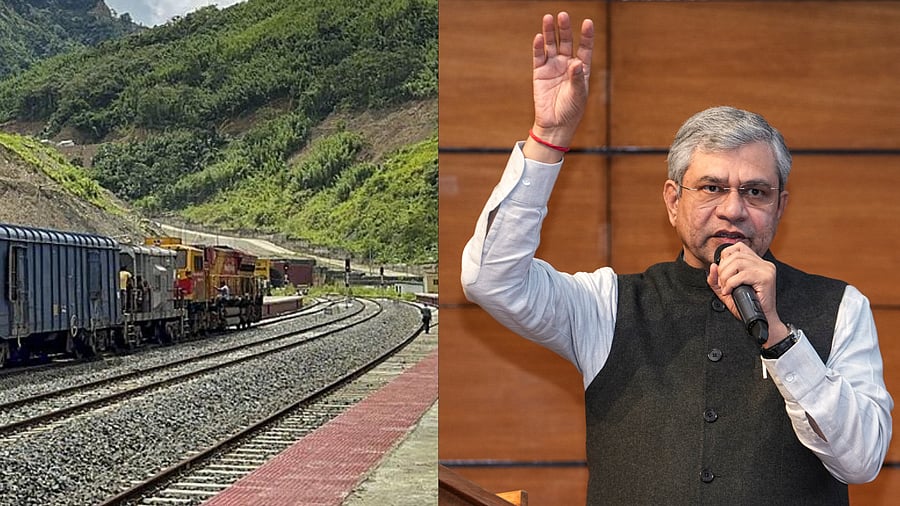
Over 75% of railway tracks capable of supporting speeds of 110 kmph or higher: Ashwini Vaishnaw
Credit: PTI photos
Railway Minister Ashwini Vaishnaw stated that the Indian Railways has made significant strides in upgrading its track infrastructure, with more than 78% of railway tracks now capable of supporting speeds of 110 kmph or higher.
In 2014, only 39.6% of tracks supported speeds of 110 kmph or more. By 2025, this has increased to 78.4%, with 56.6% of tracks now supporting speeds between 110–130 kmph, and 21.6% allowing for 130 kmph and above. Conversely, the proportion of tracks with speed potential below 110 kmph has dropped from 60.4% to just 21.6%, the Minister said in his written reply to just concluded Parliament.
The extensive upgrades carried out over the past decade include the use of 60 kg rails, wider concrete sleepers, longer rail panels, H-beam sleepers, and deployment of advanced track maintenance technologies. These measures have drastically improved the speed potential of Indian Railways.
Vande Bharat trains, which are semi-high-speed services designed for speeds up to 180 kmph and operating at a maximum of 160 kmph. The commissioning of the first prototype of the Vande Bharat Sleeper trainset is currently underway following successful field trials, Vaishnaw said.
Upgradation and improvement of railway tracks on Indian Railways to increase the speed potential have been carried out in a big way during the last 11 years. The measures for track upgradation include use of 60 kg rails, wider base concrete sleepers, thick web switches, longer rail panels, H Beam sleepers, modern track renewal and maintenance machines, interlocking of level crossing gates, intense monitoring of track geometry etc, the Minister said.