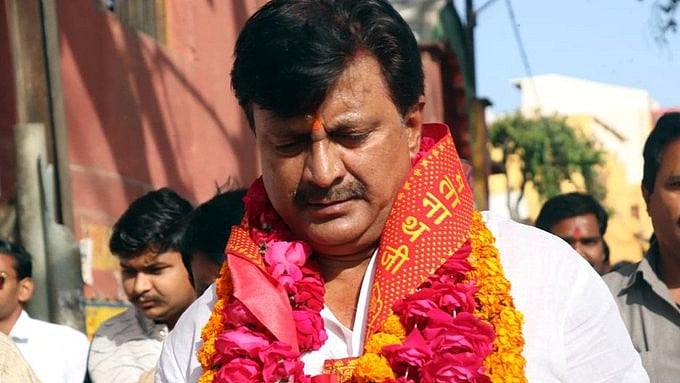
BJP MP Ganesh Singh
Credit: X/@Mrdemocratic_
New Delhi: A Parliamentary committee on the welfare of the backward classes has recommended revamping the Central Staffing Scheme to ensure optimal representation of officers belonging to socially and educationally backward communities in the top echelons of various ministries and departments under the Central government.
In its report presented in the Lok Sabha on Tuesday, the Committee on the Welfare of Backward Classes, headed by BJP MP Ganesh Singh noted that as per the data furnished by the Department of Personnel and Training, “There is a low representation of Other Backward Classes in the ministries/departments of GoI.”
“Unless they (OBCs) are optimally represented, it may not be practically feasible to safeguard the overall interest and welfare of the OBC officers/staff in the government establishment,” the committee.
The committee, during its deliberations had sought to know from the DoPT the number of secretaries in the GOI and chief secretaries in states belonging to the OBC category.
The senior-level posts of joint secretaries and above are filled under the Central Staffing Scheme or CSS for which officers of various all India services are considered for empanelment. The DoPT told the panel that of the empanelled offices, those who give their option for deputation are considered for posting.
The committee was informed that the backlog of 4 lakh vacancies in the reserved category in central jobs has been filled since 2016, and OBC representation in direct recruitment has been more than 27% in the last 10 years.
The panel has also recommended a revision of the creamy layer threshold for the OBC candidates. As per the Supreme Court order in the Indira Sawhney case, those whose parental income exceeds the benchmark set by the Social and Empowerment Ministry are not entitled to avail reservations.
In 2017, the creamy layer criteria were revised to Rs 8 lakh per annum.
The DoPT was also quizzed on the Union Public Service Commission order on the lateral entry of experts in government services without the implementation of the reservation policy.
The ministry responded by citing a 1998 Supreme Court order on 'single post cadre' where reservation 'is not permissible under constitutional framework'.