

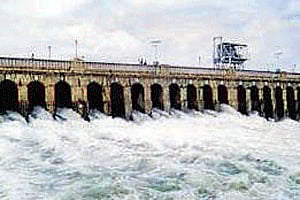
Peeved at the slow rate of progress by various tribunals dealing with inter-state river water disputes, the Centre has decided to form a single permanent body.
As per the Cabinet note moved by the Ministry of Water Resources, the Inter-state River Water Disputes Act, 1956, will be amended to set up a standing tribunal to resolve river water disputes between basin states and to give the tribunal’s award the force of an order/decree of the Supreme Court.
The proposed tribunal will have eight members, including a chairperson and a vice-chairperson. Initially, members of the existing tribunals who are below 70 years will constitute the tribunal, sources in the ministry told Deccan Herald.
The tribunal will comprise three benches and once a dispute is referred, the chairman shall assign it to a bench. In case of vacancies on a bench, a member from another bench shall hear the matter till the vacancy is filled to ensure that disputes are not pending and allowed to go unresolved. The bench should deliver the award within two years which may be extended by a year, the sources said.
However, it was clarified that there is a clause to provide two separate benches to oversee “balance work” of the Cauvery Water Disputes Tribunal and the Ravi-Beas Water Tribunal.
Abolishing the existing multiple tribunal system and constituting one standing tribunal will not only save the ministry the time and effort of setting up separate tribunals as and when water disputes erupt, but also ensure uniformity in awards, the sources said.
“Each tribunal requires annual running expenses of Rs 1.5 crore to Rs 2 crore. If government accommodation is not available, then expenditure will double. A permanent dispute resolution mechanism will therefore make economic sense too,” the sources said.
As all members of the tribunal prefer to function from the national capital, the ministry was finding it difficult to provide accommodation and other infrastructure.
Each tribunal comprises nearly 30 people, including three retired judges as members. In the proposed tribunal, total staff strength will be less than 60, including its members, the sources said.
Five tribunals
-The Cauvery dispute between Karnataka, Tamil Nadu, Puducherry and
Kerala
-Krishna dispute between Maharashtra, Karnataka and Andhra Pradesh
-Mahadayi dispute between Karnataka, Goa and Maharashtra
-Ravi-Beas dispute between Haryana, Rajasthan & Punjab
-Vamsadhara dispute between Andhra Pradesh and Odisha.