Copper is the silent enabler of India’s growth story.
India’s aspiration of becoming a self-reliant economy rest on foundations that are more elemental than any policy slogans. One such critical foundation, undoubtedly, is copper.
It is an essential metal without which development is inconceivable. However, India’s positioning is such that today the country imports over 40 per cent of its copper requirements.
This reveals a strategic vulnerability, especially at a time when global supply chains are increasingly shaped by geopolitical tensions.
Copper is the silent enabler of India’s growth story. From power grids and defense manufacturing to digital infrastructure and clean mobility, it has been increasingly becoming a strategic metal.
Recently, electric vehicles have been positioned at the heart of India’s clean transport transition. These vehicles require four times more copper than conventional vehicles. Moreover, India’s ambitious commitment to achieve 500 GW of renewable energy capacity by 2030 cannot be realised without assured production domestically.
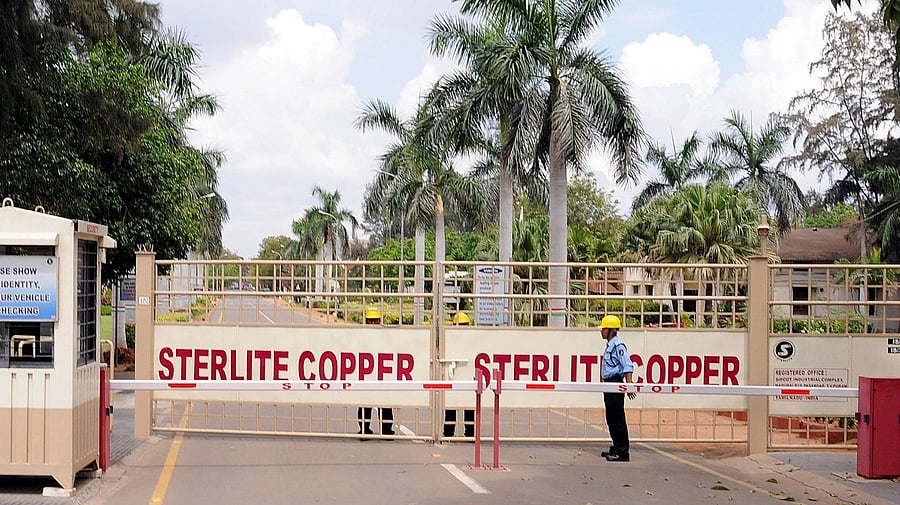
India’s growing import dependence reflects a structural contradiction. Environmental concerns have always demanded accountability. It is precisely within this complexity that the Madras High Court’s recent direction on a proposed green copper facility in Tamil Nadu’s Thoothukudi must be situated.
The Madras HC's direction reaffirms a step towards a responsible green restart. For Tamil Nadu, this direction presents a strategic opportunity. The state has long been a manufacturing centre, a leader in industry, and a pioneer in the use of renewable energy.
Tamil Nadu now has an opportunity to exhibit a development model that balances environmental credibility with economic strength.
The real question is whether India can design industrial systems that are cleaner, more accountable, and socially embedded.
The Madras HC's direction offers a pathway to attempt precisely that in Tamil Nadu. A domestically available copper ecosystem would provide Tamil Nadu’s industries with a decisive logistical and cost advantage. Through which the state can reinforce its appeal even to global investors
The proposed green copper restart envisions a transformative hybrid production model that combines primary smelting with substantial recycling. The proposal also incorporates emission control enhancements that go beyond existing world-class systems. Additionally, it reimagines the facility as a net water contributor rather than a consumer for the region.
This green restart has the potential to become a national standard with proper assessment and scrutiny.
In an era where resource security, environmental sustainability, and economic growth intersect, copper is a strategic choice. And Tamil Nadu, now stands at the centre of that very choice. The state can now showcase that progress and sustainability need not be opposing forces. With the right frameworks, they complement each other.
(Dr Suvrokamal Dutta is an acclaimed international conservative political,
economic and foreign policy expert)
Disclaimer: The views expressed above are the author's own. They do not necessarily reflect the views of DH.