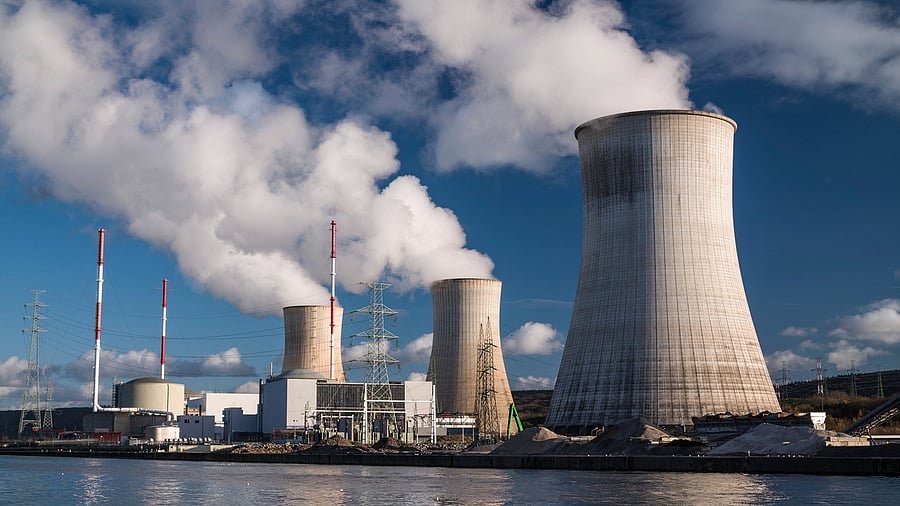
A representative image shows the cooling towers of a nuclear power plant.
Credit: iStock Photo
Hyderabad: Concerns are being raised over a proposal to use thorium fuel from the US-based Clean Core Thorium Energy (CCTE) in India's Pressurised Heavy Water Reactors (PHWRs), over domestically available thorium and the Department of Atomic Energy's (DAE) homegrown technology.
India's largest power utility, NTPC, has reportedly entered a joint venture with Chicago-based CCTE to explore the "development and deployment of Advanced Nuclear Energy for Enriched Life (ANEEL)" a thorium-based fuel for use in domestic PHWRs, subject to government approvals.
“This development surprises many, as DAE scientists and engineers have spent decades advancing thorium use for power generation, in line with Homi J Bhabha's vision for India's nuclear strategy,” said EAS Sarma, former power secretary to the Government of India.
In a letter to Dr Ajit Kumar Mohanty, Chairman of the Atomic Energy Commission (AEC), Sarma questioned whether importing ANEEL fuel would allow the US to oversee its use in Nuclear Power Corporation of India Ltd (NPCIL) PHWRs. He warned that CCTE would gain access to sensitive information on heavy water usage and urged DAE to scrutinize this risk.
Sarma also highlighted potential long-term issues like while the venture starts with US imports, it plans to produce ANEEL fuel from Indian thorium later. However, US restrictions under the 10 CFR Part 810 license could extend American regulatory oversight to domestic production, posing serious strategic concerns. He also asked whether DAE and the Atomic Energy Regulatory Board (AERB) had conducted a thorough techno-economic appraisal of ANEEL fuel.
Additionally, Sarma noted that Canada's Nuclear Safety Commission (CNSC) has only preliminarily assessed ANEEL for CANDU (PHWR) reactors and has not granted final approval. He urged AERB to consult CNSC and requested DAE to address these issues, brief the Union Cabinet, Parliament, and the public on national interest implications.
“ Now that the SHANTI Act has opened the floodgates to the entry of private players, including foreign players, in the hitherto prohibited area of nuclear power development, the concerns I have raised above assume great importance. I am afraid that as a result of the recent amendments made to the mineral laws to permit private mining of beach sands containg Monazite and as a result of the recently enacted SHANTI Act, the nation may be deviating significantly from the vision set out by Homi J Bhabha for promoting self-reliance in the arena of nuclear energy. This is something that the Parliament and the public should take note of,” Sarma said.