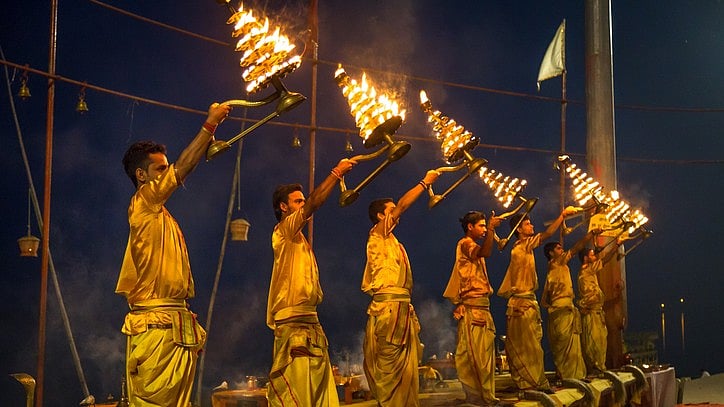
A representative image of Ganga aarti.
Credit: iStock Photo
Nainital: In the ongoing dispute regarding the future of the Ganga aarti held at the Triveni Ghat in Rishikesh, the Uttarakhand High Court permitted the Shri Ganga Sabha to continue performing the ritual, subject to certain conditions.
The vacation bench of Justice Ashish Nainthani delivered this decision on Friday, keeping public interest and religious sentiments in mind.
The case arose after the Rishikesh Municipal Corporation passed a proposal and issued an order to stop the Shri Ganga Sabha from conducting the aarti. It was argued on behalf of the corporation that the organisation's registration had expired, and therefore it had no legal right to conduct the aarti.
Additionally, allegations of commercial exploitation and littering were made against the Shri Ganga Sabha. In response, the sabha filed a petition before the high court challenging the corporation's order.
The high court, emphasising the cultural significance of the aarti, observed that it is not merely a religious ritual but an ancient cultural and civilisational heritage of the Indian subcontinent, and stopping it suddenly is wrong.
The court noted that abruptly stopping a longstanding tradition, without providing an alternative arrangement, is not in the public interest and could cause significant inconvenience to pilgrims and tourists.
While the court recognised that the registration of the Shri Ganga Sabha has indeed expired and that it does not possess a permanent right to perform the aarti, it deemed it necessary to allow the ritual to continue as a temporary arrangement.
The next hearing on this matter is scheduled for March 25. Until then, the municipal corporation's order restraining the Shri Ganga Sabha from conducting the aarti has been stayed.
Furthermore, the high court directed that the Shri Ganga Sabha must not charge any entry fee or collect money from devotees wishing to participate in or observe the aarti.
The sabha is also prohibited from taking any commission or rent from local shopkeepers selling flowers, lamps, and other prayer-related items without the municipal corporation's permission, the court said.
The responsibility for ensuring cleanliness at the ghat will rest entirely with the Shri Ganga Sabha. After the aarti, the proper disposal of remnants such as flowers, camphor, and oil will be mandatory to prevent pollution of the river, the court noted.