Credit: Special Arrangement
Tucked away on Maharashtra’s sun-drenched Konkan coast, just over 125 km from Goa’s Dabolim airport, Sindhudurg feels like a well-kept secret, offering a gentle exhale from the rush of everyday life. Beyond its sea-girded fortresses, palm-fringed beaches, lush nature trails, and local art forms lies a culinary scene waiting to be discovered.
On a warm, languid afternoon at an eco-friendly villa retreat in Bhogwe village, we step into the world of Malvani cooking right in the comfort of our two-bedroom pool villa with sweeping sea views.
As the resort staff — locals from nearby villages — arrange the ingredients for our class, the conversation turns to Malvani food and its roots. “To understand Malvani cuisine is to taste the geography of India’s western shore,” one of them said.
A mix of flavours
Born in the humble kitchens of fishermen and farmers, Malvani cuisine has evolved through centuries of trade and cultural exchange. The Marathas once ruled these lands, but Portuguese and Arab traders introduced spices — cloves, cinnamon, pepper — that transformed simple coastal fare into the fiery, aromatic cuisine known today. Meals are still served on banana leaves and eaten by hand — not merely tradition, but connection.
Though often grouped under the broader Konkani umbrella, Malvani cuisine stands apart for its smoky depth, bold heat, and bright acidity.
“The heart of every Malvani kitchen is its spice box,” says Suman Bange, a local home cook turned chef at a villa. The signature Malvani masala — a potent blend of cumin, coriander, dried red chillies, pepper, cloves, and cinnamon — forms the base of most dishes. Cardamom, dagad phool (stone flower), and fennel add nuance, while coconut and kokum remain the cuisine’s defining pillars. Recipes are rarely written; they’re passed down by taste, intuition, and memory,” Bange says.
According to culinary expert and chef Reetu Uday Kugaji, seafood lies at the core of Malvani cooking, reflecting the rhythm of coastal life. Prawns, crabs, bombil, surmai, and tisrya (clams) feature in everyday meals, often simmered in aromatic coconut gravies. The vegetarian repertoire is equally traditional and soulful, celebrating ingredients like jackfruit, colocasia, and lentils cooked with regional masalas.
The cooking methods used for Malavani cuisine are deeply traditional — tawa frying for seafood, slow simmering of gravies to deepen spice infusion, wood-fired cooking in clay pots (still used in villages for a smoky finish) and fermentation for pickles and chutneys.
Seafood to sweet finale
Our cooking class kicks off with a true coastal classic — rawa fried fish. Fresh local catch — often surmai (kingfish) or bangda (mackerel) — is bathed in a tangy-spicy marinade of turmeric, red chilli, garlic, and lime juice. Under Suman’s watchful eye, I gently coat each fillet in semolina (rawa) before hitting the pan. The magic happens as it turns golden and crisp, the crust crackling against tender, flaky flesh inside. Served hot with a squeeze of lime and a scattering of coriander, it’s the perfect appetiser to wake up the senses.
Then arrives the undeniable showstopper — Malvani prawn curry. This dish captures the very soul of the coast, a luscious coconut-based gravy layered with the fiery depth of Malvani masala. Juicy prawns are briefly marinated, then simmered in a fragrant mix of onions, garlic, dried chillies, and fresh coconut paste.
While seafood and meats are popular, many Malvani families observe strict vegetarianism during festivals or fasting periods, resulting in a rich repertoire of vegetarian dishes that use lentils, jackfruit, colocasia leaves, and indigenous vegetables.
Our veggie star for lunch is tambadi bhaji — a simple yet stunning stir-fry of red amaranth leaves. The deep purple greens sizzle with mustard seeds, garlic, green chillies, and freshly grated coconut, creating a dish that’s equal parts earthy and sweet. It’s a Konkan staple that brings balance, colour, and a touch of home-style warmth to the spread.
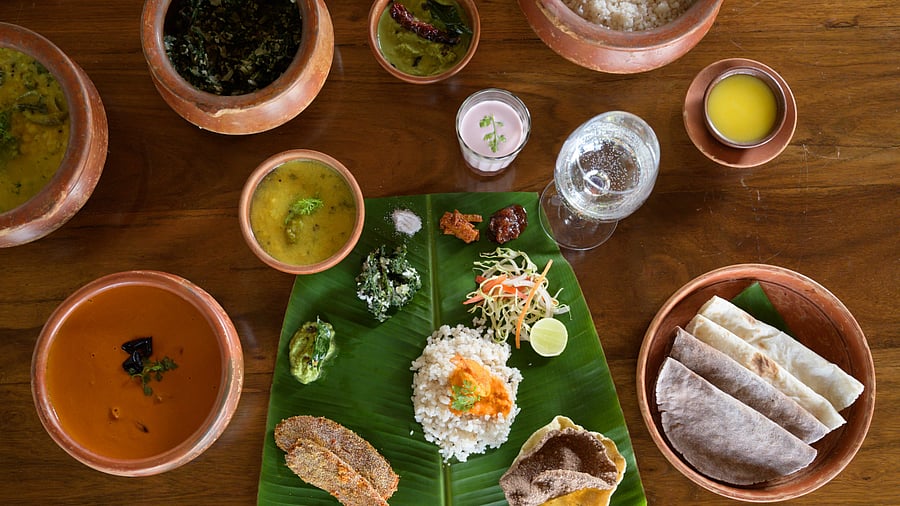
Finally, it was time to savour the fruits of our labour. Our traditional Malvani spread looks like a celebration of flavour and contrast — humble yet indulgent. Alongside what we’d prepared were comforting bowls of varan dal — a simple, soul-satisfying yellow lentil dish made with toor dal, turmeric, and a fragrant tempering of ghee, mustard seeds, and curry leaves. Steaming bhaat (short-grain local rice) sat beside a crunchy koshimbir — a cucumber and peanut salad with a zesty splash of lime — and a variety of papads and homemade achaar to add that essential zing.
No Malvani meal is complete without a chilled glass of sol kadhi — that signature pink-hued digestive made from kokum and coconut milk, seasoned with garlic and green chilli. Cool, tangy, and soothing, it refreshes the senses and perfectly balances the region’s bold coastal spices. And then, the sweet finale — the modak, stuffed with jaggery and coconut, soft and fragrant with rice flour.
The Malvani cooking class in our villa kitchen was not just about food. That afternoon of cooking offered a glimpse into a story that began centuries ago — and still simmers in every kitchen along the Konkan coast.