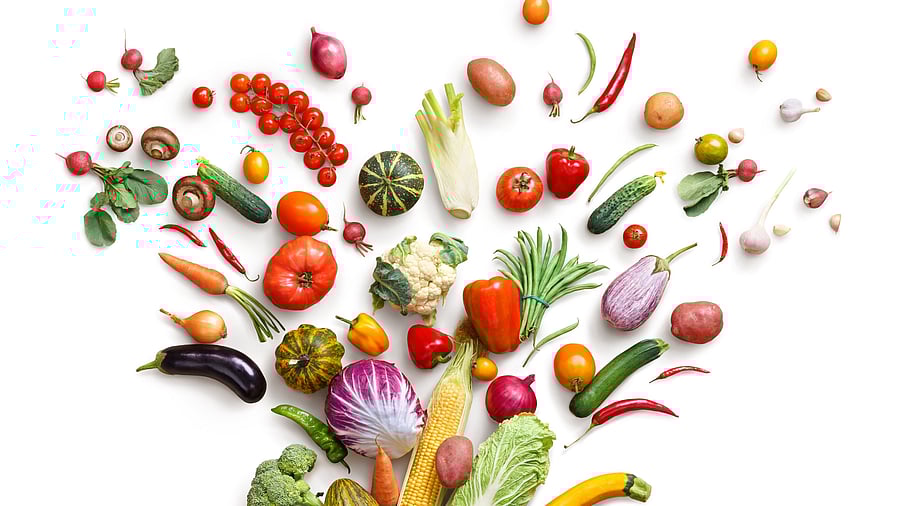
Recently at work, I had the opportunity to put together a vegetable basket for a photo shoot, using whatever was growing and in season, from the permaculture garden: tender brinjals, slightly overgrown haricot beans, flat beans, still-green lemons and bright red bird’s-eye chillies, a freshly plucked knob of turmeric, lush green bunches of mint and coriander, guavas and cherry tomatoes. There’s something calming about the way our gardener tends to this lot, with his own processes in place, circulating different varieties of seeds and crops through the year, turning kitchen waste into compost and sprinkling neem-oil infused water on the leaves.
We’ve spent most of 2025 reading, writing, worrying, celebrating, experimenting with food, predicting future ingredients, debating sustainability, and watching food trends appear and disappear with the speed of the scrolling landscape through the windows of Namma Metro.
Yet here, surrounded by familiar vegetables and Basappa’s brisk garden manner, the lure of all that fades. Food stands to be what it’s meant to be: a steady presence, a reminder that nourishment doesn’t need to be dramatic.
In the year gone by, in The Green Theory, I spoke about the expanding world of sustainable eating, including free-range futures, the ethics of what we put on our plates. I talked about looking at food as not just physical substance, but ecology, culture, politics, comfort. But there is one dimension we often neglect, which is how food affects the inner climate of our lives.
We don’t talk enough about the emotional steadiness that good food habits offer. We ramble on about immunity, fitness, and sustainability, but mental well-being is often treated as a separate entity. Something that’s managed through meditation, self-care routines, or therapy. But nutritional psychiatry reminds us that the gut and brain are connected intricately. What we eat influences how we think and feel. Even as 2026 has just begun, the food world is already throwing up its next wave of fads and superfoods. The temptation to join the race will grip us, but perhaps this year is when we choose to stay committed to a balanced approach to our dietary plans.
(Ranjini is a communications professor, author, and podcaster, straddling many other worlds, in Bengaluru. She’s passionate about urban farming and sustainable living, and can mostly be found cooking and baking in her little kitchen, where, surrounded by heirloom coffee kettles and mismatched tea cups, she finds her chi.)
THINK BEYOND TRENDS
•Pause before you hop onto the trend bandwagon. Often, we give in to some hot new thing in the market that everyone’s talking about, but it’s illogical when it doesn’t align with our actual lifestyle.
•Put local and seasonal above exotic and imported. This choice should not just count as a moral rule, but as a practical one, because your body recognises your native food patterns. Indulging in a block of imported cheese you picked up on your travels isn’t a sin, but distinguishing that from your regular local cheese intake is important.
•Steer clear of extremes. Anything that demands sudden elimination or feels like punishment rarely supports long-term balance. Ensure that your daily meals have a good balance of carbs, healthy fats, vegetables, fruits in them.
•If social media makes you anxious about food choices, try to weed out recommendations, customise them to suit your lifestyle and convenience.
•Consistency is key. Resisting the periodic superfood or superfad cycle brings a degree of freedom that puts you in charge of how you want to approach your eating habits. Stick with the basics; cheat with a special or new treat once in a while.
FOOD RITUALS FOR COMFORT
•Add more colour to your plate—this is good for gut microbiome diversity, which regulates mood.
•Stay away from screens while you eat. Sit and eat in silence, focusing on the flavours and textures of the food on your plate.
•Choose warm, fresh-cooked meals. Cooking can be an immersive process, and even if you don’t cook regularly, try your hand at preparing some simple meals now and then, to soothe the nervous system as much as the palate.
•A glass of ginger water or a simple herbal infusion at the same time everyday keeps your mood in check.
•Eat early suppers. Going to bed with a full stomach isn’t conducive for digestion, and also eating before sunset has a powerful impact on how you feel, how you sleep and your overall mood.
•Food may not solve all our problems, but it can keep us stable in a rapidly changing world.