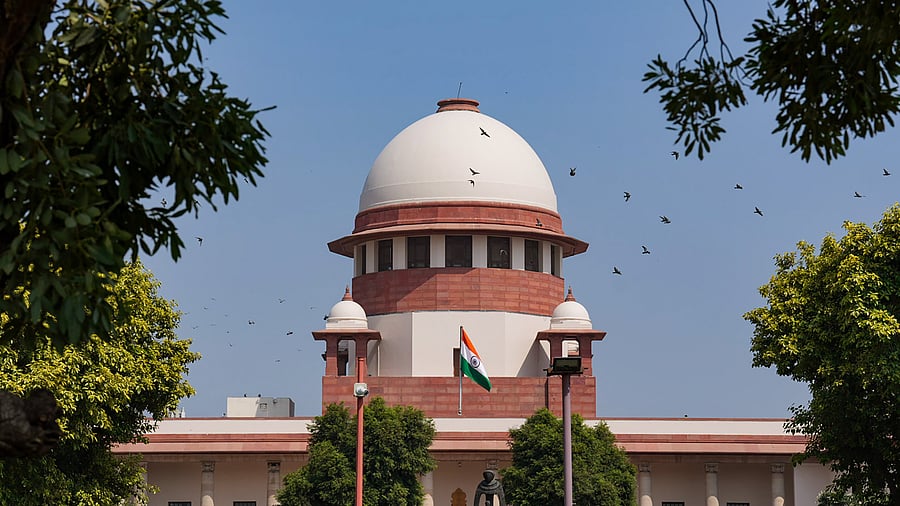
Amid political failure, unelected institutions hold the line for India’s constitutional order.
PTI
Read the first part of the story here: Why India remains a stable democracy
Read the second part of this story here: Beyond ideological wings, bureaucrats anchor India’s democratic consensus
Initially, in the early years after Independence, the judiciary was not entirely on board with the nationalist project. In a series of judgments, it placed itself on the wrong side of the social justice agenda by striking down legislation on a key issue – land reforms – forcing the government to amend the Constitution to keep it outside the purview of judicial review. Later, however, by ruling that the basic structure of the Constitution could not be changed, the judiciary asserted both its independence and its role as the guardian of the Constitution. Even though it surrendered during the Emergency, the judiciary assumed a social activist role in its aftermath. By taking up a proliferation of Public Interest Litigations (PILs), it cast itself as the defender of the last resort of the common man, civil rights and freedoms, governance generally and the Constitution. At times, it intervened in public issues suo motu. This significantly enhanced its credibility and respect among the public. As corrupt and criminal politicians failed in their governing duties and lost legitimacy among the public, the prestige and authority of the courts grew. When, for whatever reason, the bureaucrats could not get things done through politicians, courts were ready to take on those tasks. When civil society activists faced an issue or a crisis, they appealed to the courts, which were seen as independent, impartial and fair.
Over time, as failures of the politicians in governance became more pronounced, the judiciary assumed a direct role in day-to-day administration. It increasingly moved beyond the confines of traditional judicial considerations such as the mandates of laws passed by legislatures, legal precedent, Constitutional provisions, or even refraining from the content of policymaking and administrative implementation and restricting itself only to the form and procedure. It has, after listening to advocates for citizens and experts, issued administrative directives and decisions on the broadest possible range of public policy and administrative issues. It has directed governments and legislatures to pass specific legislation on issues that it deemed necessary. It has even tried to restrict what political parties could include in their manifestos, particularly with regard to “freebies”. It widened the interpretation of the Constitution to include new rights and powers. Judicial pronouncements have taken on an almost ex cathedra authority. Backed by the enormous increase in the respect in which it is held and the power of contempt of court, it has thundered, threatened, ridiculed and enforced its orders. To date, it has been able to influence and rein in the BJP-NDA governments in the Centre and the states on many issues, though not all. Even if, on occasion, like in punitive demolitions of constructions belonging to Muslims, they have ignored its directives.
In addition to their in-service roles, retired senior officials and judges have been appointed to key posts in Constitutional, policy-making and regulatory institutions and agencies – the Election Commission, NITI Aayog, the Reserve Bank of India, national security bodies, RTI, CAG, commissions of inquiry, and senior diplomatic posts. With this, the bureaucracy-judiciary complex can be said to be in control of all the commanding heights of the polity. In this position, they have become the guardians and executors of the nationalist agenda and ideology, similar to the role that the military played in post-Atatürk Turkey until recently.
This arrangement has both positive and negative aspects. Most importantly, for the common man, it provides a modicum of governance where much else has failed. On the positive side, it can be said to represent a degree of progress towards rule-based governance—what the sociologist Max Weber called rational-legal authority—upheld by the bureaucracy in a broader sense, and which for him was the most efficient and highest form of government. On the negative side, it could become what is often described in the United States as the “deep state”: rule by unelected judges, officials, and others who make decisions in closed chambers, through opaque processes, away from public scrutiny and accountability, thereby robbing citizens of their rights, including the right to govern themselves.
Stability without participation and the democratic risk
Despite the benefits of rule by administrative-judicial diktat, especially in the Indian context, it has some serious drawbacks. It tends to reduce citizens in civil society to mere petitioners rather than active participants in political decision-making, which is what democracy promises. Given the structure of the courts, it is almost impossible for individuals and organisations to argue against them in public and change their decisions in policy matters. Indeed, in recent years, courts have been limiting the physical spaces where the public can protest and also telling protesters what they cannot protest about and even telling them what issues they should take up to protest. Besides, rule by courts comes close to eliminating the distinction between the executive and the judiciary; the appeal from the court’s orders is only to the courts! It may seem far-fetched, but the risk that governance through the bureaucracy-judiciary could easily slip into a civilian dictatorship should not be ignored. In other words, there is a possibility that under certain conditions it could lead to another Emergency in a different guise. A related risk is that the bureaucracy and judiciary can be used by the ruling political party to impose its authoritarian rule in certain situations. Additionally, due to their background, training, orientation and institutional and societal position, bureaucrats and judges are not best suited for mobilising popular consent for their administration. Hence, it could also have detrimental effects on the legitimacy of that rule.
That there is nothing inherently in the nature of the bureaucracy or judiciary that predisposes them towards a particular ideology or agenda becomes clear when we look at their role in the second Trump administration over the past year. The US bureaucracy, especially at the top, has always been subject to political changes and partisan considerations. There is no strong, unified cadre and structure like in India, which was probably inherited from the British Imperial State. However, such hope as there was, among liberals at least, in restraining Trump centred on the Supreme Court, which has had a powerful independent and, in recent decades, activist role. But developments there over the past year have shown that there is little reason to assume, as we in India have in recent decades been wont to do, that the judiciary, particularly, is intrinsically a bulwark defending liberal Constitutional democracy and against authoritarian, dictatorial rule. Rather, the Supreme Court there has been an enabler of President Trump’s whimsical, arbitrary, illegal, corrupt, self-aggrandising, vengeful, militaristic, murderous (extra-legal killing in international waters), white, Christian racist/nationalist, nakedly imperialist and resource-grabbing, dictatorial and unconstitutional actions. It has, in an overwhelming majority of cases, stayed the restraining orders of the lower courts, often through cryptic emergency rulings, without giving any reasons and without even examining the Trump administration’s pleas that its actions have been necessitated by emergencies. This seems to bear out the argument of some American commentators that the guardrails against arbitrary, illegal and unconstitutional actions by would-be dictators are weak. When seen against this backdrop, the Indian nationalist ideology and agenda underpinning decisions and actions of the bureaucracy-judiciary complex stand out more clearly.
Compared with Trump’s radical, all-encompassing disruption or even Erdogan’s milder Islamic authoritarianism, Modi certainly seems moderate, preserving continuity and stability. Working within the system, using his remarkable oratorical and performative skills and keen political antenna, and backed by the organisational and legacy strength of the BJP-RSS, Modi has vastly extended the reach of the BJP-RSS’s popularity and influence, even to those who are not fully aware of and/or do not accept their fundamental nature and ultimate agenda. He has brought them further into the mainstream of Indian polity and society, from which the popular reaction to the assassination of the Mahatma had excluded them. This process had begun decades earlier with the JP Movement of the early 1970s and was furthered during the Emergency and the Janata government. He has been able to insert some of their senior personnel into key areas of power and influence in society from the highest levels downwards. Overall, this has vastly increased the legitimacy of the BJP-RSS in Indian society.
But as he pursues some of the more extreme aspects of the Sangh Parivar’s Hindutva agenda, he is straining against the constraints that the constitutional institutions, public opinion and Opposition parties have placed in his way. Arguably, he is more respectful of national icons and democratic norms and institutions because he recognises that the BJP-RSS still lacks the popular legitimacy enjoyed by the freedom fighters and the institutions they established. And that may explain why he is not able to push his Hindutva agenda as vigorously as he might want and challenge the hegemony of the nationalist democratic, secular ideology. He has personally desisted and tried to restrain his party men from any contentious or controversial issues that may divert or derail his agenda and strategy, which may be to bring about change from the inside. When Modi seeks to go beyond the nationalist consensus, there is pushback from Opposition parties, farmers, civil society, religious and linguistic minorities, and the general public. From the point of view of the bureaucracy-judiciary complex, Modi is able to mobilise mass support for their agenda and actions in return for acquiescence in promoting the Hindutva agenda to some extent. In broader policy terms, he has tilted more towards the interests of the upper classes and castes in the urban and rural areas, the urban sector, and the Hindu majority, who collectively remain his and the BJP-RSS’ strongest supporters, and away from the OBCs, SC/STs, the urban and rural poorer workers, the rural sector, and the religious minorities.
So far, so good. The strengths of Indian democracy far outweigh its serious weaknesses. Unlike in the US, in India the guardrails of constitutional democracy have kept the disruptive forces within limits and even, to some extent, mainstreamed them. For the most part, the post-Independence societal consensus has held; there has been no radical rupture or transformation. The reason for this is not merely the heritage but also the implementation of the nation’s agenda – economic growth with social justice, land reforms, reservations for the OBCs and SC/STs, upward mobility through education, an independent foreign and defence policy, constitutional democracy including all its citizens, an independent judiciary and a strong civil service, and a welfare state. None of these is without serious inadequacies, and some are more successful than others, but together they contribute positively to the stability and legitimacy of the state.
It is against this background that senior BJP leader Subramanian Swamy’s opinion that “adopting a new [Hindu Rashtra] Constitution is not possible unless there is a revolution” should be seen. Because such a constitution represents a fundamental and radical change in the idea of the Indian nation, as it has developed from Raja Ram Mohan Roy to Rabindranath Tagore, Mahatma Gandhi, and Jawaharlal Nehru, which underpins Indian constitutional democracy, it requires nothing less than an upheaval that overturns the social order to bring it about. That is also why the BJP’s majority in Parliament and in many states is inadequate to transform India into a Hindu Rashtra. In Swamy’s concluding statement, “That document was discarded for now,” there is the implication that it could be brought back at a more opportune time.
That Modi and the BJP-RSS have made only limited progress towards their ultimate goal despite three successive wins in the parliamentary elections and many in the states gives some reason for hope. But it would be foolish to write off a 100-year-old organisation that has risen to power and remained there over an extended period, has a mass leader capable of winning elections repeatedly, has a vast cadre and mass support, and has tentacles deep in the nooks and corners of Hindu society.
For those who want to defend and extend our Constitutional democracy, the task is not merely to defend the heritage but to deepen democracy and ensure that it works for all the citizens, not just for a tiny elite. They should not merely focus on strengthening the traditions that have ensured a stable democracy but need to address the weaknesses too. Most importantly, they have to expand the role of citizens to participate actively and autonomously in decisions and laws. But for that politics has to be taken back from the politicians first. That is a big ask.
(Disclaimer: The views expressed above are the author's own. They do not necessarily reflect the views of DH.)