
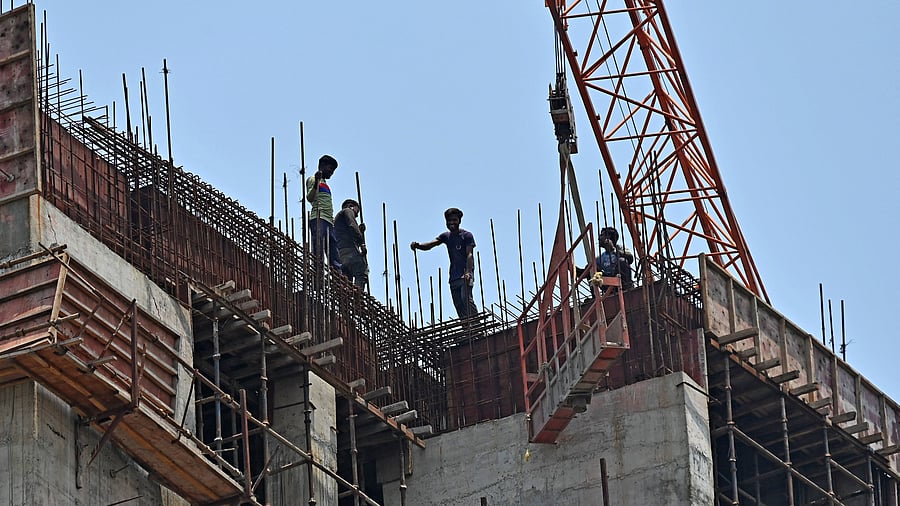
Representative image of a construction site of a high-rise building in Bengaluru.
Credit: DH PHOTO
For Bengaluru’s road users, frustration is a daily companion. Barricades, diversions, and dug-up roads have become the defining landscape of India’s Silicon Valley, turning every commute into a daily assault on time and sanity. Flyovers never seem to finish, white-topping projects paralyse neighbourhoods for years, and Metro pillars rise endlessly – the city appears trapped in perpetual construction. Take the Kanteerava Studio Junction flyover on the Outer Ring Road, which began in fits and starts. Work has resumed only now, over a decade later, and after a visiting Member of Parliament from Uttar Pradesh, stuck in a two-hour jam, publicly shamed the system. The same story plays out across the city. The Ejipura-Kendriya Sadan flyover has dragged on for over ten years. Its forest of pillars stands like a concrete graveyard of public money, mocking every claim of efficient governance.
White-topping was supposed to mean durable roads; instead, it has meant endless disruption. The upscale Indiranagar was dug up for years, and though the work is “complete” on paper, finishing touches remain elusive. Kasturinagar’s residents endured two years of unrepaired roads after water pipes were laid, until sustained protests forced the civic body’s hand. Now, Sanjaynagar’s narrow lanes face the same fate, putting small businesses on life support. Looming over all this is the biggest nightmare yet: Mahatma Gandhi Road, Bengaluru’s showcase artery, is being dug up for water pipelines for the first time in four decades; assurances that the disruption will be brief sound like a bad joke to citizens who have heard it all before. Adding to the misery is the snail’s pace of Metro construction, choking different parts of the city.
Bengaluru had pinned its hopes on Deputy Chief Minister D K Shivakumar, once known as a go-getter. Today, as the minister in charge of Bengaluru, he presides over paralysis. The city still lacks an updated comprehensive development plan, garbage management remains broken, uncoordinated agencies perennially dig up roads, and pending projects languish without closure. Grandiose plans of tunnel roads, elevated corridors, and skydecks dominate the discourse, while the basics are ignored. Bengaluru’s crisis is not one of ambition but of discipline and accountability. Projects are launched without secured finances or land clearances, and almost nothing finishes on time. A city cannot be kept in a constant state of repair without breaking its spirit. Until governance shifts from announcements to outcomes, Bengalureans will continue to pay the price – in lost hours, lost livelihoods and lost faith.