
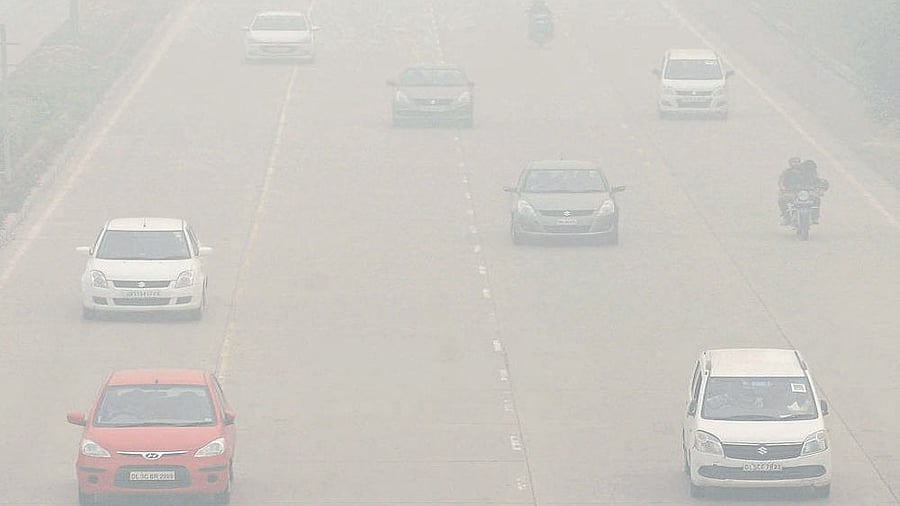
Air pollution is recognised as a major threat to health in the country, and states and cities have plans to counter it.
Credit: DH file photo
Concern over the quality of air in the country is not new. It has been voiced for many decades ever since industrial and vehicular exhausts started polluting the air. But the degradation of air quality was limited to some clusters, mainly in urban areas. But it has now spread to more areas. What is of bigger concern now is that the air quality is deteriorating year by year, and pollution has spread to most areas in the country where there is substantial human inhabitation. Since the air moves freely, the impact of pollution is everywhere and there are no easy defences against it. Polluted water can be avoided but it is not easy to avoid polluted air. The Air Quality Life Index (AQLI) prepared by the University of Chicago’s Energy Policy Institute (UCEPI) has well described the damage done to life and health in India by air pollution, and that is a dire situation.
The AQIL report, which estimates the loss of life expectancy across the world, has calculated that air pollution reduces the life expectancy of an average Indian by five years and a resident of the national capital by 12 years. It has studied the average PM (particulate matter) 2.5 levels continuously for a decade and has found that some of the worst-performing regions in terms of pollution are in India. The National Capital Region (NCR), consisting of Delhi, NOIDA and Gurugram, is among the worst. In the northern plains of India, where about 40% of the country’s population lives, the average loss of life due to air pollution is about eight years. The human and medical cost of such pollution is very high, and just as air pollution, it is not often recognised. A previous AQIL study had found that pollution killed 2.3 million Indians in 2019. It is the most important contributor to disease burden after malnutrition and is estimated to cause a loss of $36.8 billion, or about 1.36 per cent of the country’s GDP.
Air pollution is recognised as a major threat to health in the country, and states and cities have plans to counter it. But very often, these are so poorly implemented on the ground that they come in the way of livelihood issues in the short term. They are also seen as adversely affecting development plans. But it is not realised that these short-term considerations cause greater losses in the long term, and even in the short term without our knowing it. India has aspirations to become a developed country, but it should be realised that one most essential factor that contributes to economic growth and development is public health, on which air pollution has a direct and vast bearing.