
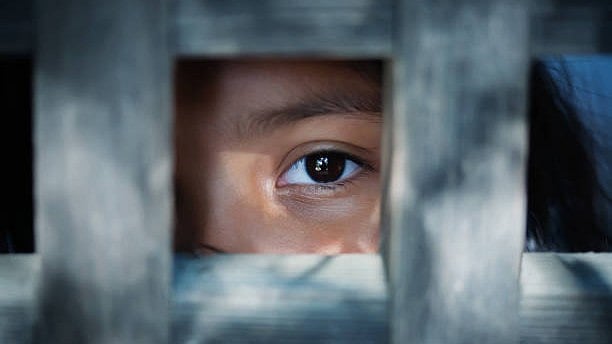
Image for representational purposes.
Credit: iStock Photo
The recently released India Justice Report shows that the juvenile justice system in the country is in disarray and children in conflict with the law are victims of systemic issues, including mistreatment and apathy. The proceedings in all the 352 juvenile justice boards (JJBs) are marked by delays, and pendency is as high as 83% in Odisha; in Karnataka, it is 35%. While JJBs are present in most districts, 25% of them operate without a full bench — this, when all it takes is a magistrate and two social workers. One-third of the boards do not have a legal services clinic, as required by law. The average backlog of a JJB is 152 cases. Only 11 of them meet all seven minimum standards required under the Juvenile Justice (Care and Protection of Children) Act, 2015. Fourteen states have not established the "Place of Safety" for 16-18-year-olds involved in serious offences.
The survey was an attempt to assess how the Juvenile Justice Act has worked, and its findings have raised serious concerns. Over 50,000 children across the country are awaiting justice from the boards. The report is based on information collected in a survey of 28 states. This information is incomplete; the country has no centralised system for data on juvenile justice cases. The children stay in childcare institutions during the investigation and after conviction. The upkeep of these homes is often poor, and there is a requirement for more such facilities. Only 28 medical officers are assigned to the 128 institutions, and most of them operate without medical staff. The system has been found wanting on multiple aspects related to the delivery of juvenile justice, including accommodation of children, handling of their cases, and rehabilitation.
A country’s legal system and culture can be judged by the way it treats its children. The State and society have a greater responsibility to children in conflict with the law than to others. The State should take special care to ensure that the children housed in juvenile homes are treated well and are served timely justice. The delay in the delivery of justice and mistreatment in the homes can harm children in unimaginable ways. A special system to ensure justice to the juveniles was created to shield them from these dangers and to help them integrate with society. The report underlines the failures of the juvenile justice system in pursuing this objective. Its findings call for a strong and studied response that addresses the problem with all its humanitarian and societal implications.