
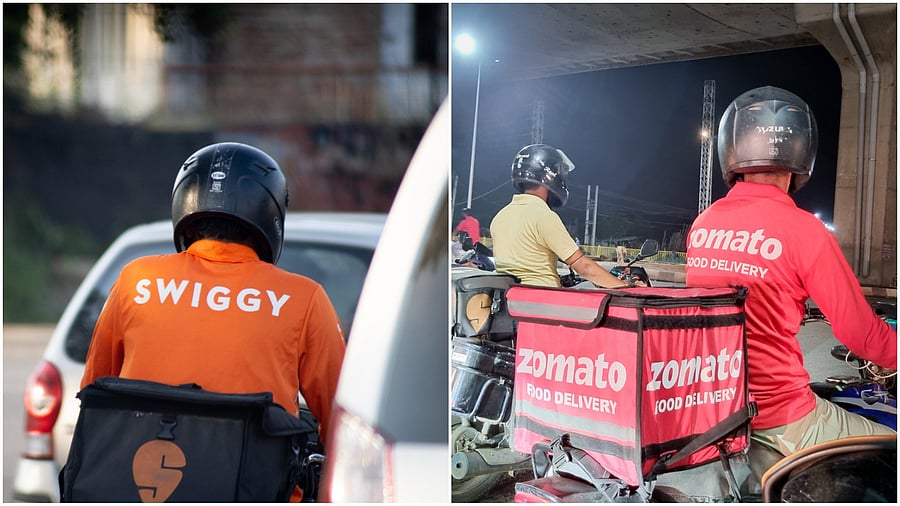
Representational image of food delivery bikers working in Zomato (R) and Swiggy.
Credit: iStock Photo
The decision by quick commerce platforms to do away with their 10-minute delivery commitment may be considered a qualified success of the campaign to put an end to the practice, which placed delivery agents under tremendous pressure. Since last month’s strike by gig workers that highlighted poor working conditions, Union Labour Minister Mansukh Mandaviya spoke with the companies, urging them to remove fixed delivery-time commitments from their branding and marketing campaigns. Concern was also rising over the impact of these commitments on the safety of the delivery agents. Working under tight schedules, the agents end up navigating peak traffic hours, often fearing the consequences of a delayed delivery. It poses risks not only to the agents but also to other road users, as seen in a spate of accidents.
But, according to reports, the situation on the ground has not changed much. The platforms have, of course, stopped making claims of time-bound delivery as part of their promotions. What has changed is the messaging; the word about quick delivery, which was clearly and loudly made through branding communication, advertisements, and social media campaigns. These platforms are yet to acknowledge that the rush to meet unrealistic delivery timelines leaves the agents under immense pressure and disrupts urban traffic systems. A counter-narrative asserts that the business model does not rely on the delivery partners’ riding speed, but on the location of the dark stores. The key factors that influenced delivery timings, it is argued, are the number and spread of the dark stores, availability of delivery partners, routing technology, and order batching.
It is known that all these factors work on one another and together create stressful work schedules for the agents. At the heart of the issue is a demand-and-supply dynamic. Customer expectations of early delivery and the availability of agents who are ready to undertake such deliveries, often under financial compulsions, are factors that drive the business. It has been argued that the situation may improve if the dark stores are mandated to be located away from residential areas, a model followed in some of the European cities. But there is no assurance that such moves can make life easier for the delivery agents. Claims of quick delivery may not be made in public now, but the orders are unlikely to slow down. The takeaway from this pause is an official acknowledgement of concerns raised by the gig workforce. It remains to be seen if it leads to a comprehensive policy with worker welfare at its centre.