
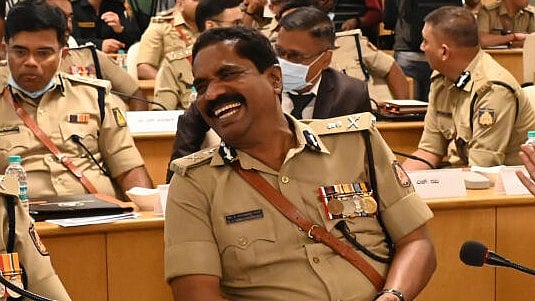
A file photo of K Ramachandra Rao
Credit: DH Photo
The suspension of DGP (Civil Rights Enforcement) K Ramachandra Rao over a sleaze tape is a deeply unsettling moment for Karnataka’s police establishment. Leaked videos allegedly show the officer in compromising situations with women, some of them inside his official chamber, and in certain instances while he was in uniform. The acts appear consensual, but that offers no shield. Rule 3 of All India Services (Conduct) Rules mandates that a member of the service maintain high ethical standards, integrity and honesty, and refrain from conduct unbecoming of a public servant. Such moral turpitude constitutes a serious violation. What makes the episode more disturbing is that this is the second instance in close succession where a senior police officer has been suspended under the same conduct rule, although not for a similar offence; the earlier case involved Ballari SP Pavan Nejjur. The frequency of such actions points to a deeper erosion of institutional discipline rather than isolated lapses.
Karnataka is no stranger to sleaze tapes. Over the years, several politicians have been caught on camera, only to dismiss the material as morphed or AI-generated and walk away unscathed. Rao has adopted a similar line of defence. That argument, however, has lost much of its force after the Prajwal Revanna case, where the police used advanced forensic methods to establish both authenticity and identity beyond doubt, culminating in a life sentence. In that context, Rao’s claim that the videos are fabricated must be subjected to similar rigorous scientific scrutiny. The officer is not without controversy. In 2014, when he was Inspector General of Police of the Southern Range, his name surfaced in the Kerala bus cash seizure case, where policemen intercepted a Kerala-bound bus and allegedly seized over Rs 2 crore, while officially recording only Rs 20 lakh. More recently, his stepdaughter’s arrest in a gold smuggling case – where misuse of police protocol was alleged – has placed him under renewed scrutiny.
It is against this backdrop that Chief Minister Siddaramaiah’s recent remarks assume significance. Addressing senior police officers, he expressed anguish that 88 police personnel were booked in criminal cases over the past year, calling it “shameful”. He also expressed embarrassment that the Maharashtra police had busted drug manufacturing units in Mysuru and Bengaluru while the local police remained unaware. The problem persists because grave misconduct by senior officers rarely results in serious consequences beyond suspension and departmental inquiry. Until accountability becomes decisive rather than optional, public trust in the police will continue to erode.