By R Gopalakrishnan
Like many other citizens, my heart wrenched as I read reports of recent protests about the woes of the city that I grew up knowing as the Garden City. Such protests are not new. In 1972, when I was a young area sales manager for the Mysuru area, I could go for a walk to Cubbon Park, eat a lovely breakfast at Woodlands Hotel, and get to work without stress. Old-timers would recall how in the 1940s, the weather would be cool all year round and that Bengaluru was a pensioner’s paradise. The increasing protests and citizen frustration are not just about traffic bottlenecks but about air quality, greenery, beauty and urban planning.
Policymakers usually appoint a committee comprising business leaders and the traffic department to address traffic snarls. Such an approach may give temporary relief but results in frustrating recurrence. Bengaluru needs an engineering solution: a comprehensive system, architected with relevant subsystems, resulting in a 25-year urban renewal master plan. Traffic snarls form only a subsystem. Brand such a 25-year master plan as the Bengaluru Krumbiegel Plan. Krumbiegel? Who is that?
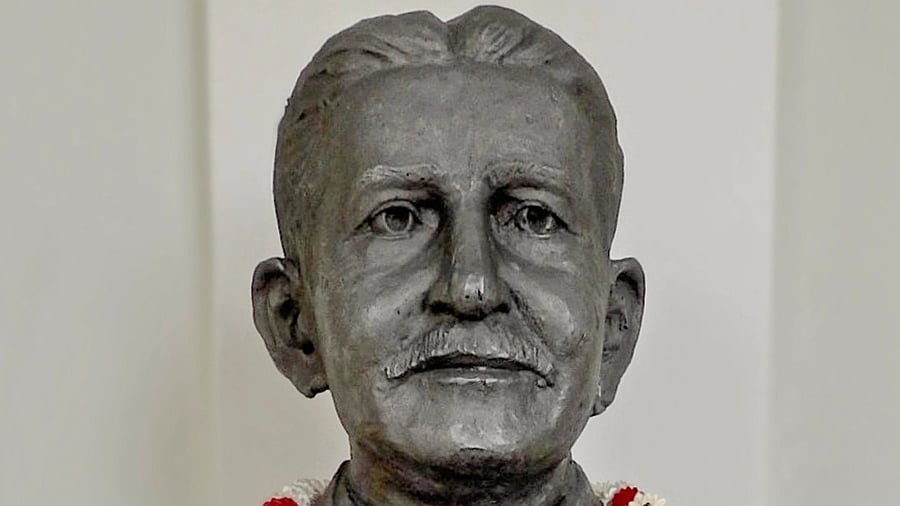
Growing up in Kolkata, I had been exposed to the fabulous Botanical Gardens. Over my career, I visited and got interested in city gardens—apart from Kew Gardens in London, Lalbagh in Bengaluru, Brindavan Gardens in Mysuru, the Lakshmi Vilas Palace gardens at Vadodara, and Jubilee Park at Jamshedpur. Until I heard an episode in a podcast recently, I did not know that all these were connected by the life and interests of one Gustav Hermann Krumbiegel, a German horticulturist. His 160th birth anniversary is on December 18.
Being an architectural consultant and gardener meant that Krumbiegel was preoccupied with integrating the practical with the aesthetic. He was not against industrialisation but advocated that cities should focus on managing industrial development in a way that was aesthetically pleasing and prevented destruction of natural spaces. Bengaluru is a great entrepreneurial city, but surely it could heed the advice of this son of Bengaluru.
Gustav Hermann Krumbiegel, also referred to as GHK (good housekeeping to industrial engineers!), was born in Germany in 1865 and developed his interests in horticulture through what he learnt at Kew and other Royal Gardens in London. At age 28, he accepted the invitation of Sayajirao of Baroda to come to India and advise him on developing the gardens at Lakshmi Vilas Palace. A German national married to an English lady, he lived most of his life in India. During the Second World War, as a German, he was incarcerated twice. His pleadings to the Mysuru Maharaja gave him some reprieve, but those were anxious times for him. After his death in 1956, his English wife, Klara, despaired about resettling back in the UK after many years in Bengaluru.
He was unbelievably talented at garden designs and horticulture. The princes had a quiet competition among themselves to excel at gardens. Some became his clients, for example, Vadodara and Mysuru, along with their palaces at Ooty. In 1937, Tata Steel desired to set up a park for Jamshedpur citizens to commemorate its golden jubilee. Who designed it? GHK and his Indian associate. I have marvelled at the beauty of Jamshedpur’s Jubilee Gardens with no awareness that GHK was its designer. After the tragic assassination of Mahatma Gandhi, independent India wanted a designer for Rajghat gardens. The task was entrusted to GHK. In short, GHK occupied a premier status among garden designers for 63 years, from 1893 until his death in 1956. He lies buried at the Methodist Cemetery at Hosur Road in Bengaluru.
Bengaluru can lead India in this long-term, essential endeavour of urban planning. India’s many megacities need a revival of GHK’s ideas of balancing industrialisation with natural spaces bolstered by new and emergent ideas on urban renewal. India has fine architects and entrepreneurs. It would be a great service to the city of Bangalore, indeed all of India, apart from being a fitting tribute to a wonderful designer, now forgotten.
The Karnataka government should develop a Krumbiegel Master Plan to restore the garden city.
(The writer is an author and corporate advisor)
Disclaimer: The views expressed above are the author's own. They do not necessarily reflect the views of DH.