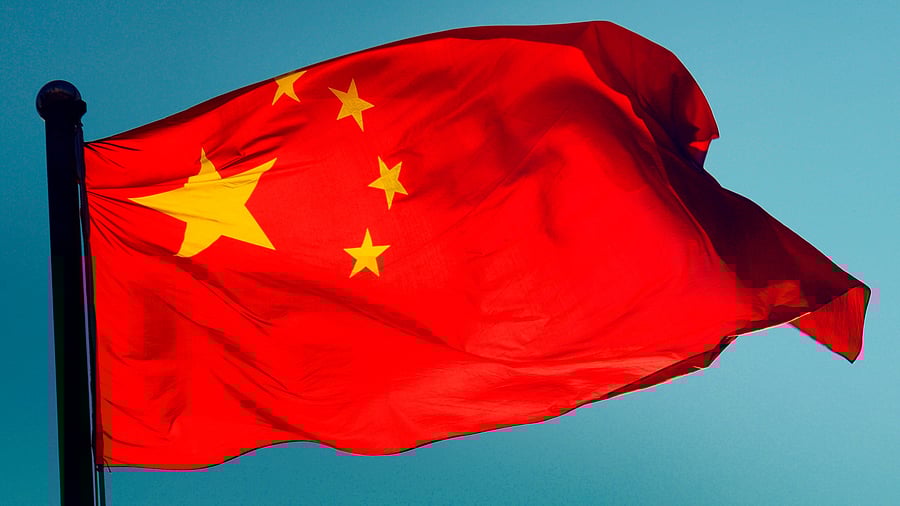
An image showing China flag
Credit: iStock Photo
By Karishma Vaswani
China’s new economic model is putting the future of Asia’s Gen-Z at risk.
The continent is home to some of the world’s most trade-oriented economies and rode globalisation to lift the lives and livelihoods of hundreds of millions. But it’s now being hit by a double whammy: an export base that has come under growing pressure from a flood of cheap goods from China, unquestionably the dominant power in the region, and US President Donald Trump’s trade war.
It’s frustrating a generation already struggling because of stagnant wages and soaring living costs. They’re having to face the reality that the manufacturing jobs that powered prosperity for their parents are becoming harder to find, even as the white-collar ladder is increasingly crowded for university graduates, too.
China has doubled down on manufacturing to sustain growth as domestic demand stalls and the property sector continues to drag. The annual trade surplus is now more than $1 trillion, despite a deepening plunge in shipments to the US. Exports are swamping neighboring economies and stirring resentment abroad. French President Emmanuel Macron has warned that the European Union may take strong measures if Beijing fails to address the imbalance.
Southeast Asia and other countries in the Global South are absorbing a disproportionate share. The members of the Association of Southeast Asian Nations are particularly vulnerable as their own low-cost markets are struggling to compete with the scale of China’s output. Import curbs and other measures have done little to stop the flow.
The pain is concentrated in labor-intensive industries that hits younger workers. Around 60 textile factories have closed in Indonesia since 2022, leading to the loss of an estimated quarter-million jobs, according to a recent report from the Lowy Institute, a Sydney-based think tank. The Indonesia Fiber and Filament Yarn Producer Association has estimated another half-million are at risk in 2025, effectively wiping out one of four jobs in the sector in a matter of years.
Indonesia, Southeast Asia’s biggest country, with more than 280 million people, isn’t the only one affected. Thailand recorded roughly 2,000 factory shutdowns last year; officials cited cheap Chinese imports as a major factor. These are the entry-level manufacturing jobs that traditionally absorbed young people, narrowing their most reliable path into the middle class.
It doesn’t stop at low-end production. The US–China Economic and Security Review Commission warns that China’s overcapacity is now reshaping markets far beyond textiles and toys. It’s leaping ahead in advanced industries — from electric vehicles and batteries to pharmaceuticals and robotics — backed by state financing and an aggressive industrial policy.
Economists David Autor and Gordon Hanson argue that the phenomenon known as China Shock 2.0 could be even more disruptive than the first. That era took place between 1999 and 2007 and upended America’s economy, leading in part to the loss of nearly a quarter of all US manufacturing jobs.
The political consequences of the new China shock are already emerging. In parts of Asia, younger voters are angrier and more skeptical of their leaders and economic elites. China’s export surge is not the sole cause, but risks intensifying pressures on governments.
That anger was on display on the streets of Indonesia, Timor-Leste and the Philippines this summer, as a generation fed up with rampant corruption, nepotism, and a lack of jobs led to protests, demanding more accountability. In Nepal, young people angry opposed to graft forced the government out of power in early September.
Beijing is aware of these problems, and may not want to upset the economic stability of its neighbors. The region is already reeling from Trump’s tariffs — and this presents an ideal opportunity for China to further its influence. Recent official meetings have made a veiled reference to the uncertainty overseas, calling for “better coordination between domestic economic work and an international economic and trade battle.” Party leaders have vowed to “act without delay” to develop new growth engines.
There are bright spots. Exports from Southeast Asia to the US rose about 23% year-on-year in September, with Vietnam and Thailand leading, Lowy notes. Much of this is companies diversifying their production from China because of geopolitical tensions. But that growth still isn’t necessarily translating into secure jobs for young workers.
Simply blocking Chinese imports is unlikely to work, because of how crucial they’ve become in the region’s supply chains. More credible responses would focus on helping domestic firms find new markets and become more efficient, coordinating regional trade defenses rather than acting alone, and expanding retraining and income support for displaced workers. Without policies that ensure that Gen-Z shares in the benefits of trade, economic frustration risks hardening into political volatility.
China’s new economic model may be stabilising growth at home. But it’s exporting uncertainty across Asia’s labor markets. No amount of cheap goods will make up for that.