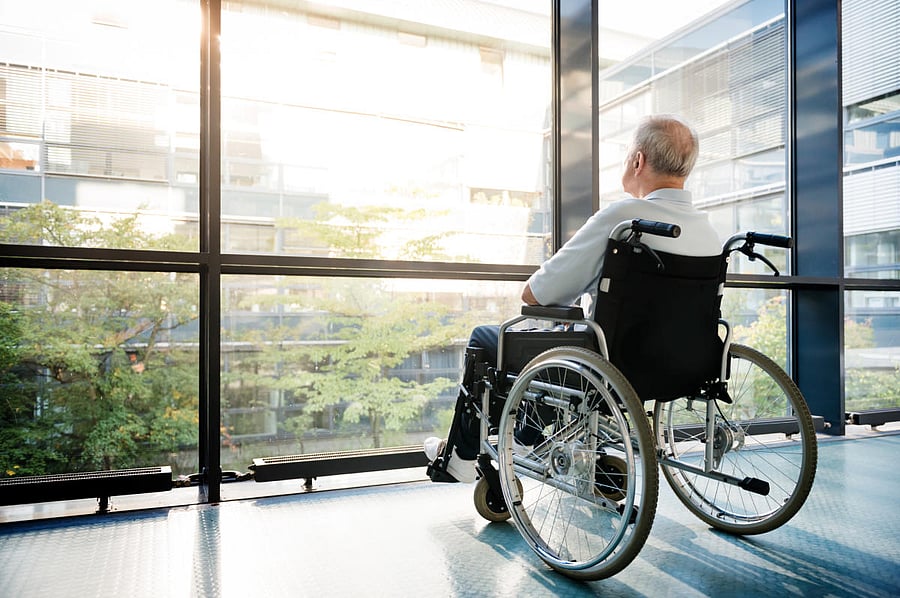
In 2025, the WHO Commission on Social Connections disclosed that one in six people worldwide suffered from loneliness between 2014 and 2023.
Credit: iStock Photo
A recent report released by AARP, a nonprofit advocacy group for older Americans, based on surveys of more than 3,000 United States residents (ages 45 and older), conducted between 2010 and 2025, revealed that 40% of them are growing lonelier, especially those in their 40s and 50s. The report didn’t pinpoint the reason for the rise, but among those who responded, the most common were bereavement, a sense of disconnection, health challenges, and separation from loved ones because of either changes in life or due to retirement.
In 2023, the WHO declared loneliness a global public health concern. In 2025, the WHO Commission on Social Connections disclosed that one in six people worldwide suffered from loneliness between 2014 and 2023. While the ‘Longitudinal Aging Study in India’ (LASI), which surveyed about 60,000 adults between 2017 and 2019 (Wave 1) showed that about one in four Indians (45 years and above) experience moderate to severe loneliness.
As the waves of loneliness engulf the globe, a recent article by a noted Indian columnist mentioned a former Canadian diplomat-friend’s decision to go for the Canadian Medical Assistance in Dying (MAiD) programme and fix his own date of death, after he was diagnosed with Alzheimer’s disease. During his latest visit to India, which he termed as a "goodbye world tour", the former diplomat disclosed his desire to make "a choice between two different ways of dying".
Now, worldwide, roughly 300 million people have legal access to some form of assisted dying, or MAiD, following legalisation in Canada, Colombia, New Zealand, the Netherlands, Belgium, Spain, Portugal, Switzerland, Austria, and various States in Australia and the US. Debates are underway on this topic in the UK and France. Switzerland (since 1942) and the Netherlands (2001) have long histories of being pro-assisted dying, while Canada (2016) and Australia (2022) have recently implemented such laws.
In contrast, Asia, largely has the most restrictive legal regimes. In India, the Supreme Court declared that the right to die with dignity as a fundamental right and allowed for advance medical directives like living wills in some cases. The apex court in its Aruna Shanbaug judgment in 2011, permitted passive euthanasia under strict guidelines, though active euthanasia remains illegal in India.
As the concept of the ‘right to die’ gains gradual legal recognition, social science researchers, bioethicists, and disability rights advocates question whether it is an authentic reflection of individual autonomy or a response to systemic social failures, economic distress, loneliness, or inadequate palliative care. Many vulnerable people, like the elderly or disabled, may feel subtle or direct pressure to end their lives to avoid being a perceived ‘burden’ on their families or society. The commercialisation of healthcare and the high costs of end-of-life care systems can also make death a financially feasible proposition for families facing poverty.
The critics of the ‘right to die’ movement believe that the strong emphasis on individual autonomy can inadvertently devalue the lives of people with disabilities or serious illnesses. Studies have also indicated that a strong desire for death in terminally ill patients is often correlated with treatable depression, raising questions about whether such requests are truly autonomous choices or symptoms of mental or emotional distress that require supportive care and treatment. Proponents of assisted dying, however, argue that these concerns should lead to robust safeguards and improved care, not a blanket prohibition on assisted dying.
Nevertheless, a recent report on the MAiD legislation revealed that almost one in five people who opted for an assisted death suffered from loneliness and isolation. In Belgium, researchers unravelled that hundreds of people suffering from mental health issues, addiction, loneliness, or despair, had opted for euthanasia.
A 2024 systematic review published in BMC Public Health found no definitive evidence to support a statistical association between social connectedness and actual requests for euthanasia and assisted suicide (EAS), though the authors acknowledged a high risk of bias in the majority of included studies (62%). A meta-analysis across 113 countries underscored that human beings need help and affection, and not planned intentional death. Several UN human rights bodies and independent experts have expressed concern about assisted dying legislation, as international law generally upholds the right to life, not a ‘right to die’, which could violate various UN conventions on human rights and rights of persons with disabilities and institutionalise ‘ableism’.
Now, to reduce feelings of isolation, worthlessness, and various other existential sufferings that may lead to a desire for assisted dying, countries across the world must give a strong push for affordable palliative care, stringent legal and medical safeguards, integrate social connection goals across various policy areas, including housing, transportation, and urban planning, and also foster societal values that respect the inherent worth of every human life, regardless of age, health, financial status or disability. The UN, as a representative world body, can also act as a provider of an ethical framework to assess whether national laws align with international human rights obligations.
Archana Datta is former director-general, Doordarshan and All India Radio, and former press secretary to the President of India. X: @ArchanaDatta54.
(Disclaimer: The views expressed above are the author's own. They do not necessarily reflect the views of DH.)