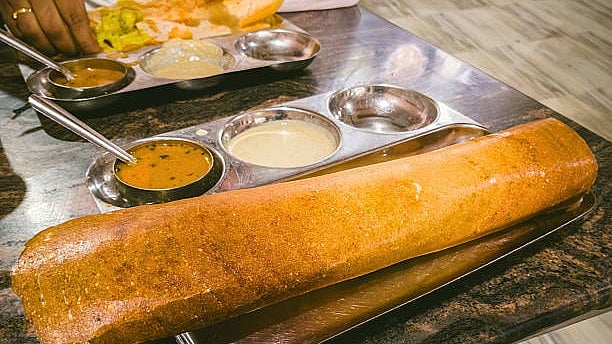
When I stepped inside the moving rath, I saw a BJP karyakarta serving him lunch—a masala dosa with sambar and chutney.
iStock
I have been fortunate to have had a tryst with one of the tallest leaders of the BJP, Lal Krishna Advani, when I accompanied him on the Swarna Jayanti Yatra in 1997. I was then a rookie, working for a struggling newspaper. I had no experience in political reporting or in reporting of any kind. Yet I had an opportunity to spend time with a stalwart—Advani.
I accompanied him on the Karnataka leg of the yatra, from Dakshina Kannada to Belagavi, for six days. The rath itself was a sight to behold. It resembled the chariot from an epic. The cavalcade stretched to over two dozen four-wheelers and was followed by streams of two-wheelers in every city we passed through.
My instructions from my bosses were clear: Don’t send speeches, send colour stories. This meant that Advaniji’s diatribe against issues like Article 370 was of no use to my paper. What they wanted were stories about the yatra—people rushing to catch a glimpse of the man of the moment, villagers travelling long distances to attend rallies, and the mood on the road.
I did this for two days and then ran out of ideas. I complained to my ‘handler’ at the newspaper—a university senior and a friend—that I could not write colour stories anymore. He urged me to keep at it. So, I did. And then something wonderful happened.
Advaniji took specific notice of me. It is well known that he reads every local newspaper he can get his hands on while on tour. Encouraged, I pressed on and wrote more stories — on the Black Cat commandos providing security, on a centenarian making his way to the rally venue and so on. These were the kinds of stories journalists call ‘sidelights’, meant to accompany the main political report.
After this, Advaniji invited me into the rath, where he spent most of his time during the yatra. I was told he wanted to meet me alone. When I stepped inside the moving rath, I saw a BJP karyakarta serving him lunch—a masala dosa with sambar and chutney. He welcomed me warmly and asked me to sit opposite him. That was the only seating available.
Then something unexpected happened. He took a spoon, cut the masala dosa into two, kept half for himself and offered me the other. I was hungry and accepted it. Instead of talking politics, he asked me about myself — why I wanted to be a journalist, my college days, my family, etc. Not a single word about politics was exchanged.
After this assignment, covering Lal Krishna Advani’s rallies became my regular beat. I met him again in Shivamogga months later. He did not recognise me then, but that was expected. I was just one among hundreds of reporters he had met over a lifetime. But for me, the time spent with him remains an experience I will never forget.