Credit: DH Illustration
Ever since the 1990s, bipartisan optimism in the United States has defined the post-Cold War era, with the belief that it presided over an ever-growing, increasingly liberal, and integrated global system. The integration of Eastern Europe, the wars in West Asia, and the ‘Pivot to Asia’ consumed its attention. Latin America was treated mainly as a zone of benign neglect, viewing it as a settled theatre with sundry but less than grave domestic problems.
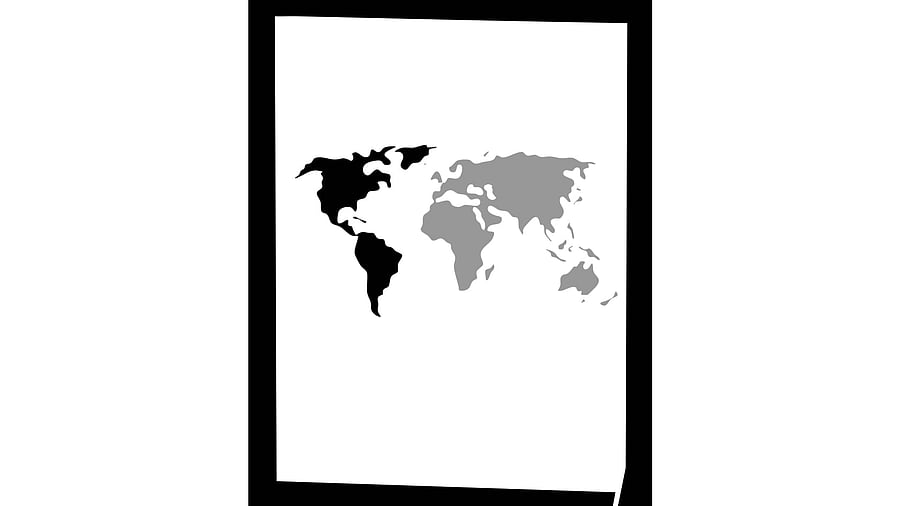
Much has been discussed about the ‘National Security Strategy of the United States of America’ released last month, although the core reasoning behind the new emphasis on Latin America has either been missed or misunderstood. Under a ‘enlist and expand’ rubric, a new grand strategy by Washington is emerging that reverts to the old-fashioned concept of spheres of influence. It takes up the Monroe Doctrine’s emphasis but adapts it for a modern era of resource competition, and pivots from the role of global leader to that of supremacy in a regional stronghold.
During previous US administrations, from Bill Clinton onwards, the White House engaged with Latin America mainly through the lens of democratisation, building institutions, monitoring elections, and promoting human rights in an era for which the best exemplar was the activities of the Carter Foundation. This has definitely now ended with the resurgence of naked use of power politics and Right-wing nationalism. US President Donald Trump has adopted transactional realism; we are witnesses to a decisive move toward supporting Right-wing governments that align with US security and economic interests, regardless of their domestic governance records.
This is apparent in the administration’s recent attitude toward Honduras. The presidential pardon to the former Honduran president was no act of mercy, but a strategic use of power to counter Chinese encroachment. Trump has, thereby, sent a message to the Honduran electorate: vote for the ultra-conservative candidate at the next election, or risk losing US support; in other words, economic decoupling from Beijing is the price for US security. The US has become an active player in the region, tilting the scales to keep the nationalist Right in power.
To underline this new sphere of influence, the White House will use the 2001 Authorization for Use of Military Force (AUMF). Passed shortly after the 9/11 attacks in the context of targeting al-Qaeda, this legislation has become an all-purpose authority for executive power, setting a troubling precedent of unilateral use of deadly force. By formally labelling specific drug cartels and State-sponsored trafficking networks as ‘narco-terrorists’, the White House has effectively brought the drug war under the scope of the AUMF without the need for any limiting congressional oversight or approval. This also carries a clear partisan bias; the ‘narco-terrorist’ label is used against Leftist regimes like Colombia and Venezuela, whereas Right-wing US allies whose institutions are equally, if not more, affected by cartel influence, are given a different classification; for them, drug trafficking is a ‘governance challenge’ requiring aid and sympathetic understanding.
The Western hemisphere now sits atop hydrocarbon wealth comparable to West Asia. Recent discoveries off the coast of Guyana have uncovered one of the largest offshore oil and gas reserves found in the past decades. The massive scale of these fields, estimated at 300 billion barrels in Venezuela and 11 billion barrels of high-quality crude in the Guyana-Suriname basin, provides the US with a historic opportunity to achieve complete hemispheric energy independence. By bringing these resources under a US security umbrella, Washington can detach its economic future from the unpredictable politics of the Arab Gulf states. This energy shift will enable a significant change in the US’ role in West Asia — the US is not leaving the region, but will be providing for its security with a new paradigm that will involve arming Israel and Saudi Arabia extensively and empowering them to serve as the major guarantors of regional stability.
The rise of China has also provided justification for the change in policy emphasis. Through its Belt and Road Initiative (BRI), China has secured critical infrastructure and the resources that will shape the global economy in this century. The US’ updated Monroe Doctrine is primarily a counter-offensive to this, and the stakes are highest in the race for critical minerals as the world moves toward a battery-powered, fossil fuel-free future. Therefore, the ‘Lithium Triangle’ of Bolivia, Chile, and Argentina is a new target for the US, and because significant deposits of rare earth elements have been discovered across Brazil and the Andean countries, the US strategy will now attempt to take control of these raw materials.
By narrowing the US strategy and security perimeter to the American continent, Washington seeks to align its means to achievable ends, establishing an unambiguous sphere of influence. The revised Monroe Doctrine in the new security strategy signals a focus on settled borders and spheres of influence. According to American observers, this will not imply abandoning traditional allies in East Asia or Western Europe, but will introduce ‘transactional maturity’ in those relationships. By indicating that the US will no longer be first to respond to crises, as in Donbas or the South China Sea, Washington seeks to encourage Brussels, Tokyo, and Seoul to become more self-reliant; the benefit to the US being more equitable burden-sharing.
Washington under Trump seems to conclude that regional dominance is the only hand worth playing in a fractured world. If this vision succeeds, the US could establish decades of economic independence, immune to Chinese supply chain pressure or perennial West Asian instability. In this way, the US would achieve the elusive strategic stability of aligning capabilities with a defensible perimeter. Such a strategy hinges on a precarious set of contingencies, based on the calculation that US allies abroad will rise to challenges without disintegrating or capitulating, and that raw power and transactional realism can deliver the Americans the security and economic benefits that the former democratic idealism could not.
(The writer is a former foreign secretary)