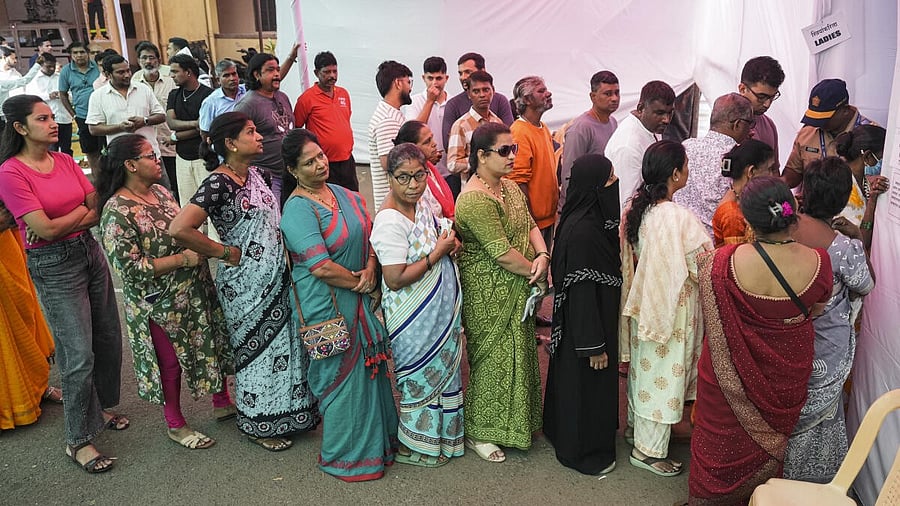
Bank queues, airport queues, cinema queues—no line is truly sacred. We excel at the casual sidle, the innocent glance, and the sudden display of urgency that propels us to the front.
Credit: PTI Photo
I have been observing this phenomenon for years, and it deserves to be called what it is: a national habit. I am, of course, talking about queue-jumping.
We, in India, have elevated queue-jumping to a fine art, practised with remarkable confidence and even a hint of pride. Bank queues, airport queues, cinema queues—no line is truly sacred. We excel at the casual sidle, the innocent glance, and the sudden display of urgency that propels us to the front.
I recall an incident at a bank that captures this perfectly. A gentleman, clearly in a hurry, walked straight up to the counter and began chatting with the cashier, blissfully ignoring the dozen people waiting patiently in line. When someone gently pointed out the existence of a queue, he looked genuinely surprised—as though the rest of us were merely extras on a set, placed there for his convenience. The cashier smiled politely and began serving him. The queue, at that moment, ceased to exist entirely.
What drives this behaviour? A belief that rules apply only to others? Or a quiet conviction that one’s own time is far more precious than anyone else’s? Perhaps it is simply a habit—practised so often that it no longer feels wrong or even noticeable.
Over time, I have seen every tactic deployed. People argue, cajole, and even invent reasons to get ahead. Some suddenly discover senior-citizen status. Others feign injuries that disappear once their task is done. There are those who announce they have “just one quick question”, which somehow requires full service. It is a never-ending performance, rehearsed and refined.
The irony, of course, is that queue-jumping merely redistributes frustration. It does not save time; it wastes everyone else’s. Instead of order, it creates irritation; instead of patience, suspicion. We end up watching one another closely, alert for the next violation.
In the interest of honesty, I must confess that I have been tempted too. Who hasn’t? The urge to slip ahead when no one is watching can be powerful. But that is precisely why resisting it matters. Civil behaviour is not defined by what we do when we are watched, but by what we choose when we are not.
Imagine the chaos if everyone decided the queue did not apply to them. Now imagine the calm if everyone respected it, quietly and without exception.
So perhaps it’s time for a small pact—with ourselves, if not with each other. Let’s stand in line, wait our turn and prove that order is not beyond us.
Who’s with me?
Disclaimer: The views expressed above are the author's own. They do not necessarily reflect the views of DH.