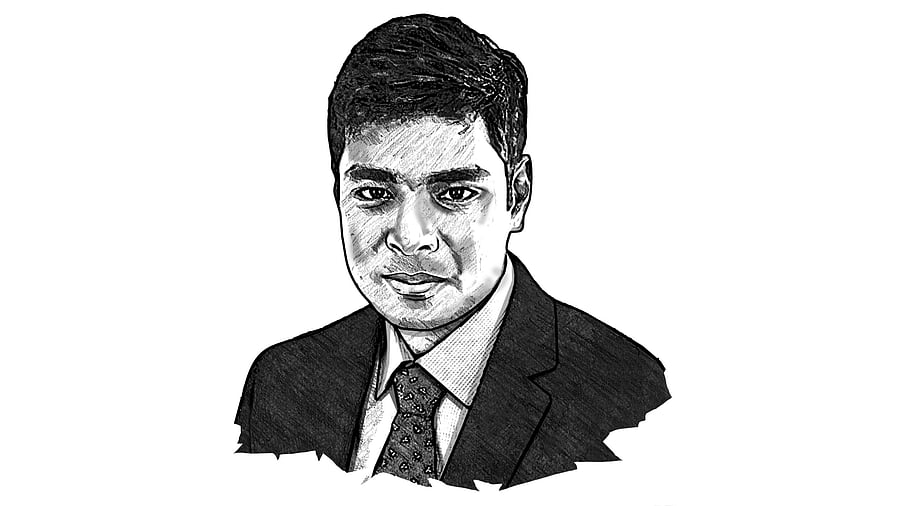
Mohamed Zeeshan is a student of all things global and, self-confessedly, master of none, notwithstanding his Columbia Master’s, a stint with the UN and with monarchs in the Middle East.
Credit: DH Illustration
At the World Economic Forum in Davos this week, Canada’s Prime Minister Mark Carney delivered a speech that might as well have been written by a foreign ministry official in New Delhi.
Over the course of 20 minutes, Carney declared that the “fiction” of a Western-led “rules-based order” is dead. For decades, countries traded with each other to expand the pie and create opportunities. But large powers have now weaponised this economic integration to coerce smaller nations. Tariffs are leverage, and supply chains are vulnerabilities.
Under the circumstances, Carney warned that if middle powers don’t act together to gain a seat at the table, they will end up on the menu. To that end, he said that Canada has been diversifying its partnerships – “different coalitions for different issues based on common values and interests.”
In the developing world, Carney’s doctrine is as old as time. For decades, emerging powers such as India, Brazil, Indonesia, and others have resisted alliances with great powers, choosing instead to play them off of each other, cooperating where possible and shunning them where necessary. As winds have changed through the years, they have called it non-alignment, multi-alignment, strategic autonomy, and other colourful things.
But for Canada and Europe, such a rationale is revolutionary. For years, these countries have seen the world through the lens of competition between China and the West. The West, led by the United States, was supposed to represent an order based on rules, governing everything – trade and global investment, healthcare and vaccination, clean energy and environmental protection. China and Russia were seen as challenges to those rules, seeking to impose their own standards on the world instead.
Under Donald Trump, the US has abandoned this worldview. Unlike its predecessors, the Trump administration does not see the US as the defender of an old global order or of any rules. To underscore that change, it has already withdrawn from a slew of multilateral institutions, including the World Health Organisation and the UN Panel on Climate Change.
There is another subtler shift. After the end of the Cold War, the US assumed a position of global preeminence. As the largest economy of the world at the time, and its strongest military power, the US saw itself as a nation bestowed with both special privileges and unique responsibilities. Its mandate was to bring an end to the law of the jungle in global geopolitics. International relations were now to be governed by a consensus forged by Washington, with other countries sharing in those gains if they submitted to its rules.
But Trump does not see the US as a special nation with an unparalleled position in world affairs. Instead, he sees the US as one among many global powers, each vying to carve out spheres of influence through military or economic coercion. By this logic, if China is taking Asia and Russia is taking Europe (or at least Eastern Europe), then the US must compete with them – not by objecting to their regional hegemony, but by fortifying the Western hemisphere for itself. This is true multipolarity: Washington now recognises China and Russia as fellow great powers with the right to dominance in their own neighbourhoods, so long as they return the favour in the Americas.
What does this mean for countries that are not great powers?
Emerging nations such as India have been clamouring for multipolarity for years. But this is not the multipolar world they were after. The US-led rules-based order had been a driving force behind the rise and success of many economies in Asia and elsewhere, because those rules had made world affairs relatively more predictable. Businesses could invest, expand, and create jobs because tariff regimes did not change overnight. Global institutions had given voice and a platform to countries that didn’t otherwise enjoy material power.
But with no country able or willing to enforce this predictability anymore, the world has now retreated back to the laws of the jungle. In this new paradigm, countries and global businesses can no longer count on the predictability of rules or laws. The only way to preserve yourself is to become strong enough to protect your assets and interests.
To start with, all countries will now have to strive to make their own survival kits. If you are a country that depends on someone else’s cooperation for your food, peace or security, then you are already “on the menu”, as Carney put it.
The writer is a student of all things global and, self-confessedly, master of none, notwithstanding his Columbia Master’s, a stint with the UN and with monarchs in the Middle East.
Disclaimer: The views expressed above are the author's own. They do not necessarily reflect the views of DH.