
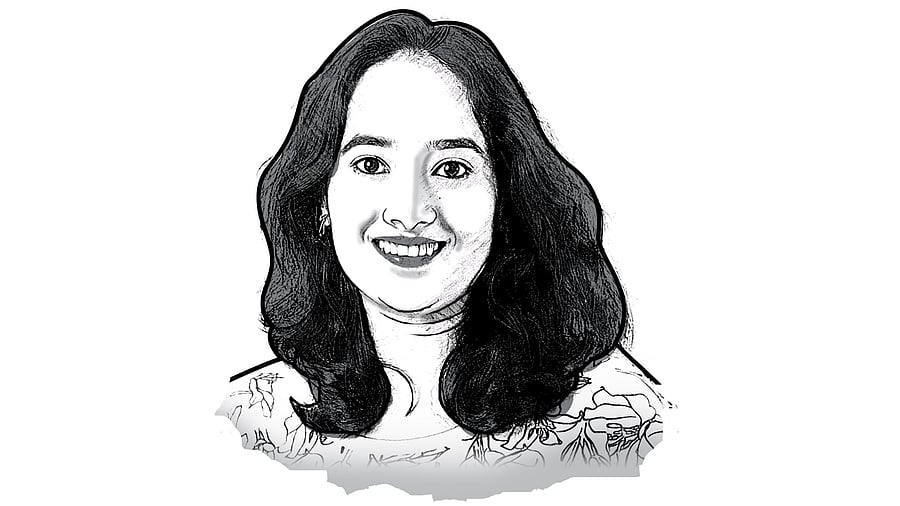
Anusha S Rao is the author of How to Love in Sanskrit and likes writing new things about very old things X@AnushaSRao2
I was recently thinking back to the most annoying parts of my early schooling and recalling the numerous essays in multiple languages we were required to write on the population explosion in India. I bet those who designed that curriculum are feeling pretty silly given that the total fertility rate in India has fallen to 1.9, below the replacement level of 2.1. Perhaps those essays all paid off, but now we must worry about an ageing population and the problems that come with it.
This got me thinking about the various attitudes we see in Sanskrit literature towards having children – the conventional, the bizarre, and the totally unhinged. For one, I remember being taken aback at reading a part of the famous prose text, Bana’s Kadambari, where the queen Vilasavati is inconsolable after hearing a religious sermon which declares that a son (putra in Sanskrit) is so called because, by being born, he saves his parents from hell, and that those who are childless (or maybe sonless?) are doomed to hell. Grief over not having children is one thing, but imagine having to fear eternal or extended damnation!
Then we have Bhishma in the Mahabharata – the revered grandfather figure of the Pandava princes. He was the son of the goddess Ganga and the king Shantanu. In another tale, Ganga abandons Shantanu for questioning her judgment in drowning all their previous sons, leaving him with only one – Bhishma. Shantanu must have understandably been lonely, and he falls in love with Satyavati, the daughter of a fisherman chieftain. The chieftain tells the king that he would only permit him to marry Satyavati if Shantanu would agree that Satyavati’s son would inherit the kingdom. When Bhishma hears of this, he takes up a vow to remain celibate and so, to never have children. This supposedly terrifying vow earns him the name ‘terrifying’ (Bhishma means terrifying in Sanskrit). This all leaves one wondering exactly what was terrifying about the vow. Perhaps it was because he was a royal prince, and all royal princes were terrified of their lineages dying out?
The final story for today is one about the sage Saubhari. It is said that he was minding his own business, meditating on the banks of a river, when his eyes fell on a couple of fish who were engaging in rather public displays of affection, and he decided he wanted those pleasures too. So he went straight to the king Mandhata, and asked him to marry off one of his daughters to Saubhari. The king was probably taken aback, but he could not afford to offend the sage, so he suggested that any of the princesses who wished to marry him would be given to him in marriage.
The sage gleaned the cause of the king’s reluctance and decided to put his powers obtained through all that difficult penance to good use. He transformed himself into a handsome young man and walked into the inner apartments; all the princesses began to fight amongst themselves to be married to him. This way, he married all fifty princesses! If you thought that was a bit much, he created elaborate palaces, opulences, and pleasures for them, and had a hundred children with each of them. One day, when he got a rare quiet moment – rare because he had five thousand children and fifty wives – he thought about how he had ruined his life, all because of looking at a couple of fish. And so, he gave it all up again and retired to the forest for more penance, this time permanently. Unsurprisingly, his wives also followed him (imagine birthing a hundred children!), and all of them attained liberation.
For our times, though, the solution to declining birth rates is simple. Just find a way to share the women’s load in birthing and raising children while running the household; stop careers from punishing women for taking time off for family; and give fathers more parental leave so they can do their share. But perhaps this is even tougher to attain than the miraculous powers of Saubhari’s penance.
The writer is the author of How to Love in Sanskrit and likes writing new things about very old things.
Disclaimer: The views expressed above are the author's own. They do not necessarily reflect the views of DH.