
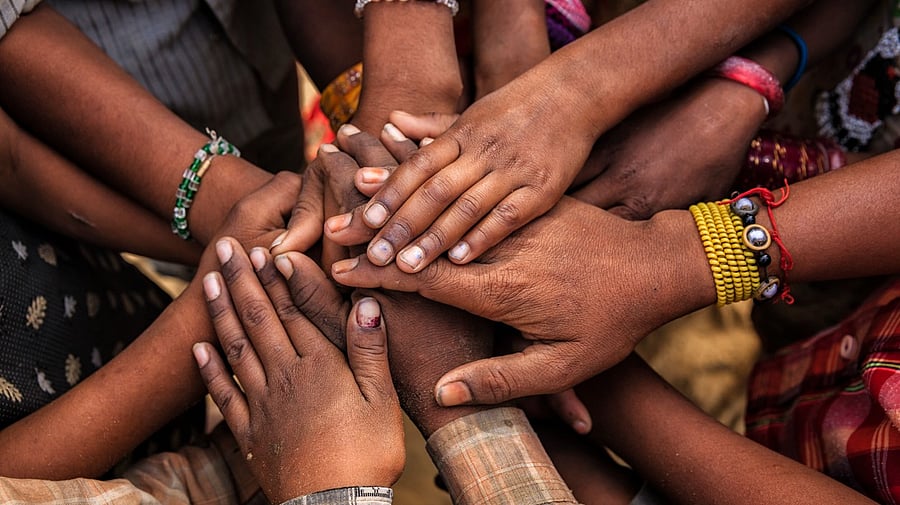
Representative image
Credit: iStock Photo
In an age when nations compete not merely on military strength but on social cohesion, moral legitimacy, and the creative energies of their people, it is worth revisiting a remarkable chapter from India’s own history. Maharashtra’s Warkari movement—rooted in devotion, equality, and collective ethics—did more than shape spiritual life. It helped build one of the subcontinent’s most egalitarian social orders. It is no coincidence that from this very soil emerged Chhatrapati Shivaji Maharaj, the architect of a resilient, prosperous, and people‑centric swarajya.
The argument is simple yet profound: an egalitarian society is not a moral luxury; it is a strategic necessity for building a powerful nation. Maharashtra’s history offers one of the clearest demonstrations of this truth.
Long before the rise of the Maratha Empire, the Warkari movement had begun transforming the social landscape. Saints such as Dnyaneshwar, Namdev, Chokhamela, Eknath, Tukaram, and Bahinabai challenged the rigid caste hierarchies and ritual exclusivity. Their message was radical for its time: every human being, regardless of birth, is equally capable of devotion, dignity, and moral worth.
This was not merely a spiritual doctrine; it was a social revolution.
The Warkari tradition fostered shared spaces where all castes ate, walked, and worshipped together. It promoted a moral code centred on humility, service, and collectivity. Through bhakti, poetry and pilgrimage, it created a cultural identity that transcended caste boundaries. It also nurtured decentralised communities bound by mutual respect rather than hierarchy.
In effect, the Warkari movement democratised social relations centuries before the arrival of modern political democracy.
When Chhatrapati Shivaji Maharaj emerged in the 17th century, he did not rise in a vacuum. He rose from a society already primed to reject inequality and embrace collective empowerment. The Warkari movement had prepared the psychological and cultural ground for Swarajya.
Shivaji Maharaj’s genius lay in converting this social capital into political power.
First, the Warkari ethos had instilled a sense of dignity as a birthright. A population that believes in its own worth is far more willing to defend its land and its freedom. This made people receptive to Shivaji Maharaj’s call for Swarajya—self‑rule rooted in justice and honour.
Second, his administration drew talent from across society—Marathas, Kunbis, Malis, Mahars, Brahmins, Muslims, and others. This inclusivity was not an accident; it reflected the Warkari tradition that valued ability over birth. The result was a meritocratic State machinery that often outperformed many of its contemporaries.
Third, Warkari emphasis on seva translated into a culture of collective responsibility. Local communities took ownership of defence, agriculture, water management, and justice. Shivaji Maharaj’s governance—anchored in forts, panchayats, and local militias—thrived because society was already disciplined and community‑oriented.
Finally, his rule derived moral legitimacy rather than fear. His commitment to justice, protection of women, respect for all faiths, and fair taxation resonated deeply with a population shaped by Warkari ethics. This legitimacy inspired extraordinary loyalty—something no empire can secure through force alone.
The Maratha polity that emerged was not only militarily formidable but also economically vibrant, and egalitarianism played a direct role in this prosperity.
Agricultural productivity rose because peasants felt secure and respected. Trade flourished as local communities cooperated rather than competed along caste lines. Innovation and social mobility expanded because talent was not restricted by birth. Women participated more actively in social and economic life, strengthening households and communities.
In short, the Warkari‑inspired social order created a broad base of empowered citizens – the true engine of any strong State.
Maharashtra’s history offers a timeless lesson: a nation becomes powerful not by concentrating privilege, but by distributing dignity.
Egalitarianism is not merely a moral ideal; it is a strategic tool of governance.
Social equality creates national unity. When people feel respected, they identify with the nation; when they feel excluded, they withdraw or resist. The Warkari movement’s inclusive ethos enabled society to rally behind a leader like Shivaji Maharaj.
Meritocracy strengthens institutions. Shivaji Maharaj’s administration thrived because it drew from the widest possible talent pool. Modern India, too, becomes stronger when opportunity reaches every caste, region, and class.
Moral legitimacy enhances State power. A State rooted in justice commands loyalty; a State perceived as unequal breeds resentment. Moral authority is a form of political capital.
Cultural cohesion drives economic growth. Shared values reduce social friction, enabling cooperation, innovation, and prosperity.
If India seeks to become a global power in the 21st century, it must remember the formula that once made Maharashtra formidable: egalitarian society-->empowered citizens -->strong institutions -->prosperous and powerful State.
This is not nostalgia; it is strategic wisdom drawn from our own past.
The Warkari movement showed that social equality can be built from the ground up. Chhatrapati Shivaji Maharaj demonstrated that such a society can produce extraordinary political leadership. Together, they proved that egalitarianism is not just a social virtue—it is statecraft.
As India debates its future, this lesson deserves renewed attention. A nation that invests in dignity, justice, and equal opportunity does not weaken itself. It strengthens itself.
(The writer is the chairman of Congress’s OBC department)
Disclaimer: The views expressed above are the author's own. They do not necessarily reflect the views of DH.