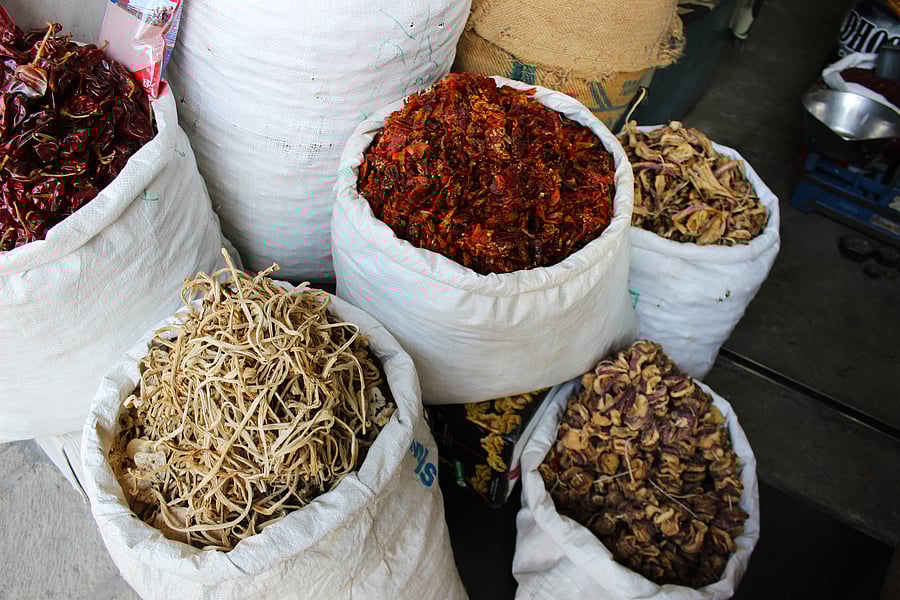
Kashmir is a land where winters are not just a season, but a way of life. When the snow begins to fall, it doesn’t stop for weeks. Roads vanish, markets close, and the whole valley seems cut off from the rest of the world. In the old days, people here had to prepare early for this isolation. They found their own way to survive the long, frozen months by drying vegetables in the summer sun. This tradition is called hokh syun, which simply means dry vegetables, and for Kashmiris, it has always been the taste of survival.
From July to October, when the air is still warm, villages across the valley come alive with the sight of vegetables spread on rooftops and courtyards. Women slice bottle gourds, brinjals, turnips, and tomatoes into thin pieces and lay them neatly on zagich a traditional mat made of grass. The sun slowly draws out the moisture, leaving behind crisp, light pieces that will last through winter. It’s a scene found in almost every home, from Kupwara in the north to the hills of Shopian.
By the end of autumn, every house smells faintly of sun and spice. Vazul machragun or red chillies hang from the balconies like garlands, waiting to be crushed into powder. Vazul machragun gives Kashmiri wazwan its fiery soul and signature red glow. Dried bottle gourd (ale hachi), brinjal (wangan hachi), and tomato (ruwangan hachi) are stored carefully in cloth bags or tin boxes. To an outsider, it might look like simple food preservation, but in Kashmir, it is part of life itself a habit passed down quietly through generations.
Staying warm
When winter arrives, especially during ‘Chillai e Kalan’, the 40 bitterly cold days that test every household, these dried vegetables become the valley’s main food. Fresh vegetables are hard to find, and even if available, they are said to make the body cold. Hokh syun keeps people warm and nourished. Inside every home, clay stoves glow with slow-burning firewood as the smell of dried vegetables fills the air.
The taste of hokh syun is unlike anything else — smoky, rich, and deep. Dried brinjal cooked in mustard oil, bottle gourd stewed with fish, or dried tomatoes turned into thick gravies — each dish feels like a memory of sunshine. Among them, handh, or dried dandelion greens, holds a special place. It is believed to have healing powers, especially for women recovering after childbirth, and helps people stay strong during harsh winters.
In the higher villages, where snow covers the land for months and doctors are miles away, these foods also serve as natural medicine. People say dried vegetables protect the elderly from chest infections and cold-related illnesses.
In Srinagar, the faithful gather at Dargah Hazratbal for Friday prayers, and when they return home, it’s often hokh syun waiting on the table the humble dried vegetables that have long carried the warmth of Kashmiri winters.
Today, even with modern heating and markets, hokh syun continues. Every summer, people still fill their courtyards with sliced vegetables, turning them gently under the sun. It’s more than just a habit it’s a quiet form of wisdom, a reminder that life in Kashmir has always found warmth even in the coldest times.