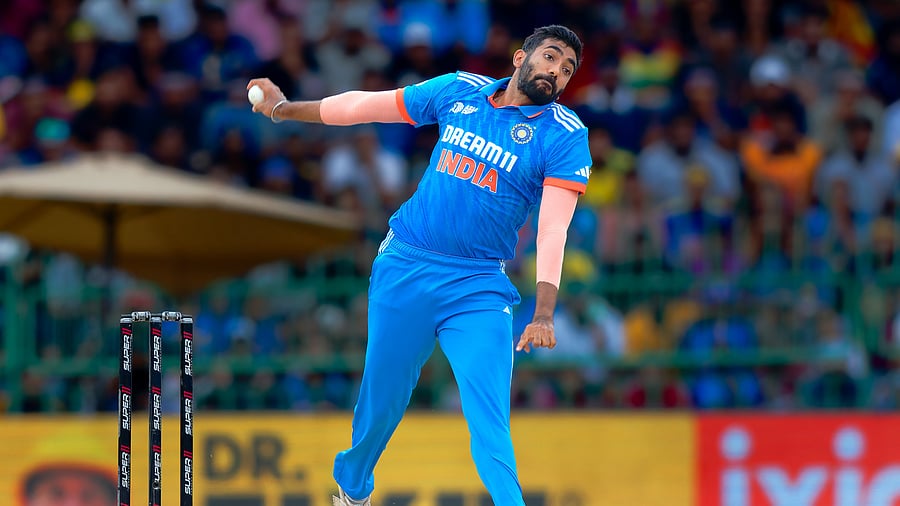
Jasprit Bumrah in action.
Credit: PTI Photo
A sign of something really good is when you forget just how good it is. When novelty fades, all things become normal, but some things, some great things, have a way of reminding you of their brilliance, their relevance.
The Indian pace unit is one such thing.
It’s easy, even expected, to take it for granted since the stocks over the years have been exceptional, even if injuries have hampered them on a few occasions. Still, the team was not always known for pace excellence.
Save for a few rare specimens who came along every once in a while, Indian pacers were of a tactful variety. Not very quick - the early 130s was their zone - but acutely aware of limitations and strengths.
Along came a generation which changed that narrative, and comprehensively so. It was a conscious decision by the management because they needed to find answers on quick wickets abroad. They figured they would breed a new generation on a diet of grassy knolls and Olympic weightlifting strategies.
And just like that Rohit Sharma became a proud heir to what can arguably be described as the best bowling attack India has had in some time. The skipper himself hasn’t stopped gushing about it yet.
Then again how could anyone not when they have the likes of Jasprit Bumrah, Mohammed Siraj, Mohammed Shami, Hardik Pandya, Shardul Thakur and Prasidh Krishna to choose from?
The fact that India have six top-shelf fast bowlers and without injuries is a privilege not many teams are anointed with. But the thing about this line-up is not so much that most of them are capable of going past 140 kmph, save for Shardul, it’s that each of them has something so unique to offer, even Shardul.
A large part of that stems from Bumrah and his hyper-extending genius, but that’s not to say the rest don’t come with their alternative angles, their radically different points of release, their approach to the crease, their pace variations and so on…
“As a biomechanic, it’s a dream to see those bowlers bowl together,” says Ramji Srinivasan, who used to work with the Indian team. “All the parts you need to study among bowlers you can with these five bowlers. Each of them gives away so much data because they operate in such different modes. In studying them, it’s like you could get a grip on almost everything fast bowlers can do.
“The only variety they don’t have ready and in the squad is a left-arm seamer, but Arshdeep (Singh) gives you that and he’s very much in their scheme of things,” he adds.
Ramji dives into the technical nuance, as he often does, but that’s for a thesis paper. Instead, let’s veer away from the technique of it all and get into the effect they impart instead.
Take Siraj's six-wicket riot from a couple of days ago for instance. While he hasn’t looked nearly as threatening as Bumrah for a while now, in conditions that suited him at the R Premadasa stadium during the final, he made his seven-over spell a mission statement. His level of execution was as brutal as it was graceful.
The fact is each of these bowlers - yes, even Shardul - is capable of coming up with these spells, even on dry strips now.
Should they fire, even one at a time, it’s quite possible that they could change the trajectory of the game. In that sense, it won’t come as a surprise if the Indian pace unit plays more of a part in the team going the distance this time around than the spinners.